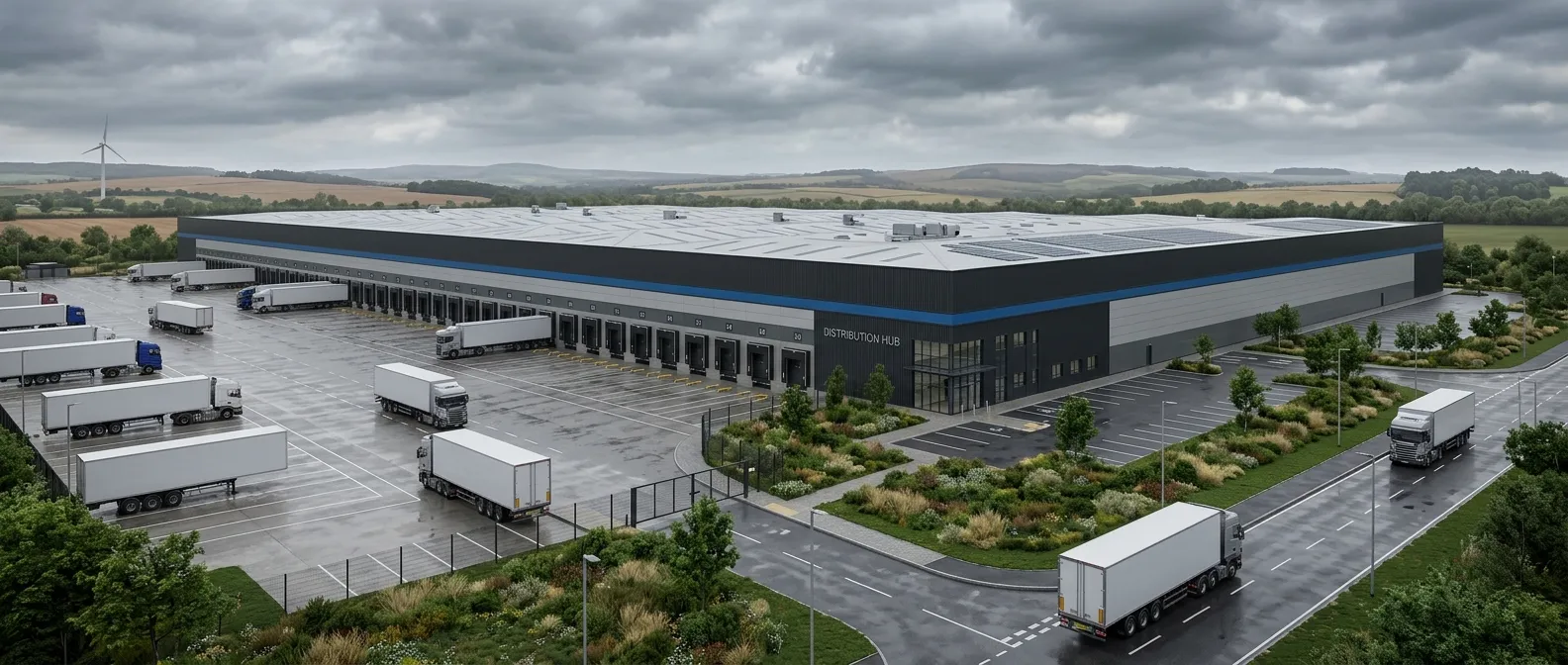
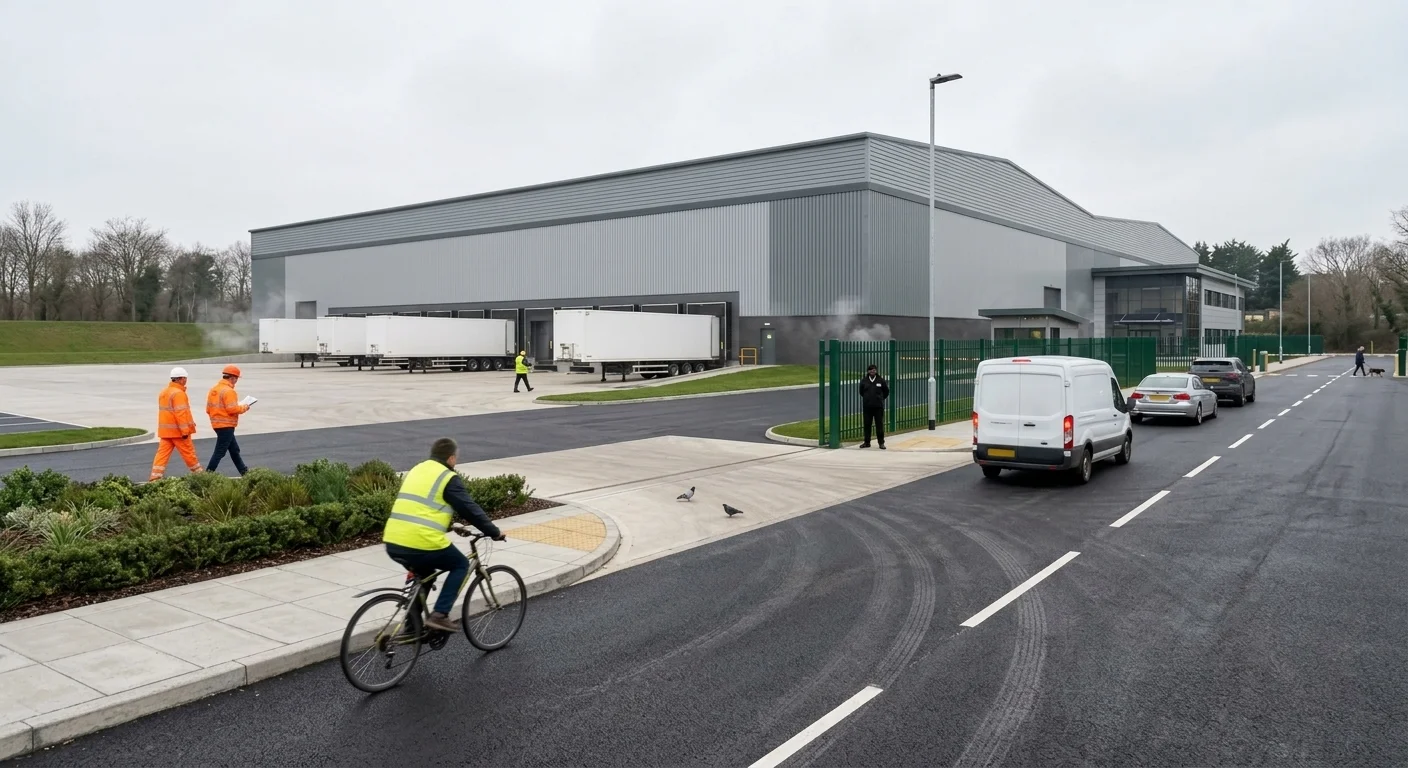
EPC Uplift and MEES Compliance CGI
Industrial warehouse refurbishment CGI shows the cladding, rooflight, and PV array changes that drive EPC improvement under the consultation-stage non-domestic MEES pathway: EPC C by 2027 (draft interim milestone) and EPC B by 2030 (proposed final target, DESNZ October 2023 consultation, not yet confirmed in final legislation). The EPC rating scale runs from A (most efficient) to G, with Band B as the proposed MEES 2030 target for non-domestic rented buildings in England and Wales under that consultation. Scotland operates a separate EPC scheme and is not covered by this draft MEES non-domestic pathway.
Industrial landlords and fund managers are treating the proposed MEES 2030 timeline as a planning assumption for asset management decisions, even though the regulation remains at consultation stage. The January 2026 partial DESNZ Energy Performance of Buildings response covered EPC metrics only; it did not confirm the MEES enforcement timeline, so the EPC C 2027 and EPC B 2030 thresholds named above are still subject to the final DESNZ legislation. StratumCGI produces the visual evidence layer for this planning assumption: a refurbishment CGI set that shows the asset team and the credit committee what the proposed envelope, rooflight, and PV works will physically produce, alongside the energy consultant's modelled EPC band.
EPC A to G
England and Wales scale
Band B is the proposed MEES 2030 target for non-domestic rented buildings (DESNZ 2023 consultation, under consultation, not yet confirmed in legislation).
EPC C by 2027
Proposed interim milestone
Under the consultation-stage MEES non-domestic pathway, EPC C is the draft interim milestone before the EPC B target proposed for 2030. Both are yet to be confirmed in final legislation, not enacted law.
Up to GBP 150,000
Proposed maximum civil penalty
The 2023 DESNZ consultation set out a proposed maximum civil penalty of up to GBP 150,000 per building for the most serious non-compliance breaches (not yet confirmed in final legislation).
Approx. 20%
UK built environment emissions
Refurbishment and construction account for approximately twenty per cent of UK built environment emissions (UKGBC, Net Zero Whole Life Carbon Roadmap, 2024).
Source: UKGBC, 2024
3D rendering of a refurbishment project depicts how a composite panel system upgrade, rooflight replacement, and dock-insulation programme would address the building envelope changes relevant to the proposed GBP 150,000 MEES civil penalty range (DESNZ 2023 consultation, proposed, not yet confirmed in final legislation). StratumCGI produces industrial warehouse refurbishment CGI that shows how these scope of works address the asset's stranded asset risk and position it as a green premium opportunity, giving the investment committee a visual instrument that sits alongside the energy consultant's EPC improvement report.
Industrial warehouse refurbishment CGI compares overcladding, full recladding, and partial composite panel replacement side by side, giving the asset manager and the BREEAM In-Use V6 assessor a visual record before procurement. Refurbishment and construction account for approximately twenty per cent of UK built environment emissions (UKGBC, Net Zero Whole Life Carbon Roadmap, 2024). Pre-specification renders allow the project team to evaluate lower-carbon envelope solutions for embodied carbon reduction, including overcladding over the existing skin rather than full demolition and panel replacement, before structural surveys and material procurement begin. Whole-life carbon considerations favour overcladding: the existing fabric is retained and the refurbishment scope replaces only the failing or thermally deficient elements. This connects directly to the Materials category of BREEAM In-Use V6 assessments, where demonstrating considered material selection supports the In-Use Part 1 (asset) scoring.
Compliance note: StratumCGI produces CGI of the proposed physical works. The studio does not conduct energy assessments, calculate EPC ratings, or advise on MEES compliance strategy. The CGI is used alongside an energy consultant's report and an investment committee pack, not as a substitute for either.