UK Industrial CGI Studio, 2026
Industrial Architectural Visualisation Studio | StratumCGI
StratumCGI is a UK-based industrial architectural visualisation studio with remote-first delivery, specialising in AI data centres, warehouses, light industrial units, industrial parks, airport cargo terminals, and planning-led developments across Britain. Since 2018, the studio has delivered over 300 industrial CGI projects, with exterior renders starting from £1,800 per pair of views (2026 pricing).
UK industrial centres we deliver CGI to
UK industrial CGI coverage by region
Golden Triangle (East and West Midlands logistics core)
- Lutterworth and Magna Park
- Daventry
- Rugby
- Northampton
- Milton Keynes
- Corby
- Nottingham
- Leicester
West Midlands
- Birmingham
- Wolverhampton
- Coventry
- Telford
- Tamworth
North West England
- Warrington and Omega
- Manchester
- Liverpool
- Widnes and Runcorn
- Preston
Yorkshire and Humber
- Leeds
- Sheffield
- Doncaster
- Wakefield
- Hull
- Immingham
North East and Teesside
- Newcastle
- Sunderland
- Teesside
- Darlington
Scotland, Central Belt
- Glasgow and Edinburgh corridor
- Livingston
- Bellshill
- Grangemouth
Wales and Severnside
- Avonmouth and Severnside
- Cardiff
- Newport
- Deeside
South West and M4 Corridor
- Bristol
- Swindon
- Slough
- Reading
- Exeter
South East and Thames Gateway
- Tilbury and London Gateway
- Dartford
- Basildon
- Medway
- Ashford
East of England
- Peterborough
- Cambridge
- Felixstowe
- Ipswich
Investment Zones and Growth Hubs
- East Midlands Investment Zone
- Greater Manchester Investment Zone
- West Midlands Investment Zone
- Humber
- Teesside
- Liverpool City Region
- Celtic (Milford Haven and Port Talbot)
Delivering industrial CGI to developers, planners, and operators across Britain.
New: CGI-led marketing packages for industrial planning, pre-let and occupier launches.
Recent Industrial CGI Projects
StratumCGI's portfolio spans nine recent industrial projects across warehouses, data centres, cargo terminals, and industrial parks in England, Scotland, and Wales. Each brief moved through the studio's five-stage process from brief intake to final delivery pack.
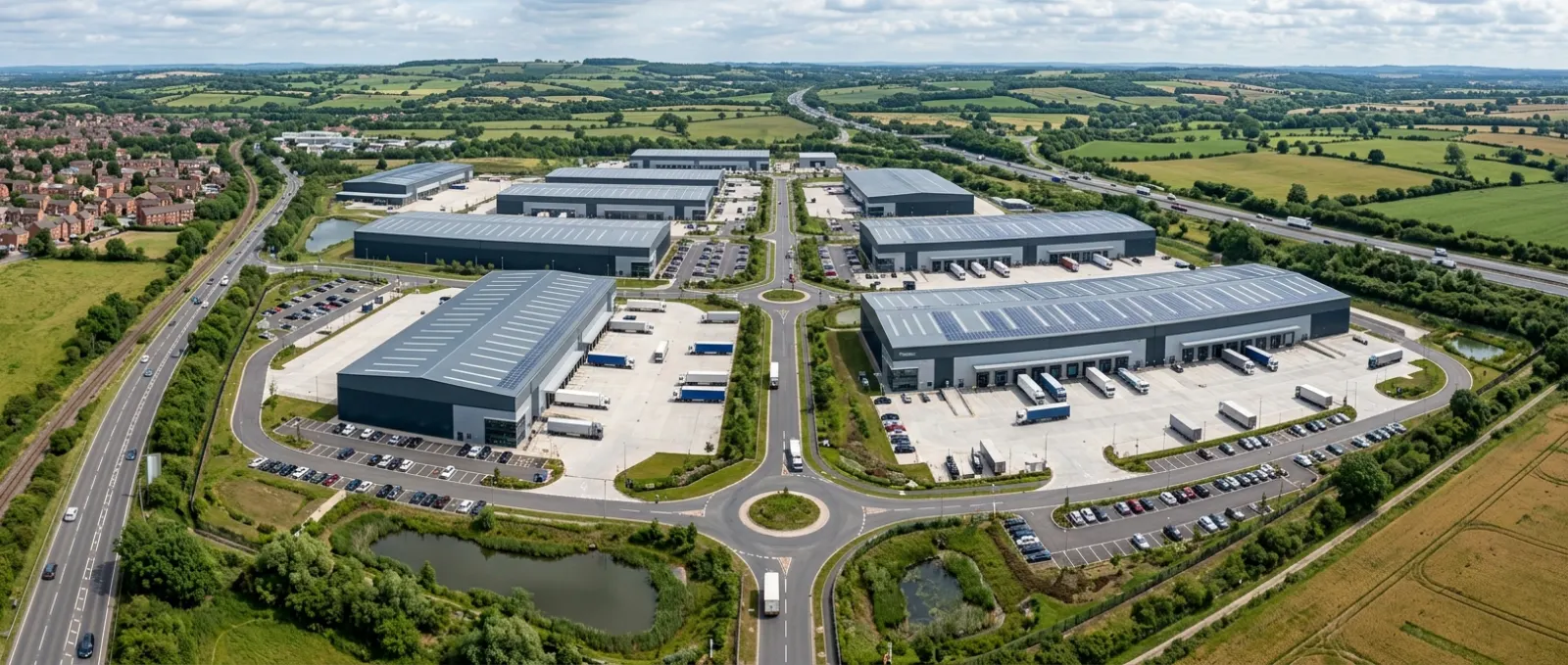
Each project shown was delivered through a five-stage process covering brief intake, model build, draft views, technical review, and final delivery. The same sequence is described in the Process section below.
Three commissions carry full case-study deep-dives: the Golden Triangle big-box logistics CGI at Magna Park Extension (SCGI-001), the Manchester Hyperscale Data Centre visualisation (SCGI-002), and the Hyperscale AI GPU Campus CGI in the North West (SCGI-003). Each documents the brief, planning constraints, delivery scope, and operational outcome.
Why Industrial Developers Choose StratumCGI
Commercial development CGI for industrial schemes: warehouses, logistics parks, data centres, big-shed and last-mile depots that need to win planning consent and pre-let to occupiers. StratumCGI specialises in industrial briefs, so each project starts with working knowledge of cladding systems, operational yard layouts, and planning authority expectations. Project records show 300+ UK industrial schemes rendered since 2018. On a typical six-frame warehouse or data centre brief, the first approved hero image is usually issued within 10 working days.
Our industrial CGI work covers technical facilities, including power substations, air cargo terminals, and cold chain depots. The same production workflow supports planning visuals, aerial masterplan views, construction phase flythroughs, and operational interior renders.
StratumCGI's logistics, data centre, and employment-land focus gives the studio a reference library for warehouse and logistics CGI across distribution centres, cold stores, air cargo facilities, last-mile depots, and fulfilment centres. For smaller-format Use Class E(g)(iii) and B2 schemes, Light Industrial Unit Visualisation covers multi-let estates and trade-counter units, distinct from the larger B8 logistics assets. Industrial CGI briefs often reuse similar cladding systems, yard configurations, security zones, and planning constraints, so the studio can start from tested modelling decisions and reduce avoidable review loops.
Industrial CGI for Developers, Operators, and Planning Teams Across Britain
StratumCGI produces industrial CGI for developers, operators, consultants, and planning teams working across logistics, data centre, infrastructure, and employment-land projects in Britain. The client logos below represent the sectors StratumCGI works within. Individual project names and commissioned visuals remain confidential unless publication is approved by the client.

Prologis
SEGRO
Tritax
Equinix
Companies shown represent the data centre, warehouse, and industrial park sectors served by StratumCGI across the UK.
Industrial and Commercial Development CGI by Sector
StratumCGI produces sector-specific CGI for 25 industrial, logistics, commercial, energy, and infrastructure building types. Developers, operators, and investors commission this work because warehouse, data centre, energy, commercial, and infrastructure schemes each require accurate cladding, plant, yard logistics, access, and operational detail.
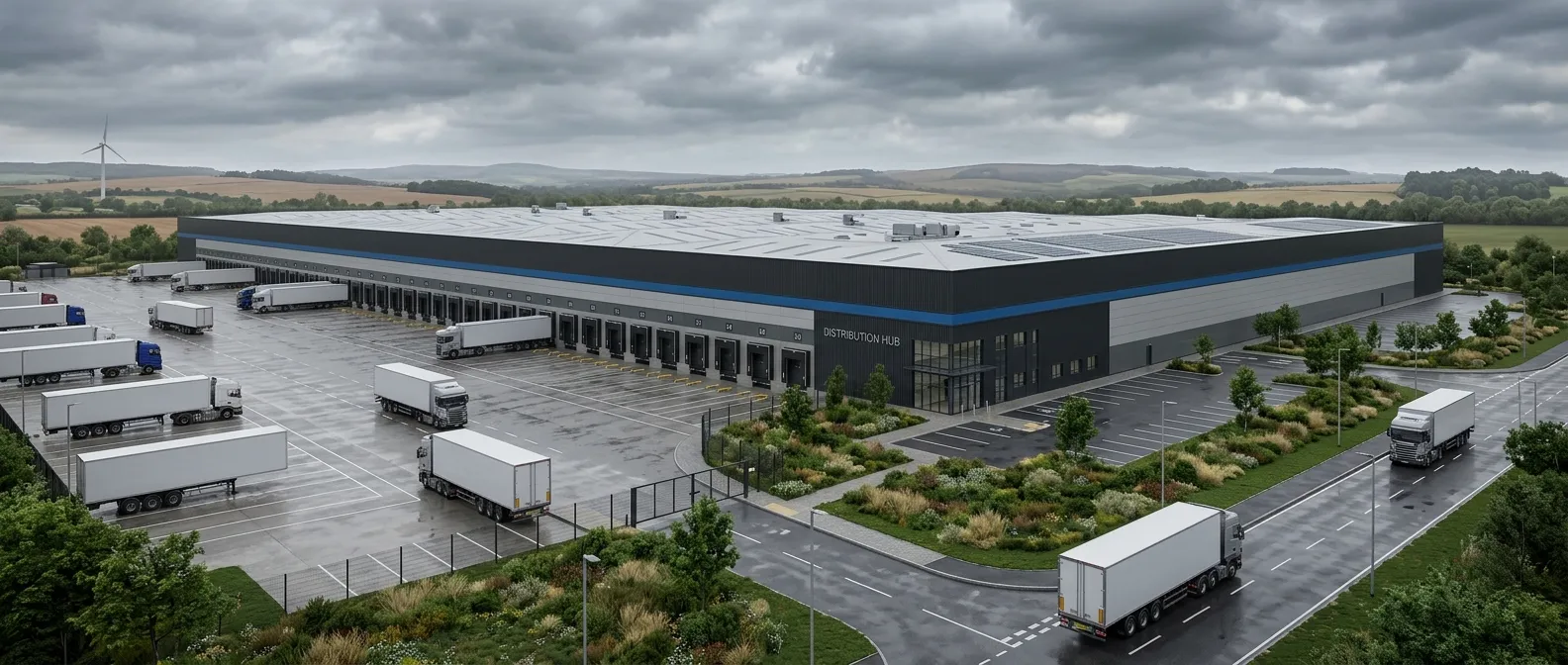
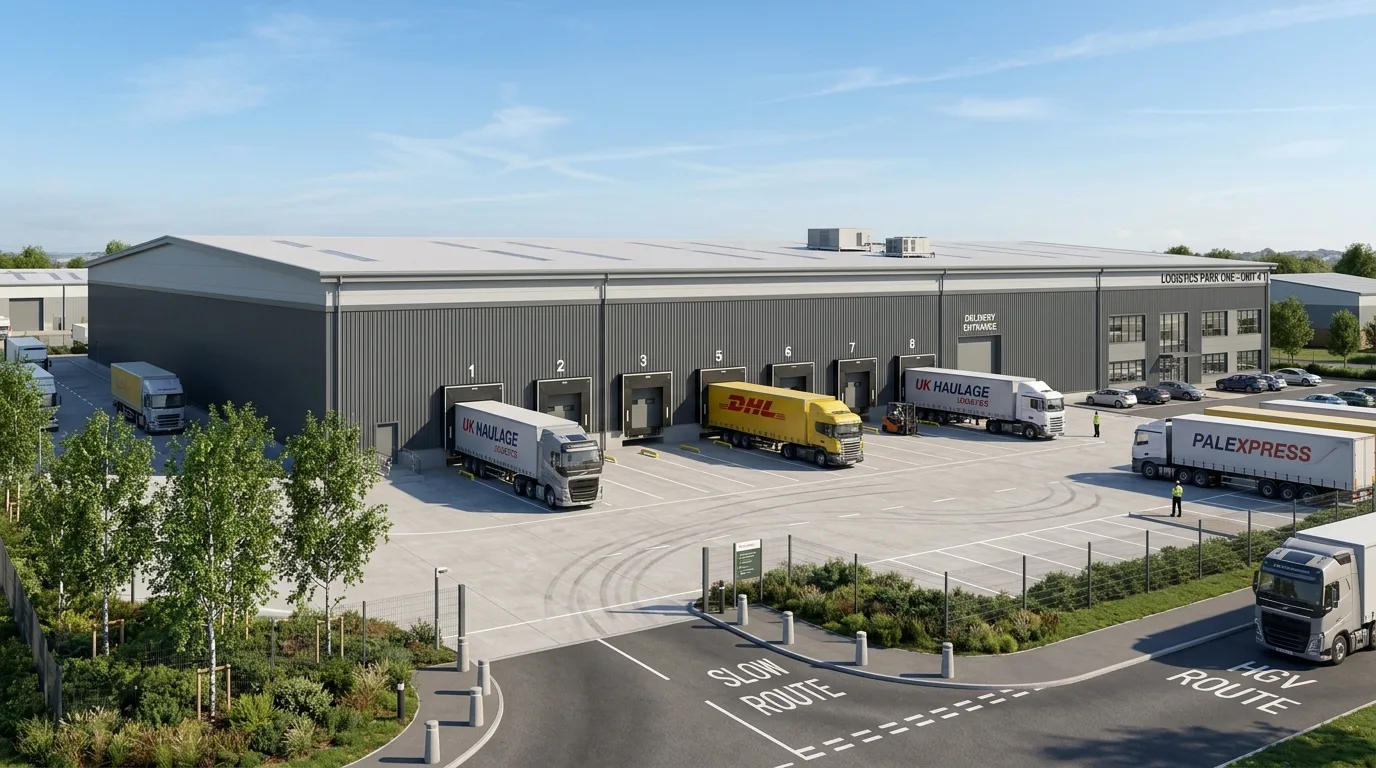
Warehouse Exterior CGI, Daylight
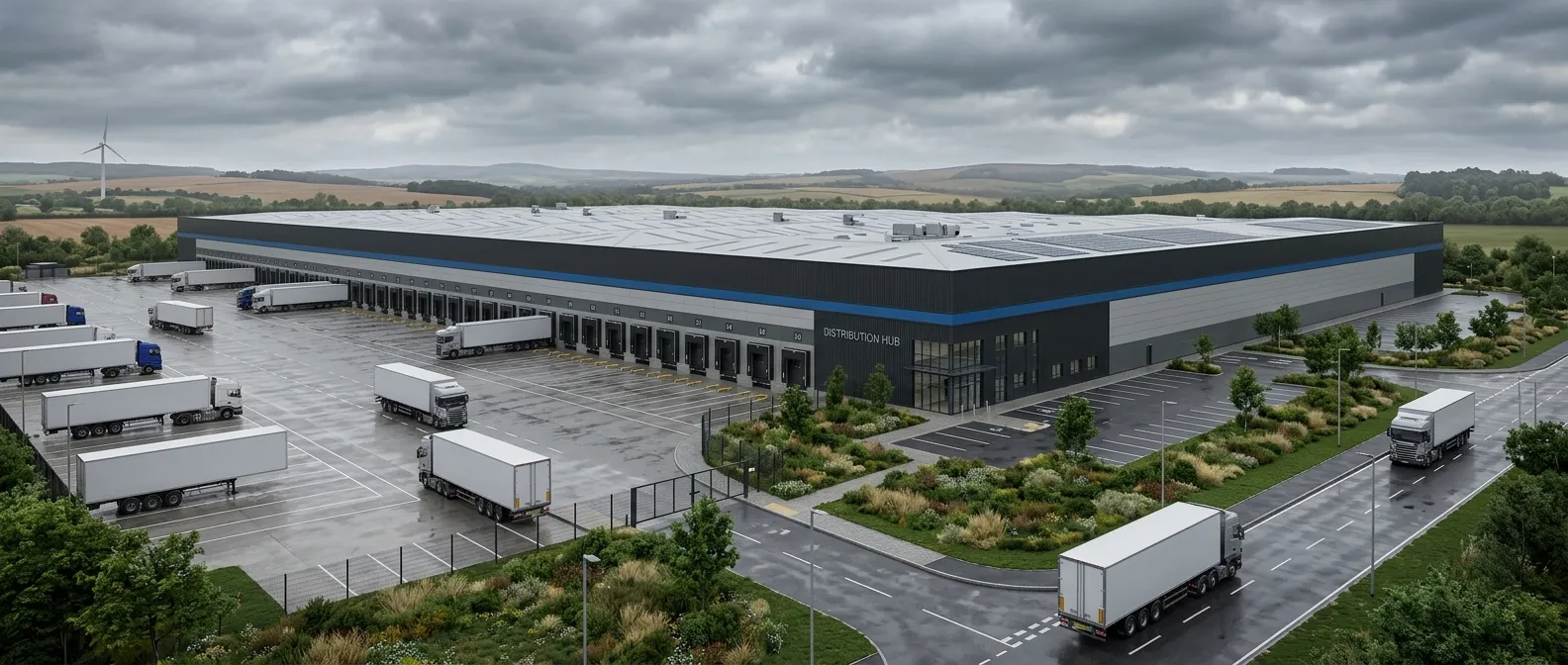
Daylight exterior render showing a logistics warehouse with operational yard, HGV loading bays, and landscaped perimeter.
What This Covers
- Loading bay perspectives
- Yard circulation views
- Entrance hero shots
- Cladding and signage detail
Who Commissions This
- Logistics developers marketing new units
- Letting agents preparing occupier brochures
- Planning consultants submitting warehouse applications
Common Questions About Warehouse Exterior CGI
How many camera angles does a warehouse exterior CGI brief typically include?
Most warehouse exterior briefs include two to four views: a front elevation hero shot, a yard-level loading bay perspective, an entrance approach view, and an aerial context view. StratumCGI quotes per view, with exterior pairs starting from £1,800 (2026 pricing).
What drawings does StratumCGI need to start a warehouse CGI project?
The minimum input is a site layout plan (DWG or PDF) and at least one elevation drawing showing cladding, door positions, and ridge height. If the warehouse is speculative with no detailed design, StratumCGI can work from a planning layout and typical unit specifications.
Can StratumCGI show the warehouse yard with HGVs and operational activity?
Yes. StratumCGI populates yards with articulated trailers, rigid trucks, delivery vans, forklifts, and pedestrian activity based on the operational brief. Vehicle types, livery colours, and trailer counts are adjusted to match the target occupier profile.
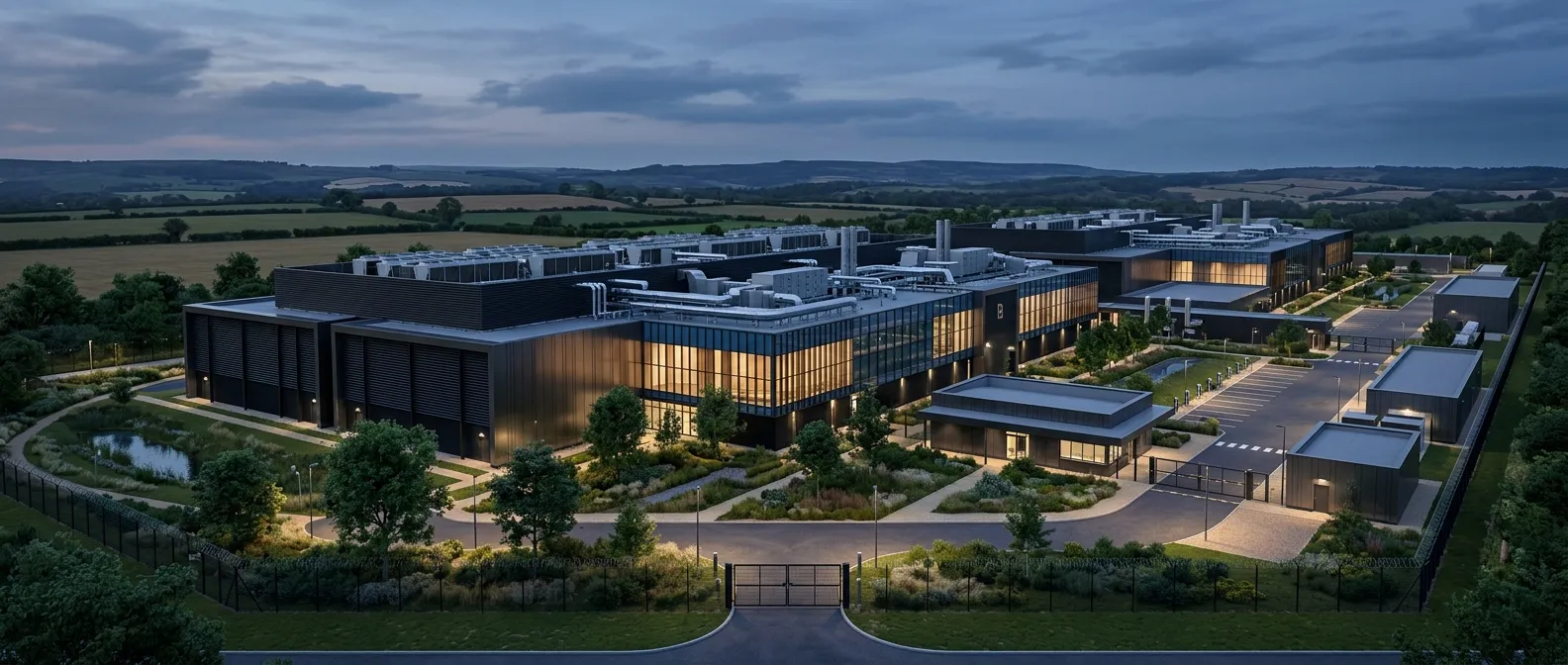
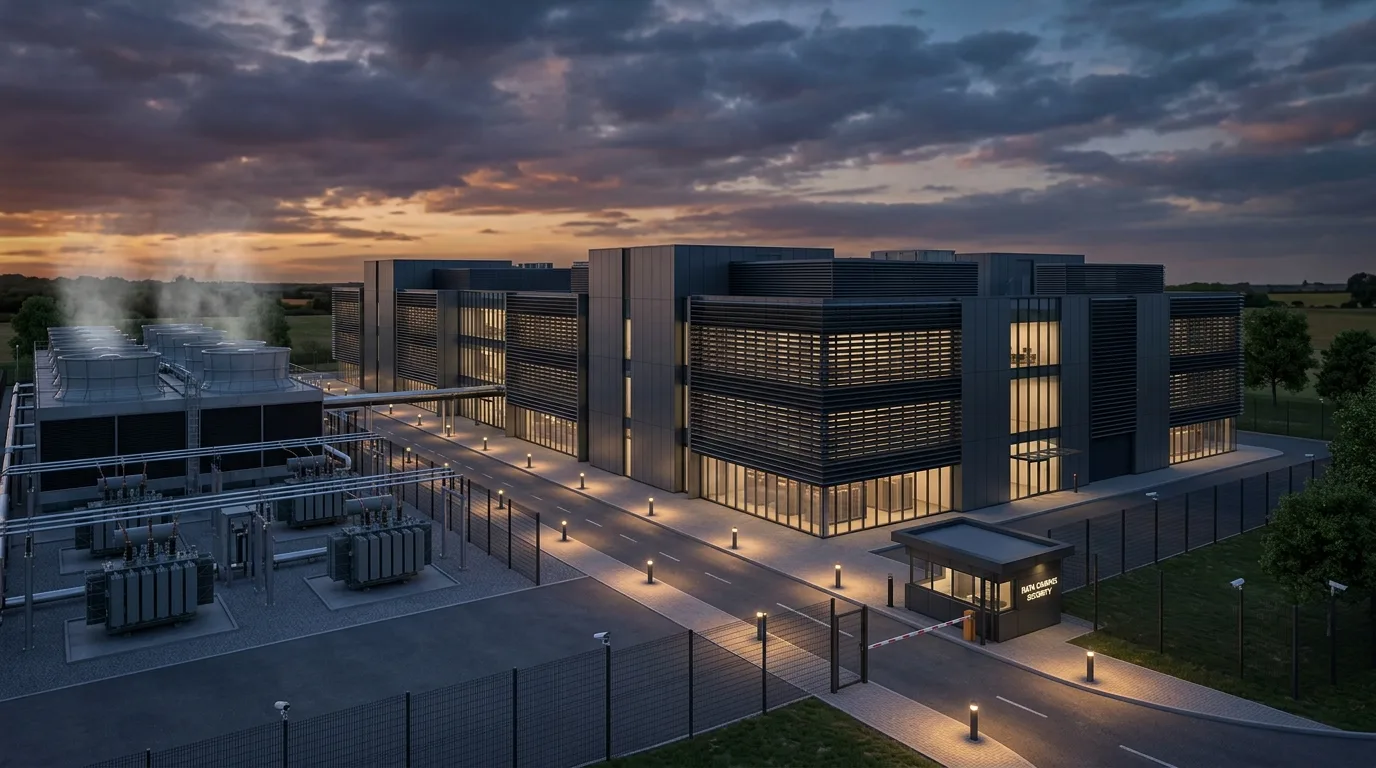
Data Centre Campus CGI, Dusk
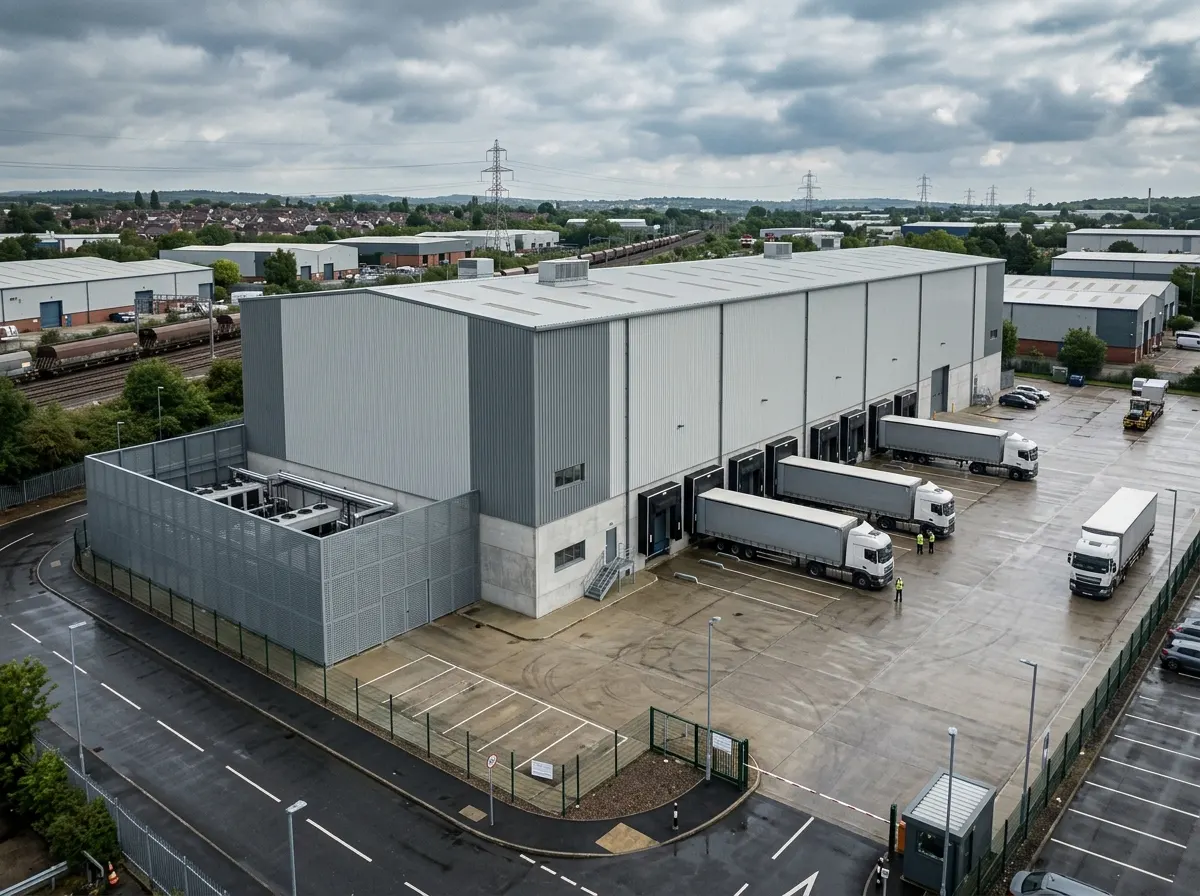
Dusk exterior render of an AI data centre campus showing security perimeter, mechanical plant, and warm interior glow.
What This Covers
- Campus-wide exteriors
- Security zone context
- Plant and infrastructure detail
- Board-level presentation imagery
Who Commissions This
- Data centre developers presenting to investors
- Operators commissioning marketing collateral
- Planning teams preparing campus applications
Common Questions About Data Centre Campus CGI
What mechanical plant and cooling infrastructure does StratumCGI include in a data centre campus CGI?
StratumCGI models cooling towers, chilled water plant, generator sets, and AHU arrays from engineering drawings or vendor datasheets. Plant placement follows the electrical and mechanical design to show a technically credible campus rather than a generic shed.
How does StratumCGI handle confidentiality when producing AI data centre CGI?
StratumCGI signs project-specific NDAs before receiving any drawings. Completed data centre images are not shown in the public portfolio unless the commissioning party gives written consent. References are provided on request under NDA.
Can a data centre campus CGI show multiple phases of development on the same site?
Yes. StratumCGI builds a single base model and renders each phase separately so the same camera angles can be used across Phase 1, Phase 2, and full-build views. This is standard practice for hyperscale campus planning submissions.
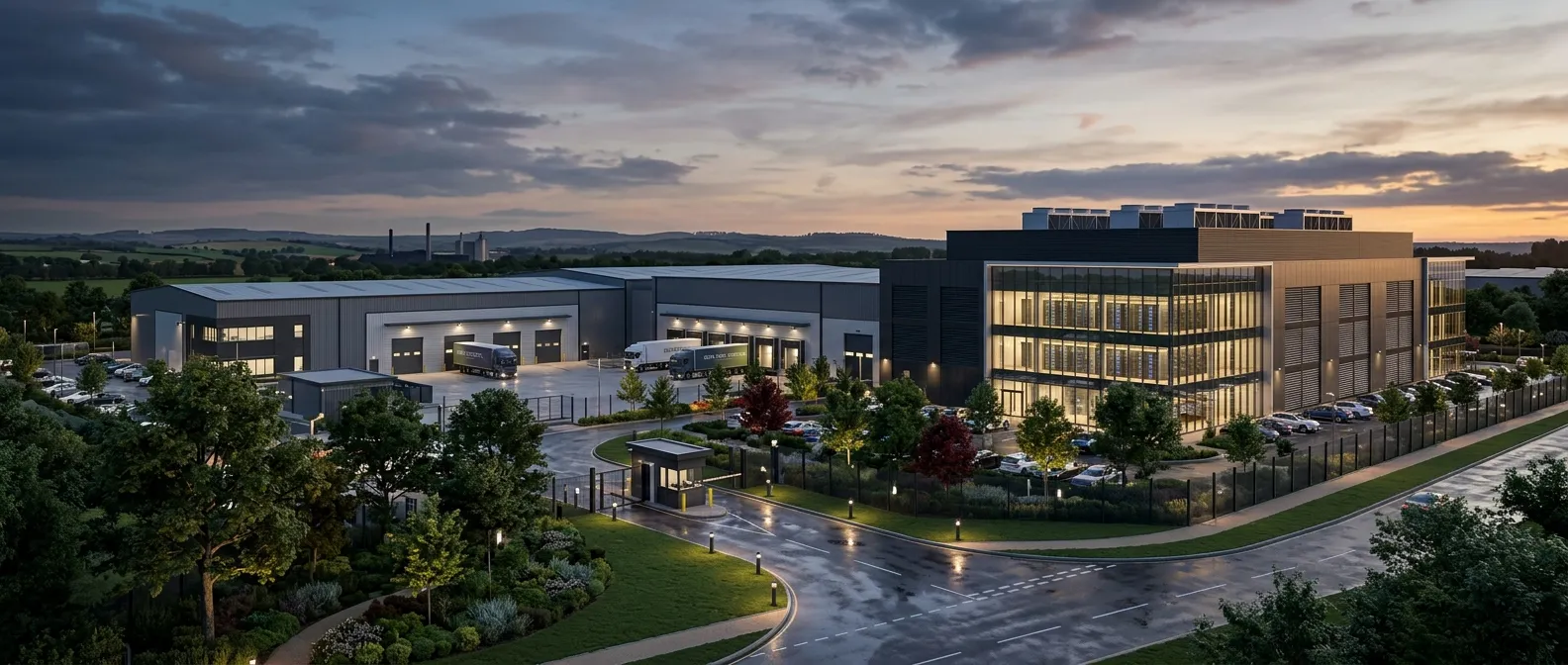
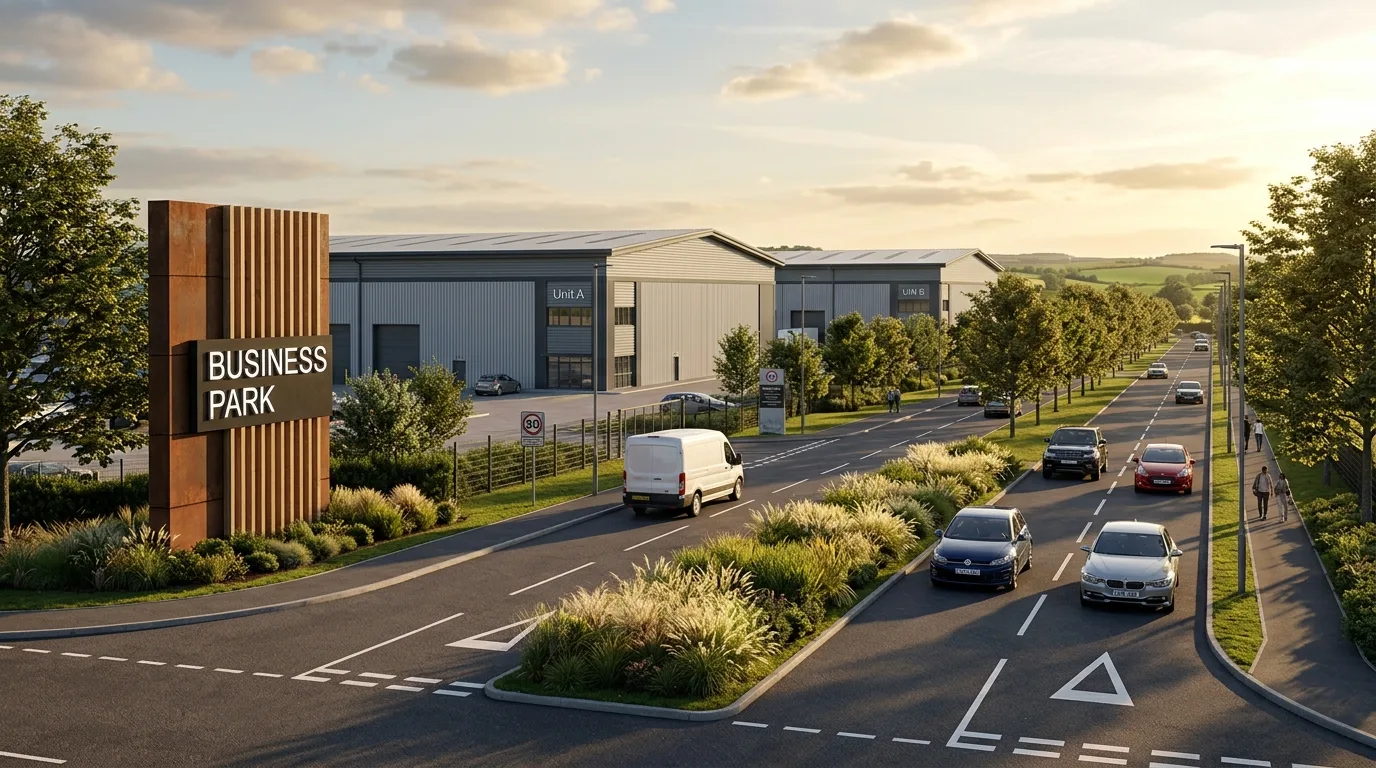
Industrial Park Entrance CGI, Golden Hour
Eye-level marketing hero shot of an industrial park entrance with tenant signage, landscaping, and arriving vehicles.
What This Covers
- Entrance arrival sequence
- Tenant signage and wayfinding
- Landscaping and public realm detail
- Marketing hero imagery for leasing
Who Commissions This
- Estate managers marketing available units
- Developers launching new industrial parks
- Letting agents preparing marketing suites
Common Questions About Industrial Park Entrance CGI
Can StratumCGI produce an industrial park entrance CGI with speculative rather than named tenant signage?
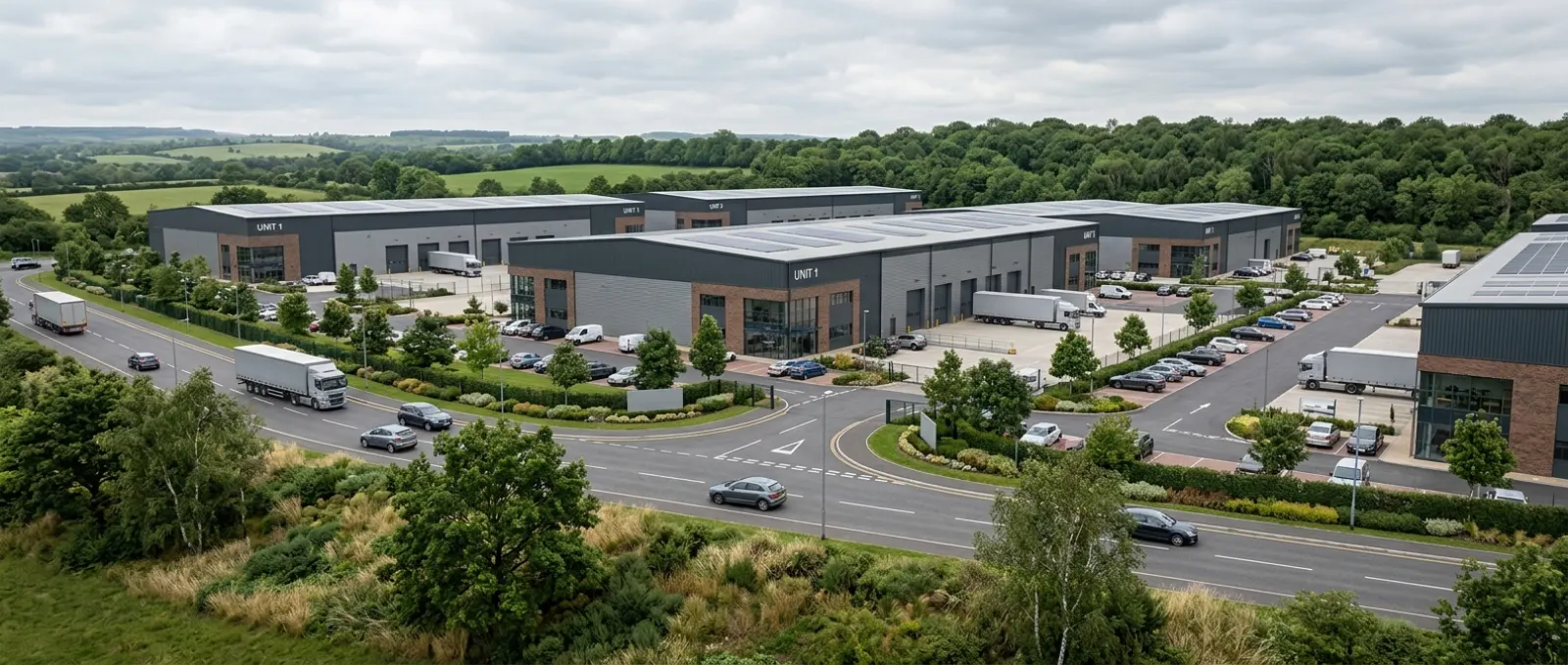
Yes. Where a park is pre-let, StratumCGI places agreed tenant logos and unit numbers. For speculative schemes, generic branding such as "Unit 1 Available" or developer house-style panels keeps the image planning-neutral and commercially flexible.
What landscaping detail can StratumCGI include in an industrial park entrance architectural visualisation?
StratumCGI follows the submitted landscape plan to place bunded edges, feature trees, entrance planting beds, and estate gates. Where a landscape scheme is not yet designed, planting is agreed with the client to reflect the planning authority's green infrastructure requirements.
What camera angle works best for an industrial park entrance CGI used in a planning application?
Planning submissions typically use a pedestrian eye-level view from the public highway showing the full entrance composition. Marketing hero shots often use a slightly elevated angle to show depth into the estate. StratumCGI recommends one of each where budget allows.
BESS Facility CGI, Exterior
Exterior render of a battery energy storage system facility showing container-mounted battery units, transformer yard, grid connection infrastructure, and security perimeter.
What This Covers
- Container-mounted battery unit arrays
- Transformer yards and grid connection points
- Security perimeter and access control
- Site landscaping and visual screening
Who Commissions This
- Energy developers presenting BESS proposals to planning authorities
- Grid operators commissioning visual impact assessments
- Renewable energy companies preparing investor presentations
Common Questions About BESS Facility CGI
How accurately does StratumCGI model battery containers in a BESS facility CGI?
StratumCGI models containers either to generic IEC-standard proportions or to specific OEM dimensions where a supplier has been selected. Transformer bays and cable routes are taken from the electrical layout. Accurate container sizing is important because planning officers increasingly scrutinise BESS massing.
Can a BESS facility CGI be produced for use in a landscape and visual impact assessment?
Yes. StratumCGI can produce verified views from agreed assessment viewpoints with the BESS facility inserted into baseline photography. These images support LVIA submissions and are prepared to the methodology set out in SNH/NatureScot or equivalent guidance.
What grid connection detail does StratumCGI include in a battery storage facility architectural visualisation?
Overhead line gantries, cable route entry points, DNO compound fencing, and transformer plinths are modelled from the electrical infrastructure layout. Including these elements confirms the technical credibility of the CGI for planning and investor audiences.
Life Science Facility CGI, Exterior
Exterior render of a life science and cleanroom facility showing laboratory-grade cladding, dedicated air handling plant, and secure goods-in area.
What This Covers
- Laboratory-grade cladding and fenestration
- Dedicated HVAC and air handling plant
- Secure goods-in and loading areas
- Cleanroom and controlled environment external indicators
Who Commissions This
- Life science developers presenting facility proposals
- Biotech companies commissioning purpose-built labs
- Science park operators marketing speculative lab units
Common Questions About Life Science Facility CGI
What does a life science facility CGI actually show?
A clean exterior render of a modern lab or research building with controlled-environment features visible: sealed glazing, roof plant, secure goods entrance, and staff entry. StratumCGI produces these for speculative science parks and purpose-built occupier facilities.
How is a life science facility CGI different from a standard warehouse CGI?
A science facility has distinct visual cues: specialist cladding, dedicated plant enclosures, controlled-entry areas, and higher-quality public realm. StratumCGI adjusts the level of detail on these elements so the building reads as a lab, not a shed.
When should a life science facility CGI be commissioned?
Early enough to support pre-application discussions with the local authority and marketing to biotech occupiers. StratumCGI often produces the first render at RIBA Stage 2 or 3 once the massing and facade strategy are agreed.
Cold Storage Facility CGI, Overcast
Exterior render of a temperature-controlled logistics facility showing refrigeration plant, insulated cladding, and dock levellers.
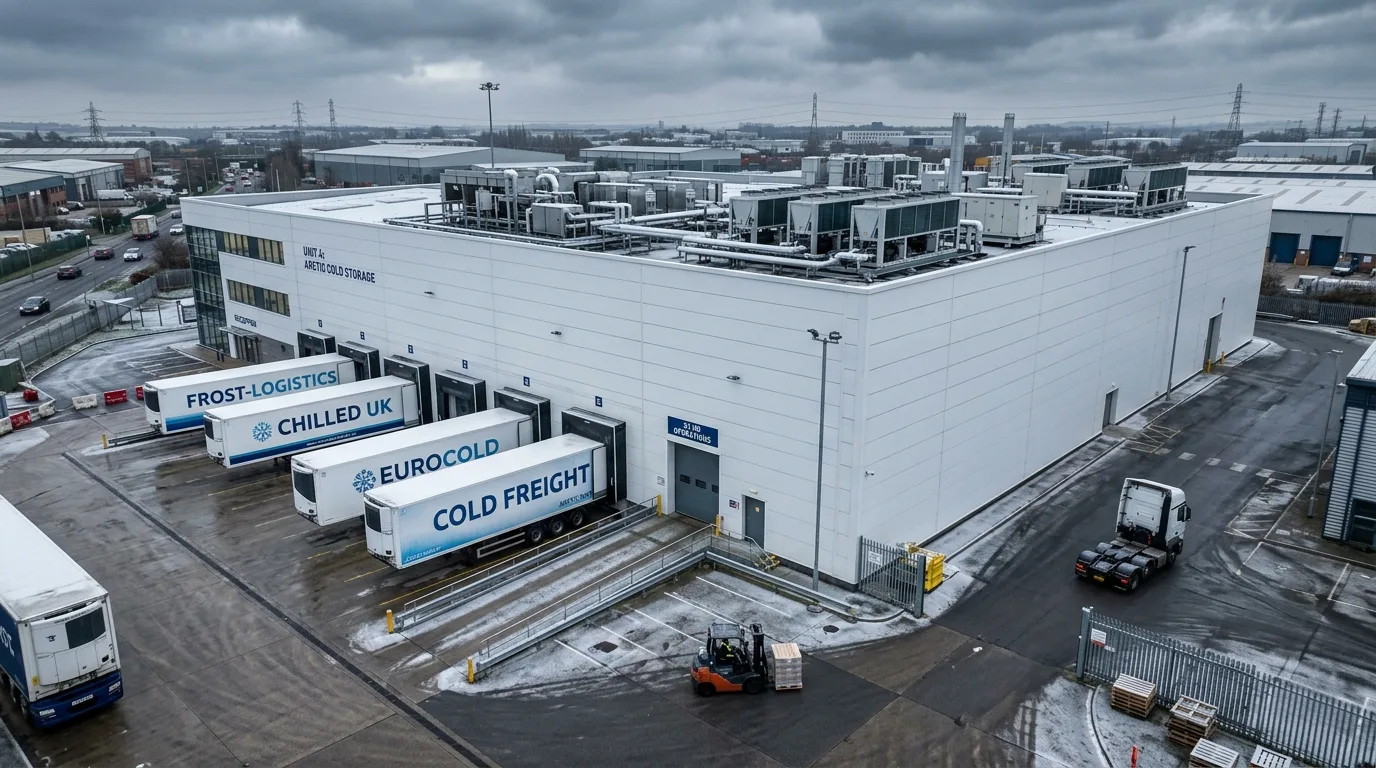
What This Covers
- Specialist cladding and insulation systems
- Refrigeration plant and condensers
- Dock leveller and loading configurations
- Temperature-controlled yard operations
Who Commissions This
- Cold chain operators commissioning purpose-built facilities
- Developers marketing speculative cold storage units
- Food logistics companies presenting to investors
Common Questions About Cold Storage Facility CGI
How does StratumCGI represent refrigeration plant in a cold storage facility CGI?
Rooftop condensers, compressor houses, and ammonia plant enclosures are modelled from the mechanical engineering layout. Including plant detail is essential for cold store CGI because refrigeration infrastructure forms a significant part of the visual footprint and planning assessment.
Can StratumCGI accurately show the insulated cladding and dock levellers on a cold chain warehouse CGI?
Yes. The thick composite insulated panels used in temperature-controlled logistics buildings are modelled to the specified profile and joint pattern. Pit levellers, insulated dock seals, and overhead dock shutter positions are taken directly from the elevation drawings.
What operational yard detail can StratumCGI include in a cold storage facility architectural visualisation?
StratumCGI populates the yard with refrigerated trailers, reefer plug-point bollards, yard lighting columns, and separation markings between HGV and pedestrian zones. Trailer livery can be adjusted to match a specific cold chain occupier or left as generic white fleet.
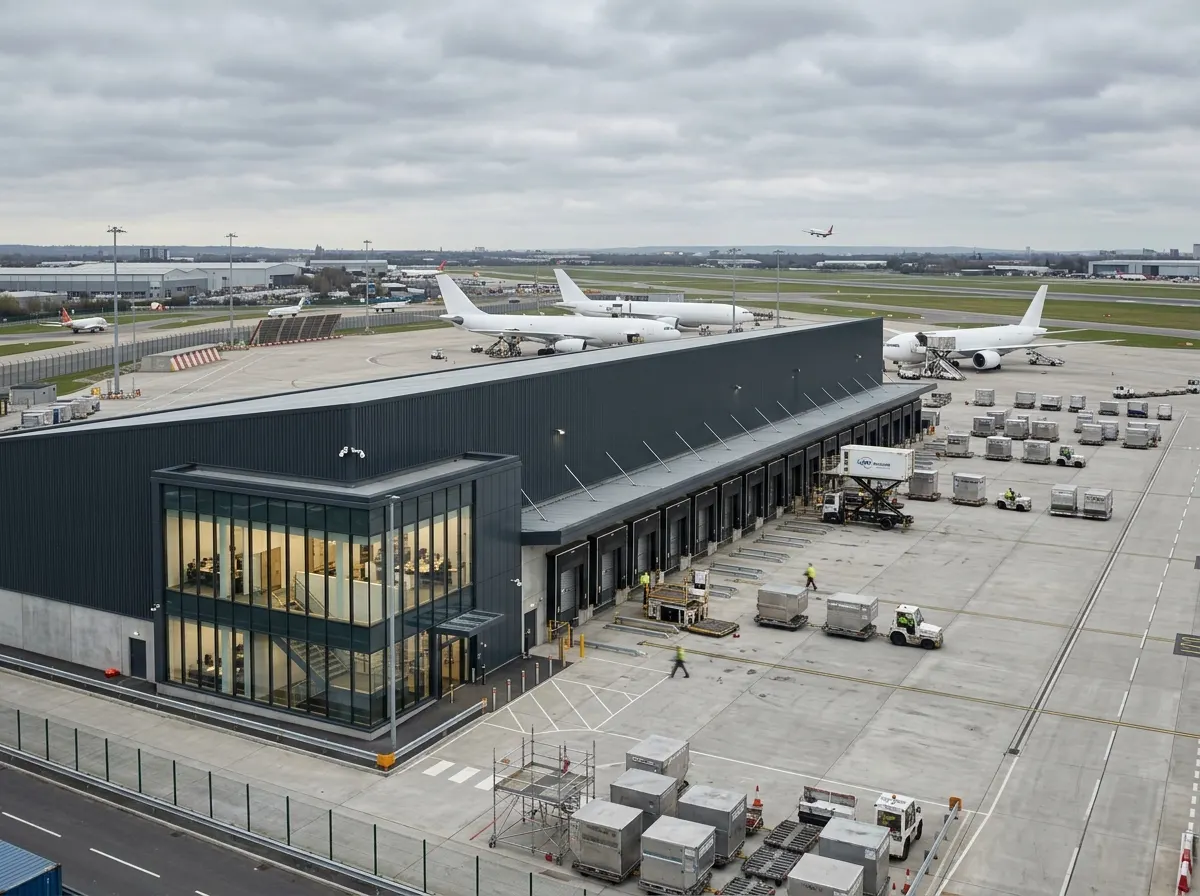
Airport Cargo Terminal CGI, Daylight
Apron-side view of a cargo terminal with aircraft stands, freight handling areas, and airside security infrastructure.
What This Covers
- Airside and landside context
- Freight handling and apron layout
- Security infrastructure and access control
- Terminal building and office integration
Who Commissions This
- Airport operators expanding cargo capacity
- Freight developers presenting terminal proposals
- Aviation consultants preparing planning submissions
Common Questions About Airport Cargo Terminal CGI
How does StratumCGI distinguish between airside and landside zones in an airport cargo terminal CGI?
Airside and landside boundaries, security lanes, and vehicle access control points are modelled from the airport master plan drawing. The visual separation of these zones is a regulatory requirement in planning submissions to airport authorities and the Civil Aviation Authority.
Can StratumCGI include aircraft stands and apron activity in a cargo terminal architectural visualisation?
Yes. StratumCGI models aircraft to correct proportions for the designated stand type, from narrowbody freighters to widebody cargo aircraft. Apron ground markings, lead-in lines, and FOD boundary treatments are included where the brief requires a credible airside scene.
What freight handling equipment can StratumCGI show in an air cargo terminal CGI?
Unit load devices, baggage dollies, high-loader vehicles, and cargo transporters are placed in the apron scene to illustrate operational density. Equipment type is selected to match the handler's actual fleet profile or agreed with the client for speculative facilities.
Last-Mile Urban Depot CGI, Multi-Storey
Exterior render of a compact multi-storey urban logistics hub on a tight inner-city site, with electric delivery vans, rooftop solar panels, and pedestrian-friendly ground floor.
What This Covers
- Multi-storey logistics configurations on constrained sites
- Electric vehicle charging and loading areas
- Rooftop solar and sustainability features
- Pedestrian interface and ground-floor activation
Who Commissions This
- Urban logistics operators developing last-mile facilities
- Local authorities assessing design quality of inner-city logistics
- Developers presenting multi-storey industrial to planning committees
Common Questions About Last-Mile Urban Depot CGI
How does StratumCGI show the multi-storey floor configuration in a last-mile urban depot CGI?
Ramped vehicle access, mezzanine sortation decks, and ground-floor unloading bays are modelled from the architect's section drawings. A cutaway or elevated camera angle is often used to show the operational stacking logic, which is a common planning requirement for urban logistics applications.
Can StratumCGI show an EV fleet and charging infrastructure in a last-mile delivery hub CGI?
Yes. Electric delivery vans, rapid-charge bays, cable management raceways, and solar canopies are modelled to the operator's specification. Including EV infrastructure in the CGI is increasingly requested by planning authorities requiring sustainable transport commitments.
What active frontage detail can StratumCGI include in an urban logistics depot architectural visualisation?
Ground-floor retail or community uses, cycle parking, pedestrian routes, and street tree planting are modelled from the active frontage strategy drawing. This content demonstrates compliance with urban design SPD requirements in boroughs requiring ground-level activation.
Car Showroom CGI, Big Shed Dealership
Exterior render of a car dealership built as a big shed portal frame with full-height glass showroom frontage, forecourt displays, and customer car park.
What This Covers
- Full-height glazed showroom frontage and portal frame structure
- Forecourt vehicle display layout and feature lighting
- Customer car park and circulation design
- Brand signage integration and entrance landscaping
Who Commissions This
- Automotive manufacturers approving franchise dealership designs
- Developers building speculative big shed retail units
- Planning consultants submitting retail park applications
Common Questions About Car Showroom CGI
What makes a car showroom CGI different from a standard commercial building visual?
The glazed frontage is the hero. Car showroom CGI relies on interior lighting pushing through floor-to-ceiling glass, with display vehicles visible from outside. Dusk and evening renders are common because they make the showroom glow against the forecourt.
Can StratumCGI produce car showroom visuals without a confirmed franchise?
Yes. Where the dealer brand is not yet agreed, the showroom is rendered in a neutral specification with generic signage. Once a franchise is confirmed, the CGI can be updated with OEM colours, totem signs, and approved branding.
What does StratumCGI need to start a car dealership CGI?
A site plan, elevations, and a sense of the intended franchise or brand tier. If the OEM is known, their brand guidelines help with signage proportions and colours. A concept layout is enough to begin, detailed interiors can follow later.
Retail Park CGI, Edge-of-Town
Big-box retail warehouse units in an L-shaped arrangement with central car park, landscaped entrance, and service yard.
What This Covers
- Big-box retail unit design and fascia treatment
- Car park layout and pedestrian circulation
- Service yard screening and delivery access
- Landscaped entrance and signage strategy
Who Commissions This
- Retail park developers marketing available units
- National retailers commissioning new store CGI
- Planning consultants submitting retail park applications
Common Questions About Retail Park CGI
What is the hardest part of producing a retail park CGI?
Making a scheme with unknown tenants still feel alive. Retail parks are often marketed before occupiers sign, so StratumCGI balances neutral fascias with realistic branding cues, enough to sell the scheme without misrepresenting future tenants.
Should a retail park CGI show the car park full or empty?
Full, but not crowded. A sparsely populated car park reads as a failing scheme, a packed one looks chaotic. StratumCGI typically places vehicles at around sixty to seventy percent occupancy, with pedestrians and trolleys in natural positions to show the scheme working on a normal trading day.
Can StratumCGI produce retail park visuals for both planning and leasing?
Yes, and the two often reuse the same 3D model. Planning visuals emphasise landscaping, massing, and context. Leasing visuals focus on fascia prominence, customer flow, and unit legibility. Running both from one model keeps branding and signage consistent across the marketing and consent process.
Trade Counter CGI, Builders Merchant
Builders merchant with covered loading canopy, external timber and materials racking, trade counter office, and operational yard with forklift.
What This Covers
- Open-sided covered loading canopy design
- External materials storage and racking layout
- Trade counter office and customer reception
- Yard circulation for HGVs and trade vans
Who Commissions This
- Builders merchant chains opening new branches
- Industrial estate developers building speculative trade units
- Planning consultants submitting trade park applications
Common Questions About Trade Counter CGI
Why does a trade counter CGI need to look different from a standard industrial unit render?
Because the covered loading canopy, external racking, and forklift zones are the whole point of the building type. A trade counter rendered as a generic shed loses its identity. StratumCGI treats the canopy and racking as the hero of the frontage, not an afterthought.
Should a trade counter CGI show it busy with customers and staff?
Yes. Trade counters live or die on throughput, so the CGI should read as operational. StratumCGI places trade vans mid-loading, a forklift moving a pallet, and a few customers at the counter entrance. An empty yard makes the building look like a warehouse with no tenant.
Can the same CGI work for planning and for attracting an operator?
Usually yes. Planners care about massing, canopy height, and yard screening. Operators like Jewson, Travis Perkins, or Selco care about racking layout, vehicle flow, and customer separation. StratumCGI frames the view so both audiences see what they need in a single image.
Drive-Through Restaurant CGI, Blue Hour
QSR drive-through pod with drive lane, outdoor seating terrace, customer car park, and blue-hour lighting on a retail pad site.
What This Covers
- Drive-through lane geometry and queuing design
- Outdoor seating and landscaping layout
- Illuminated menu board and brand signage
- Pad site configuration and car park access
Who Commissions This
- QSR operators developing new roadside locations
- Retail park developers marketing pad site opportunities
- Planning consultants submitting A3/A5 use class applications
Common Questions About Drive-Through Restaurant CGI
Why are blue-hour renders so common for drive-through restaurant CGI?
Because the brand shows up best when the fascia, menu boards, and canopy lights are glowing. Daylight renders flatten QSR buildings into generic boxes. StratumCGI almost always delivers a dusk or blue-hour version alongside the daylight view so clients can show planners and franchise managers the scheme at its strongest.
How important is drive lane accuracy in a QSR drive-through CGI?
Very. Planning officers routinely push back on stacking capacity, and a CGI that shows fewer queuing bays than the drawings will get flagged. StratumCGI models the lane geometry from the transport layout exactly, including bypass lanes and the order point canopy, so the image matches what has been submitted for consent.
Can StratumCGI work to McDonald's, KFC, Starbucks, or Costa brand standards?
Yes. Each chain publishes its own signage proportions, colour palette, and canopy style. StratumCGI works from the client's brand pack or the OEM's published guidelines, and the fit-out architect usually signs off the render before it goes to planning or marketing.
Petrol Station CGI, Forecourt
Modern petrol station with steel fuel canopy, pump islands, convenience store, jet wash bay, and roadside price totem.
What This Covers
- Canopy structure and pump island layout
- Convenience store frontage and signage
- Jet wash and ancillary facilities
- Price totem and roadside visibility
Who Commissions This
- Fuel retailers developing new forecourt sites
- Oil companies refreshing existing station designs
- Planning consultants submitting forecourt redevelopment applications
Common Questions About Petrol Station CGI
What makes or breaks a petrol station CGI?
The canopy. If the steel canopy proportions, soffit lighting, and pump island spacing are wrong, fuel retailers spot it immediately. StratumCGI models canopies from the operator's standard structural drawings, because this is the element that decides whether the image reads as a real forecourt or a stock illustration.
How does StratumCGI handle EV charging in a modern forecourt CGI?
EV provision is now expected on almost every new forecourt render. StratumCGI adds rapid charger bays, canopy extensions over EV spaces, and dedicated lane markings from the electrical layout. Fuel retailers increasingly use these visuals to show planners how the site is future-proofed beyond petrol and diesel.
Can StratumCGI produce forecourt visuals for BP, Shell, Esso, or independent operators?
Yes. Each brand has its own canopy livery, totem design, and price display standard. StratumCGI works from the operator's brand manual where available, or neutral forecourt styling for speculative schemes. Totem height is often a planning flashpoint, so accurate proportions matter.
Roadside Hotel CGI, Dusk
Budget roadside hotel on a retail park with porte-cochere entrance, regular bedroom window grid, car park, and neighbouring commercial units.
What This Covers
- Hotel massing and bedroom window rhythm
- Porte-cochere entrance and drop-off design
- Car park layout and external lighting
- Brand signage and totem visibility from road
Who Commissions This
- Hotel operators developing new roadside locations
- Retail park developers marketing hotel pad sites
- Planning consultants submitting C1 use class applications
Common Questions About Roadside Hotel CGI
What is the most important camera angle for a roadside hotel CGI?
The porte-cochere. The covered drop-off is where guests form their first impression, and it is where the operator brand is most concentrated, the canopy, the sign cabinet, the flag poles, the entrance doors. StratumCGI almost always leads the set with a hero shot looking across the entrance approach rather than a flat side elevation.
How does StratumCGI keep Premier Inn, Travelodge, or Holiday Inn branding accurate?
Budget hotel operators work to tight design codes. Window modules, spandrel colours, entrance canopy proportions, and flag pole positions are all specified in their brand manual. StratumCGI builds from those standards so the render passes operator sign-off first time, rather than coming back for colour and proportion corrections.
Should a roadside hotel CGI include the neighbouring retail park or just the building?
Usually both. Roadside hotels are rarely standalone, they sit beside drive-throughs, petrol stations, and retail units, and planners expect to see that relationship. StratumCGI renders the adjacent commercial context so the hotel reads as part of a working roadside scheme, not an isolated block floating on a blank site.
Gym and Leisure CGI, Morning
Large format gym in a big shed unit with full-height branded glass frontage, outdoor training area, bicycle racks, and retail park car park.
What This Covers
- Full-height glass frontage and interior visibility
- Outdoor functional training area design
- Brand signage and facade treatment
- Car park and bicycle parking layout
Who Commissions This
- Gym operators expanding into new locations
- Retail park developers marketing leisure units
- Planning consultants submitting D2 use class applications
Common Questions About Gym and Leisure CGI
What separates a convincing gym CGI from a generic big-box shed render?
Life behind the glass. A gym with a dark interior looks like a warehouse. StratumCGI lights the inside, places treadmills, rigs, and moving figures visible through the frontage, and pushes the brand colour onto structural columns and fascia. The building has to feel used, not just built.
Should a gym CGI be shot in daylight or at dusk?
Dusk, most of the time. The branded fascia glows, the interior lighting pushes through the glass, and the building becomes a beacon on an otherwise quiet retail park. StratumCGI still delivers a daylight version for planning, because case officers often want to see massing and materials under neutral light, but the marketing hero is almost always the evening shot.
How does StratumCGI handle outdoor training zones and active-travel features?
They are no longer a nice-to-have. Planners expect outdoor HIIT areas, sheltered bike racks, and pedestrian routes from the car park because they tick well-being and active-travel boxes. StratumCGI models these directly from the site plan and populates them with runners, cyclists, and small groups using the equipment, which makes the whole scheme feel inhabited rather than staged.
Waste and Recycling Facility CGI, Exterior
Exterior render of a materials recovery facility showing the tipping hall entrance, sorting building, baled output storage, and vehicle circulation yard.
What This Covers
- Tipping hall and reception building
- Sorting and processing building envelope
- Baled output storage and dispatch areas
- Vehicle circulation and weighbridge infrastructure
Who Commissions This
- Waste operators presenting MRF proposals to planning authorities
- Local authorities commissioning new recycling infrastructure
- Environmental consultants preparing EIA visual assessments
Common Questions About Waste and Recycling Facility CGI
Why do waste and recycling schemes need CGI at all?
Because almost every waste application faces local objection, and words alone rarely overcome it. A clear render showing the building, the screening, and the traffic flow gives planners, councillors, and residents something concrete to react to. StratumCGI is often commissioned specifically to defuse the "what will it actually look like" question before it reaches committee.
Can a CGI make a waste facility look acceptable to neighbours?
Honesty works better than gloss. StratumCGI renders the scheme as it will actually be built, including bunding, tree belts, enclosed tipping halls, and realistic vehicle activity. A render that over-prettifies the site gets picked apart at consultation, while a grounded, accurate visual tends to build trust with objectors rather than inflame them.
What does StratumCGI need to start a waste facility visualisation?
A site plan, elevations, the landscape and screening strategy, and the transport layout showing HGV routes. That is usually enough to produce a planning-grade CGI. Operational details like sorting equipment or bale storage can be added later if the application needs to show process flow alongside external views.
EV Charging Hub CGI, Forecourt
Exterior render of an electric vehicle charging forecourt with canopy structure, solar panel roof, multiple charging bays, and landscaped waiting area.
What This Covers
- Canopy structure and solar panel integration
- Charging bay layout and vehicle circulation
- Landscaped waiting areas and amenity buildings
- Grid connection and substation infrastructure
Who Commissions This
- Charging network operators developing new hub sites
- Fuel retailers converting forecourts to EV charging
- Local authorities planning public charging infrastructure
Common Questions About EV Charging Hub CGI
What is the defining element of an EV charging hub CGI?
The canopy. A hub without a sheltering roof looks like a supermarket car park with a few chargers bolted in. StratumCGI builds the canopy as the main architectural gesture, usually with integrated solar panels, because that is what distinguishes a purpose-built charging destination from a retrofit and what operators like Gridserve, InstaVolt, and Osprey want to see in marketing material.
How many charger bays should show in the render?
Exactly the number the planning application has consented. Bay count is usually a conditioned parameter, so StratumCGI models bay markings, cable posts, and canopy columns to match the electrical layout. A render that shows twelve bays when the application says eight causes problems later, so accuracy here is not optional.
Do charging hubs need amenity buildings in the CGI?
Increasingly yes. A twenty-minute charge is twenty minutes to kill, and planners now expect to see cafes, toilets, and sheltered dwell areas as part of the scheme. StratumCGI renders these alongside the chargers so the hub reads as a destination, not just infrastructure, which matches how operators are actually positioning new sites.
Film and Television Studio CGI, Site Plan
Sound stage complex with production offices, backlot, base camp, and site zone overlay showing facility layout.
What This Covers
- Sound stage building design and eave heights
- Production office and support facility layout
- Backlot and base camp configuration
- Security perimeter and site access
Who Commissions This
- Studio developers presenting campus proposals to planning authorities
- Film industry investors assessing facility capacity
- Local authorities evaluating studio development applications
Common Questions About Film and Television Studio CGI
Why is a film studio CGI usually shot from above?
Because sound stages are big windowless boxes, and a ground-level view makes them look like ordinary warehouses. An aerial or elevated render shows the full campus, stages, production village, base camp, backlot, which is what investors and studio operators actually need to see. StratumCGI leads most studio sets with an elevated hero shot for this reason.
How does StratumCGI handle stage dimensions and grid heights?
Taken directly from the structural drawings. Stage internal volume, grid height, and door proportions are what production companies care about when they are deciding whether a facility can take their shoot, so the CGI has to match the stage spec exactly. An aspirational stage with the wrong grid height loses credibility the moment a location scout compares it to the technical pack.
Who commissions film and television studio CGI?
Usually developers, investors, and enterprise zone promoters, rather than the production companies themselves. The CGI is used to pre-let stage capacity, support planning submissions, and pitch to local authorities backing the creative economy. StratumCGI builds the image to serve all three audiences from one model.
Solar Farm CGI, Aerial Site Plan
Ground-mounted photovoltaic array with site plan overlay showing panel blocks, inverter compound, access tracks, and buffer planting zones.
What This Covers
- Panel array layout and mounting frame configuration
- Inverter and transformer compound positioning
- Access track and maintenance route design
- Buffer planting and biodiversity net gain zones
Who Commissions This
- Renewable energy developers preparing planning submissions
- Solar farm operators presenting site layouts to grid connection partners
- Environmental consultants commissioning LVIA visual assessments
Common Questions About Solar Farm CGI
What is the hardest part of a solar farm CGI?
Making it honest. Solar farms are big, low, and highly visible from public rights of way, and LPAs know it. StratumCGI builds the array to the exact panel density and row spacing of the electrical layout, then tests it from agreed LVIA viewpoints, because an over-flattered render gets picked apart at examination and damages the case.
Does StratumCGI produce verified views for solar farm LVIA submissions?
Yes. Photomontages are built from survey-aligned camera data at agreed viewpoints and prepared in line with the methodology LPAs and inspectors expect. The same model also generates marketing and stakeholder images, so the verified view work feeds directly into community consultation material without having to rebuild anything.
Can StratumCGI show biodiversity and grazing alongside the panels?
Yes, and it usually should. Hedgerow planting, wildflower margins, and sheep grazing between panel rows are what turns a solar farm from infrastructure into a managed landscape in the eyes of a parish council. StratumCGI models these from the ecology and landscape mitigation plan so the CGI backs up the BNG case rather than ignoring it.
Cross-Dock Facility CGI, Through-Flow Layout
Long narrow logistics building with inbound and outbound dock doors on opposite sides, showing the through-flow transfer operation.
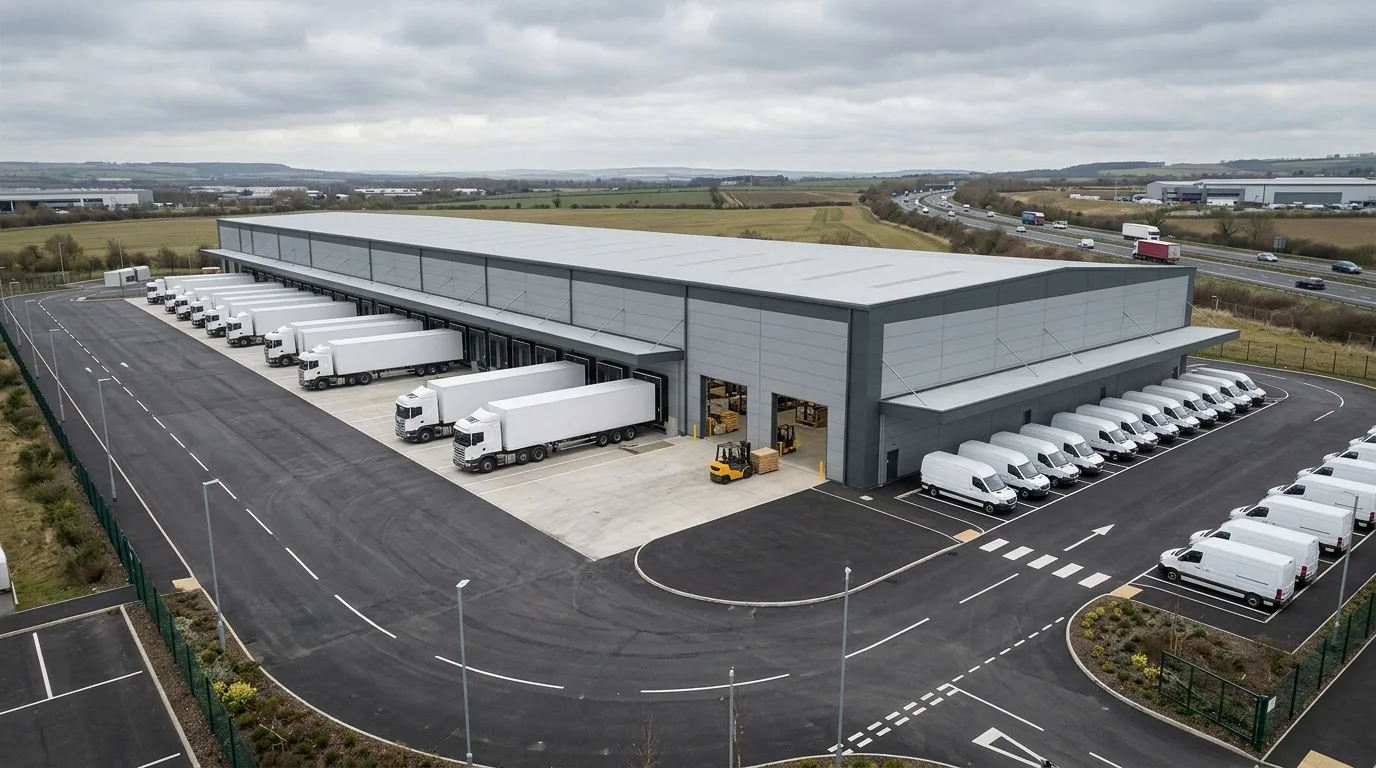
What This Covers
- Inbound and outbound dock door configuration
- Through-flow building layout for rapid goods transfer
- HGV and van circulation yard design
- Canopy and weather protection at dock faces
Who Commissions This
- Logistics operators developing cross-dock transfer hubs
- Parcel and freight companies commissioning sortation facilities
- Supply chain consultants presenting operational layouts
Common Questions About Cross-Dock Facility CGI
What makes a cross-dock CGI different from a standard warehouse render?
The building is long, shallow, and has dock doors on both sides, not one. A standard warehouse render from a corner angle completely hides what the building actually does. StratumCGI usually uses an elevated or aerial view so the inbound yard, the outbound yard, and the through-flow between them are all visible in a single image.
How does StratumCGI show the yard operation realistically?
Cross-dock yards are busy. Tractor units parked, trailers staged in rows, HGVs turning, forklifts moving freight between doors. StratumCGI populates both yards with coordinated activity based on the transport layout, because an empty cross-dock yard sends the wrong signal to occupiers looking at the scheme.
Who commissions cross-dock facility CGI?
Mostly developers and logistics REITs building speculative units aimed at parcel carriers, retailers, and third-party logistics operators. The render is used for pre-let marketing and planning, often in parallel. StratumCGI frames the image to show the operational logic clearly enough that an occupier can see how their fleet would actually run the building.
Water Treatment Works CGI, Process Layout
Water treatment facility showing circular settlement tanks, aeration basins, process building, and pipework connections in a rural setting.
What This Covers
- Circular settlement tank and scraper arm configuration
- Aeration basin and process stage layout
- Above-ground pipework and connection routes
- Embankment bund containment and screening
Who Commissions This
- Water utility companies presenting treatment works upgrades
- Infrastructure consultants preparing DCO or planning submissions
- Environmental agencies commissioning visual impact assessments
Common Questions About Water Treatment Works CGI
Why commission CGI for a water treatment works?
Because these schemes are hard for non-technical audiences to picture. Engineering drawings mean nothing to councillors or residents, and a treatment works sits somewhere on the spectrum between factory and infrastructure. A CGI gives everyone, planners, communities, stakeholders, a single reference image of what will actually be built, which is usually the difference between a smooth consultation and a contested one.
Who actually uses water treatment CGI?
Water companies, consulting engineers, and planning teams, but the audience is wider. The same image ends up in planning submissions, community newsletters, press releases, public consultation boards, and examination hearings. StratumCGI treats the render as a communication asset with a long life, rather than a one-off for a single document.
What does StratumCGI need to start a water treatment works CGI?
The civil and process layout, elevations of any buildings, and the landscape strategy showing bunding and screening. That is enough to produce a planning-grade image. Where a full design is still developing, StratumCGI can work from concept layouts and refine the CGI as the scheme firms up through the design process.
Parcel Sorting Hub CGI, Operations
Large-scale parcel sorting facility with dock doors, delivery van fleet staging, HGV loading area, and conveyor infrastructure visible through open shutters.
What This Covers
- Multiple dock door configuration for van and HGV access
- Van fleet staging yard and circulation design
- Conveyor and sortation infrastructure integration
- Security gatehouse and perimeter lighting
Who Commissions This
- Parcel carriers developing new regional sorting hubs
- E-commerce operators commissioning fulfilment centres
- Logistics developers marketing speculative big shed units
Common Questions About Parcel Sorting Hub CGI
What is the visual signature of a parcel sorting hub?
A long wall of dock doors and a yard full of vans. Nothing else looks quite like it. StratumCGI builds the facade rhythm to match the exact dock door count in the layout, because parcel operators like Amazon, DPD, Evri, and Royal Mail recognise the building by its door density and yard depth, and a render that fudges the count looks wrong immediately.
Should a parcel hub CGI show operator livery?
If the occupier is confirmed, yes. Amazon blue vans, Royal Mail red, DPD yellow, it makes the building immediately legible. If the scheme is speculative, StratumCGI uses neutral fleet so the render does not misrepresent a future tenant. Livery can be swapped later once a pre-let is agreed without rebuilding the scene.
Can StratumCGI show the sorting operation inside the building?
Partially, through open shutters. A glimpse of conveyors, dock levellers, and interior lighting behind a few open doors signals that the building is a working sortation hub, not an empty shed. StratumCGI uses this sparingly, usually on two or three doors, to add operational depth without turning the exterior render into an interior one.
Electricity Substation CGI, Compound Layout
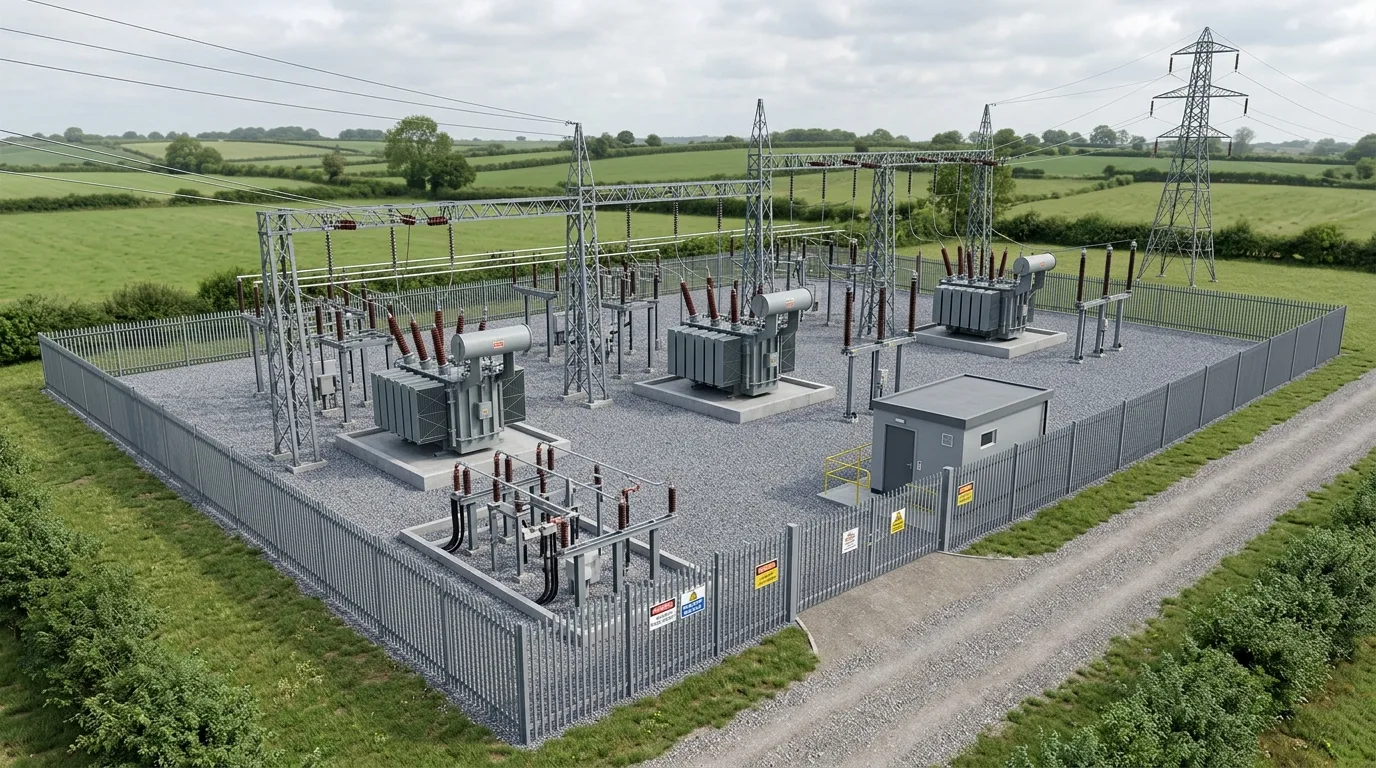
High-voltage substation compound showing transformers, gantry structures, circuit breakers, and overhead power line connections.
What This Covers
- Transformer and switchgear bay configuration
- Steel lattice gantry and busbar routing
- Security fence compound and access control
- Overhead line entry and cable sealing ends
Who Commissions This
- Distribution network operators presenting substation proposals
- Energy developers requiring grid connection visualisation
- Planning consultants preparing infrastructure planning submissions
Common Questions About Electricity Substation CGI
Why commission CGI for an electricity substation?
Because substations are one of the most objected-to forms of infrastructure, and written descriptions rarely defuse the opposition. A CGI gives planners, parish councils, and residents a shared image of the compound, the transformers, the gantries, and the screening. It moves the conversation from fear to specifics, which is usually the only way a substation application gets through consultation intact.
Can StratumCGI produce verified views for a substation planning submission?
Yes. Photomontages are built from agreed LVIA viewpoints using survey-aligned camera data, prepared to the methodology LPAs and the Planning Inspectorate expect. The same model generates marketing and stakeholder imagery, so the verified views feed directly into community consultation boards and hearing bundles without duplicating work.
How does StratumCGI handle the setting and screening around a substation?
These are almost always the determinative issues. StratumCGI models the bunding, tree belts, fence line, and access track from the landscape strategy, then tests the view from the receptors the ecology and visual assessments identify. The render is built to back up the mitigation case rather than dress around it, which matters when the CGI is being read by a hostile audience.
Dark Kitchen Hub CGI, Evening
Ghost kitchen facility with individual kitchen units, extraction flues, delivery rider collection point, and evening operational lighting.
What This Covers
- Individual kitchen unit subdivision and servicing
- Extraction and ventilation flue configuration
- Delivery rider collection point and staging area
- Evening operational lighting and signage
Who Commissions This
- Dark kitchen operators developing multi-unit facilities
- Commercial property investors assessing ghost kitchen conversions
- Planning consultants submitting change-of-use applications
Common Questions About Dark Kitchen Hub CGI
Why is a dark kitchen CGI visually different from a normal commercial unit?
Because the extraction flues are the whole story. A dark kitchen hub is defined by a row of vertical risers climbing the rear or side elevation, one per unit. StratumCGI models these from the M&E drawings rather than hiding them, because the flue arrangement is the element planners, neighbours, and environmental health officers all focus on.
Should a dark kitchen CGI show rider activity?
Yes. Dark kitchens live or die on rider logistics, and a render without riders reads as a vacant industrial unit. StratumCGI populates the collection zone with cyclists, mopeds, and covered waiting shelters, which shows the operational layout working as intended and answers the traffic and circulation questions that come up in urban planning applications.
What lighting condition works best for a dark kitchen hub CGI?
Evening, almost always. These facilities peak at night, so a dusk render with illuminated unit signs, rider lighting, and warm interior glow tells the truth about how the hub operates. Daylight is still useful for planning, but the evening shot is what communicates the scheme to investors and operators looking at the model.
Modular Housing Factory CGI, Production
Large portal frame factory showing timber frame module production line, gantry crane, completed units on flatbed transport, and materials delivery yard.
What This Covers
- Portal frame factory building design and clear span
- Production line layout and gantry crane specification
- Completed module loading and transport staging
- Materials receiving yard and storage configuration
Who Commissions This
- MMC manufacturers developing new production facilities
- Housing developers investing in offsite construction capacity
- Industrial estate owners marketing factory units to MMC operators
Common Questions About Modular Housing Factory CGI
What does a modular housing factory CGI need to prove?
That the building can actually make houses at scale. Investors, Homes England, and planning committees all use the render to gauge whether the factory has the span, the gantry crane reach, and the production floor to justify the business case. StratumCGI models the portal frame and crane from the structural drawings, because getting the scale wrong undermines the entire investment case.
Should a factory CGI show the production line in action?
Yes, unless the brief says otherwise. An empty factory reads as speculation. StratumCGI populates the floor with volumetric modules at different build stages, jigs, forklifts, and completed units loaded onto flatbed transporters. The image has to feel like a running operation, which is what pre-lets and funding committees want to see.
Who commissions modular housing factory CGI?
Usually developers, MMC manufacturers, and local authorities backing modern methods of construction. Sometimes Homes England or combined authorities funding regional housing accelerators. StratumCGI builds the render so the same image works for planning, funding applications, and operator recruitment, because the audience for MMC factories is unusually broad.
CGI Deliverables by Project Stage
StratumCGI produces 13 deliverable types ordered by the stage of the development cycle they serve. Pre-application massing studies, planning verified views, marketing hero renders, investor presentations, and interactive formats each target a different decision point in the project timeline.
Massing Study CGI, Pre-Application
Simple white block model showing proposed building volumes, scale, and relationship to surrounding context at early design stage.
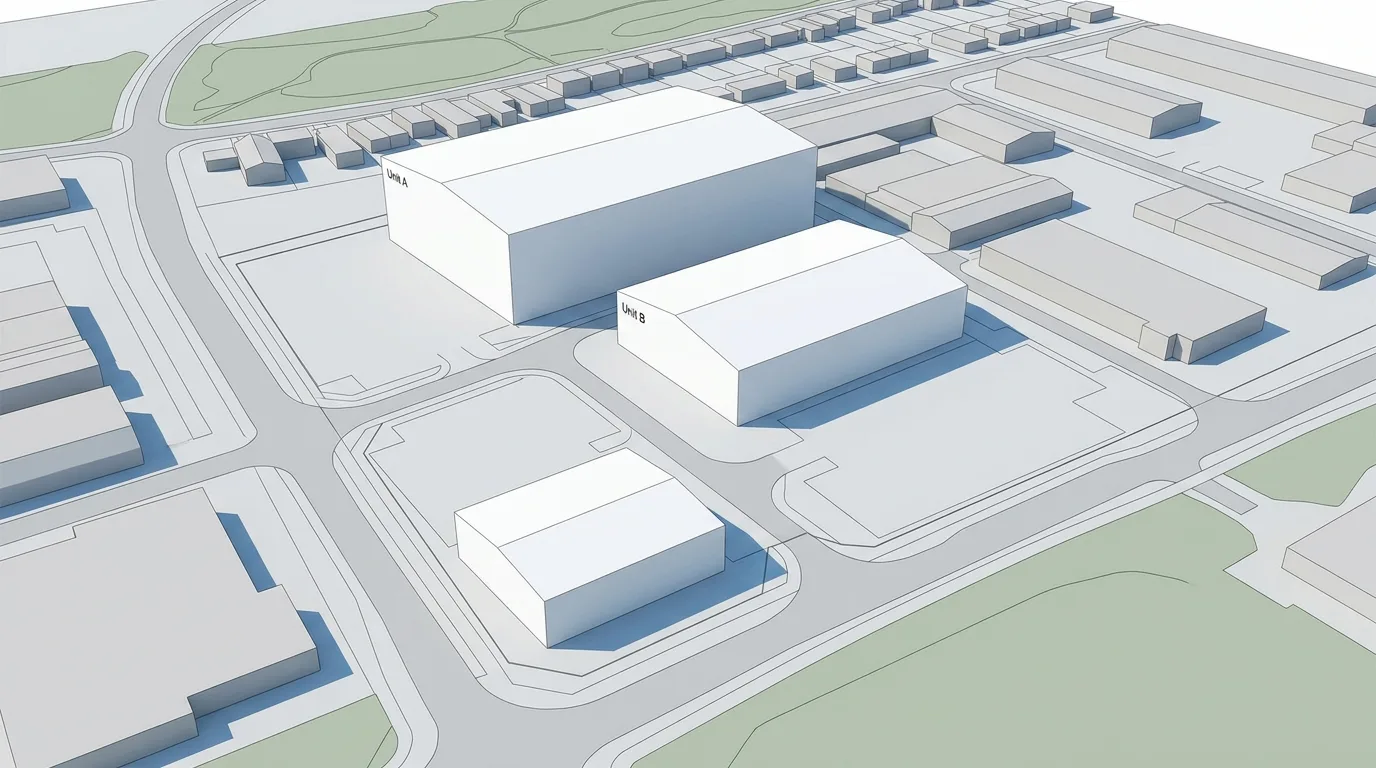
What This Covers
- Building volume and height relationships
- Site coverage and plot ratio
- Shadow and daylight impact
- Early-stage design options testing
Who Commissions This
- Architects testing massing options at pre-application stage
- Developers presenting scale and context to planning officers
- Urban designers assessing site capacity
Common Questions About Massing Study CGI
What does a massing study CGI actually show?
Pure volume, nothing else. No cladding, no windows, no materials. White blocks on a site model. The point is to test scale, footprint, and how the building sits against its neighbours without getting distracted by the elevation treatment. StratumCGI produces massing studies when the design is too early for anything more committed but a decision still needs to be made.
When in the project do you commission a massing study?
Usually during pre-application discussions with the local planning authority, or at the feasibility stage when the scheme is still being tested against floor area targets and planning constraints. A massing CGI is the cheapest way to settle an argument about height, massing, or site coverage before anyone spends money on detailed design.
How many options does StratumCGI test in one massing commission?
Typically two or three, shot from the same camera position so they can be compared directly. Fixing the camera early is important, because the value of a massing study is in the side-by-side comparison, not the individual image. Extra options or extra viewpoints can be added without rebuilding the base model.
Verified View CGI, Street-Level Photomontage
Photomontage composite inserting a proposed industrial building into an existing street-level photograph with survey alignment.
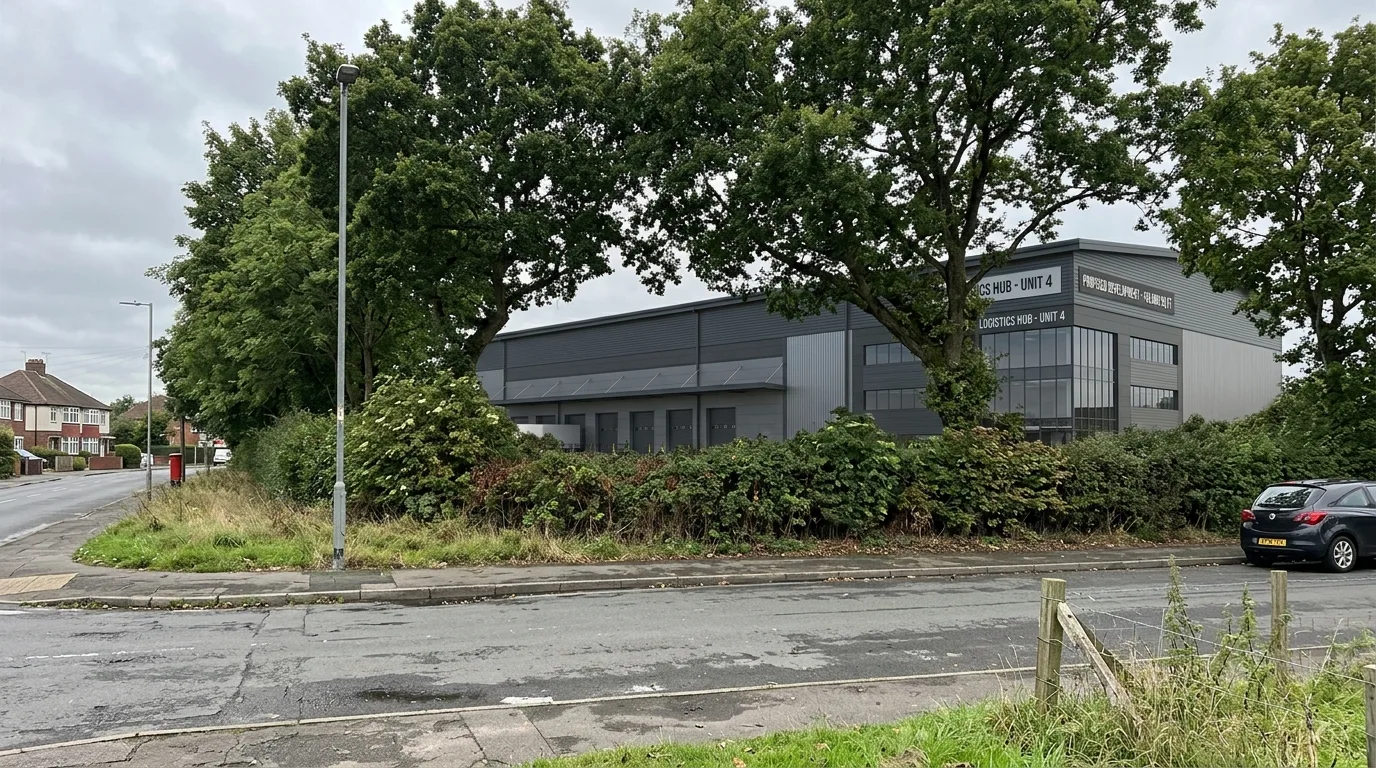
What This Covers
- Accurate insertion of proposed massing into existing photography
- Survey-aligned camera positions
- LVIA and townscape assessment support
- Planning submission image packs
Who Commissions This
- Planning consultants preparing verified view submissions
- Architects needing accurate visual impact evidence
- Developers responding to local authority requests
Common Questions About Verified View CGI
What is a verified view, and when do you need one?
A verified view is a photomontage built on top of a survey-aligned photograph of the actual site. Standard CGI shows the design, a verified view shows the design inserted into a real view at the real scale. You need one when the planning authority or an LVIA consultant requires proof that the image is geometrically accurate, not artistic.
How accurate is a StratumCGI verified view?
Camera positions are fixed using total station or GNSS survey data, focal length and sensor dimensions are recorded, and the 3D projection is calibrated against those values. The calibration sheet is delivered with the images so the LPA or inspector can scrutinise how the montage was built. It is designed to survive hostile examination, not just to look plausible.
How are viewpoints chosen for a verified view commission?
Usually agreed between the applicant's LVIA consultant and the local planning authority during pre-application. StratumCGI works from the agreed viewpoint schedule and will flag positions that are technically difficult or unlikely to demonstrate the scheme fairly. Agreeing the list before survey day keeps the verified view process from sliding.
Before/After Site CGI, Planning Evidence
Side-by-side composite showing an existing brownfield site on the left and the proposed industrial development on the right from the same viewpoint.
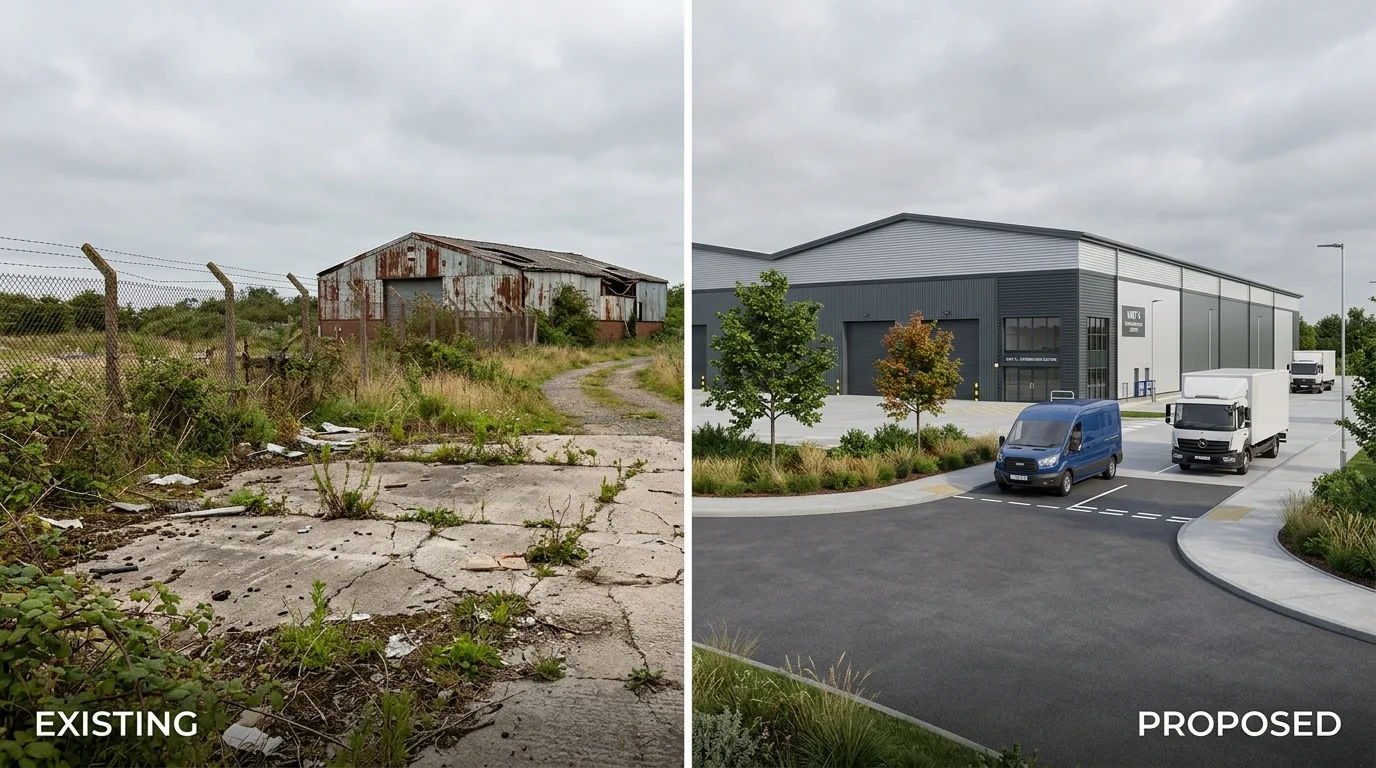
What This Covers
- Existing site conditions vs proposed development
- Visual impact assessment from matched viewpoints
- Brownfield-to-built transformation context
- Planning application evidence
Who Commissions This
- Planning consultants preparing visual impact evidence
- Developers presenting regeneration proposals
- Local authorities requesting before-and-after comparisons
Common Questions About Before/After Site CGI
What is the difference between a before/after CGI and a verified view?
Accuracy scope. A verified view is calibrated with survey data and built to satisfy formal LVIA scrutiny. A before/after CGI is a matched-perspective composite, good enough for pre-application, community consultation, and marketing, but not for formal photomontage methodology. StratumCGI produces both, and will tell you which one your submission actually needs before quoting.
What does StratumCGI need for the baseline photography?
Daylight, overcast or lightly overcast sky, and a calibrated camera at an agreed viewpoint. StratumCGI issues a photography brief for each view so the client or their photographer captures the right frame, or StratumCGI can do the site visit and take the baseline images directly. Bad baseline photography is the main reason before/after composites fail.
How should a before/after pair be presented?
Full resolution side-by-side is the most useful format for planning. For public exhibitions or presentations, StratumCGI can deliver an A3 layout or a digital slider. Worth agreeing the format early, because it changes the camera composition, a slider needs a tighter frame, an exhibition board wants a wider one.
Townscape CGI, Street-Level Context
Street-level view showing a proposed industrial building within its wider urban or suburban context, with neighbouring buildings, roads, and pedestrians.
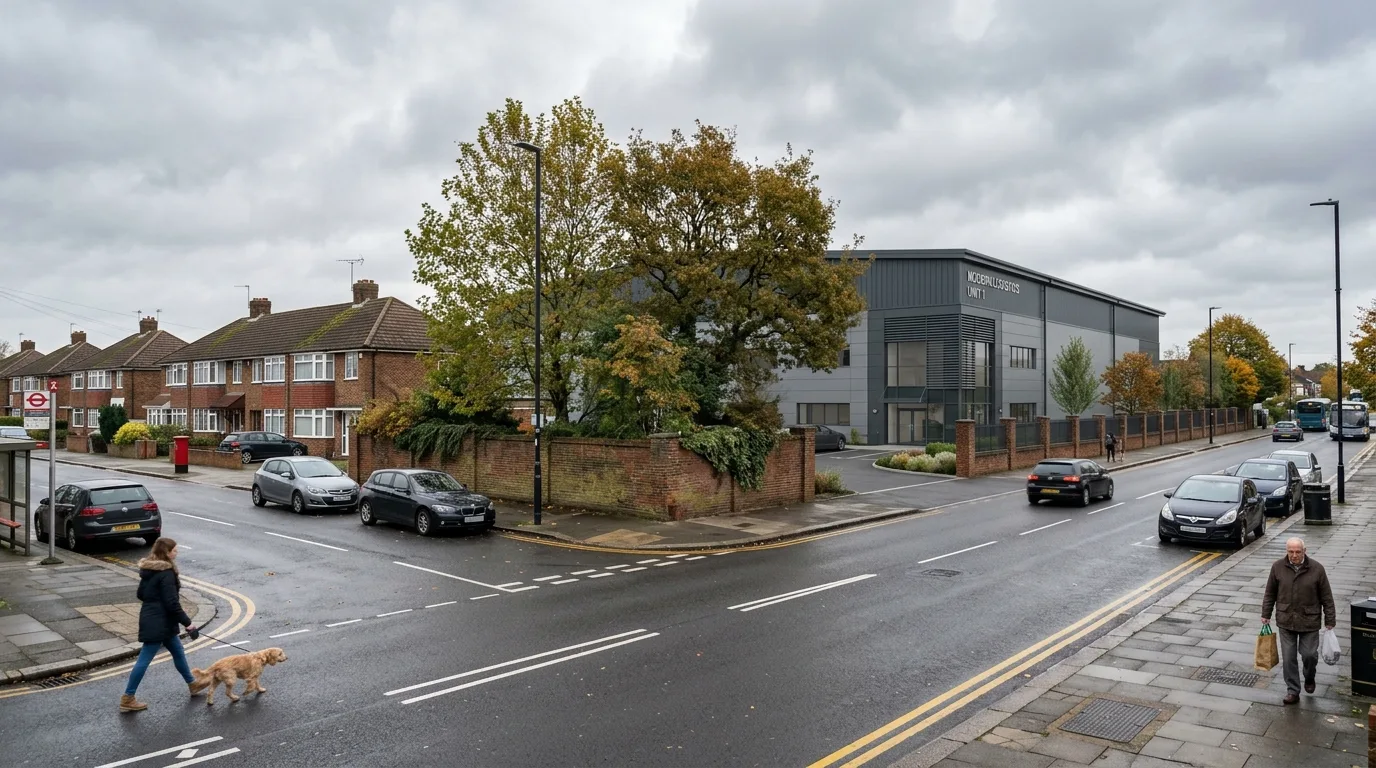
What This Covers
- Building integration with existing streetscape
- Scale relationship to neighbouring properties
- Pedestrian and vehicle context
- Planning-stage visual impact from public viewpoints
Who Commissions This
- Planning consultants preparing townscape and visual impact assessments
- Architects demonstrating design sensitivity to context
- Developers responding to design review panel feedback
Common Questions About Townscape CGI
When do you need a townscape CGI instead of a standard verified view?
When the issue is heritage, conservation area character, or settlement setting, not just visibility. Townscape CGI is the format used to answer a TVIA consultant or a heritage officer who is asking how the scheme affects a listed building, a conservation area, or a designated view. StratumCGI produces it to Historic England methodology or the equivalent devolved guidance.
How important is the existing context model?
As important as the proposed building. A townscape assessment is a comparison of before and after, and a sloppy roofscape or missing street trees makes the after look worse than reality. StratumCGI builds the existing scene from survey data and aerial imagery with the same care as the proposed model, because that is where the assessment lives or dies.
How many viewpoints does a typical townscape package cover?
Usually three to five, spanning long, medium, and close range. A long-range view shows the scheme in the skyline, a medium-range view sets it in the public realm, and a close-range view tests the street-level relationship. The viewpoint list is agreed with the planning authority and the heritage consultant before any survey happens.
Aerial Masterplan CGI, Bird's-Eye
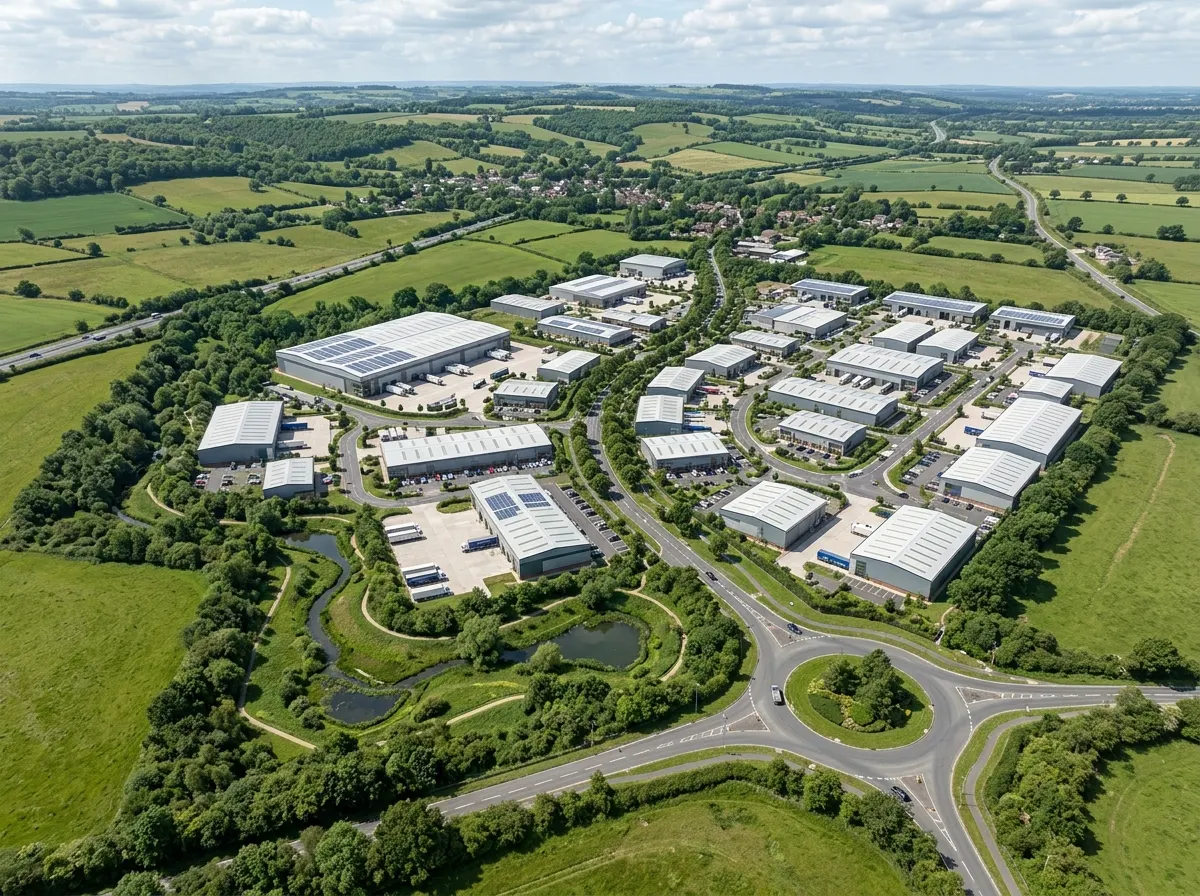
Bird's-eye view of an industrial park showing full site layout, phasing boundaries, road network, and surrounding land use.
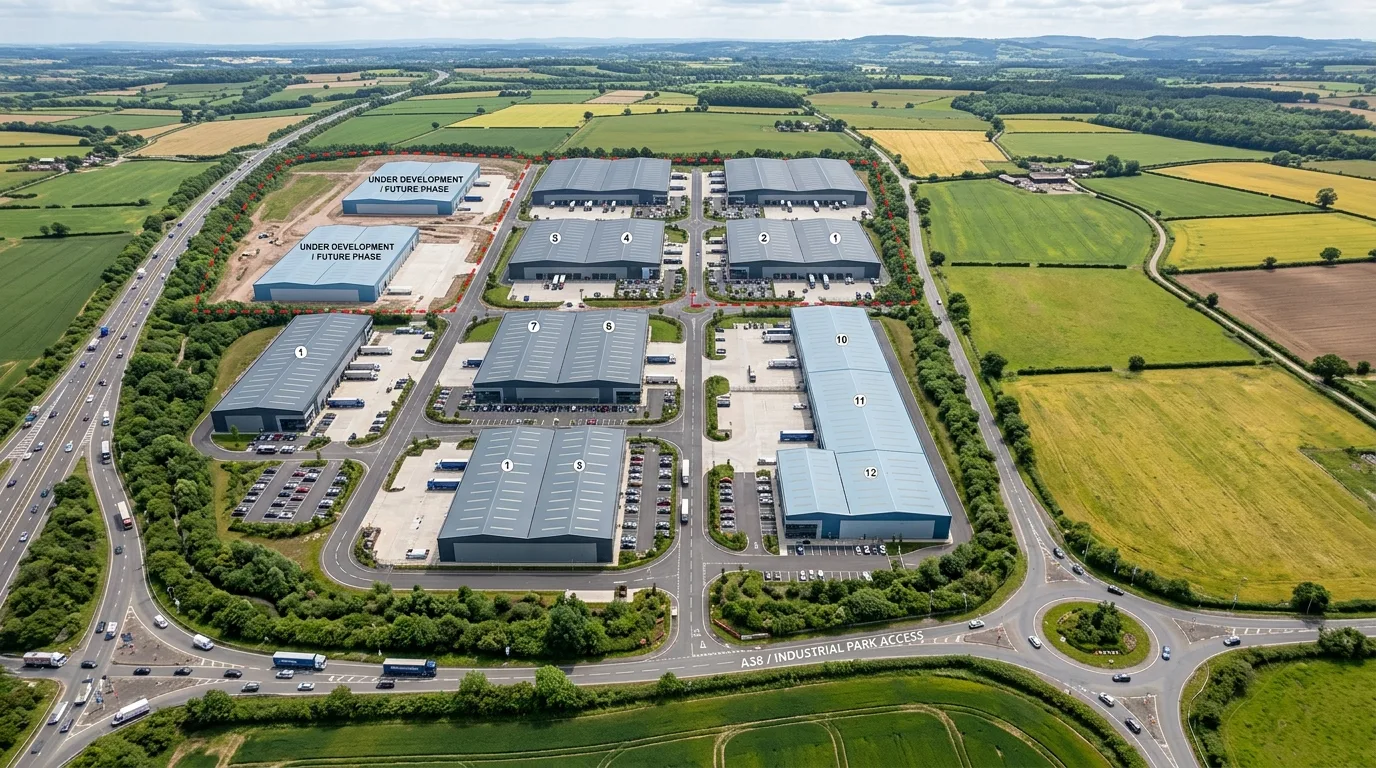
What This Covers
- Full site context from above
- Phasing and plot boundaries
- Access routes and circulation
- Relationship to surrounding land use
Who Commissions This
- Masterplan developers showing site strategy
- Investment teams presenting phased development
- Planning consultants demonstrating site-wide impact
Common Questions About Aerial Masterplan CGI
Why use an aerial view for a masterplan instead of a ground-level render?
Because a masterplan is about relationships, building to building, building to access, phase to phase, and you cannot read those relationships from the pavement. StratumCGI uses a 45 to 60 degree perspective elevation as standard, which shows roofscape and facade in one image. Orthographic plan views are available too, when the output is going into planning drawings.
Can an aerial masterplan CGI show phased delivery?
Yes, and this is one of the most useful things the format does. StratumCGI builds one model of the full buildout and renders Phase 1, Phase 2, and completion from the same camera position. The phase comparison is a strong committee and investor tool, because it shows programme certainty without requiring anyone to read a programme bar chart.
How much surrounding context should the render include?
As much as the planning examination zone of influence requires, and no more. StratumCGI models neighbouring roads, buildings, and landscape from OS data and aerial imagery. Extra context inflates cost without adding clarity, so the extent is agreed at brief stage based on what the application actually needs to prove.
Cutaway Section CGI, Technical
Cross-section revealing internal structure, insulation layers, plant rooms, and floor layouts within an industrial building.
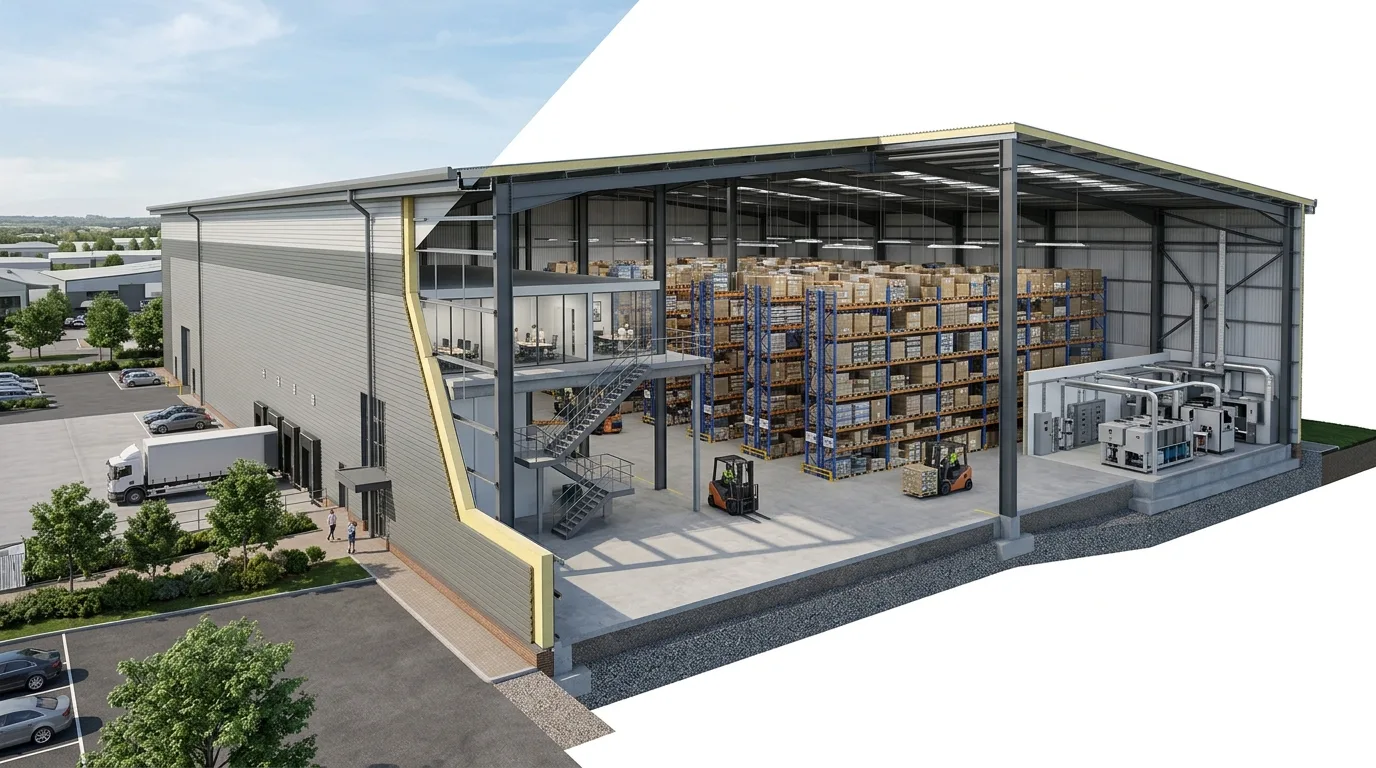
What This Covers
- Steel frame and structural connections
- Insulation and cladding build-up in section
- Mechanical plant room layout
- Mezzanine and office integration within the envelope
Who Commissions This
- Architects explaining construction assemblies to planning committees
- Engineers presenting M&E layouts to clients
- Developers illustrating spec-build interior standards
Common Questions About Cutaway Section CGI
What is a cutaway section CGI actually useful for?
Explaining volume. A normal exterior render tells you what the building looks like, a cutaway tells you what you can fit inside it. Racking heights, mezzanine levels, plant zones, clear span, all visible in one image. StratumCGI produces cutaways most often for pre-let marketing and investor decks, where the audience needs to understand usable volume, not elevation treatment.
Where does the cut plane go?
Wherever reveals the most. For a standard warehouse that is usually a transverse cut from floor to ridge showing full clear height. For multi-level or mixed-use buildings, a stepped cut exposes more than one floor at once. StratumCGI agrees the cut with the client before modelling, because the wrong cut plane produces an image that answers nothing.
What drawings does StratumCGI need to start a cutaway?
Section drawings, floor-to-floor heights, and the fit-out or racking spec. If section drawings do not exist yet, StratumCGI works from plans plus the structural engineer's frame schedule to build the cut accurately. A cutaway built on guessed heights loses credibility immediately with an occupier who measures in pallets.
Construction Phase CGI, 4D Phasing Sequence
4D construction sequence visualisation showing colour-coded build phases, timeline bar, and phased cladding progress across the site.
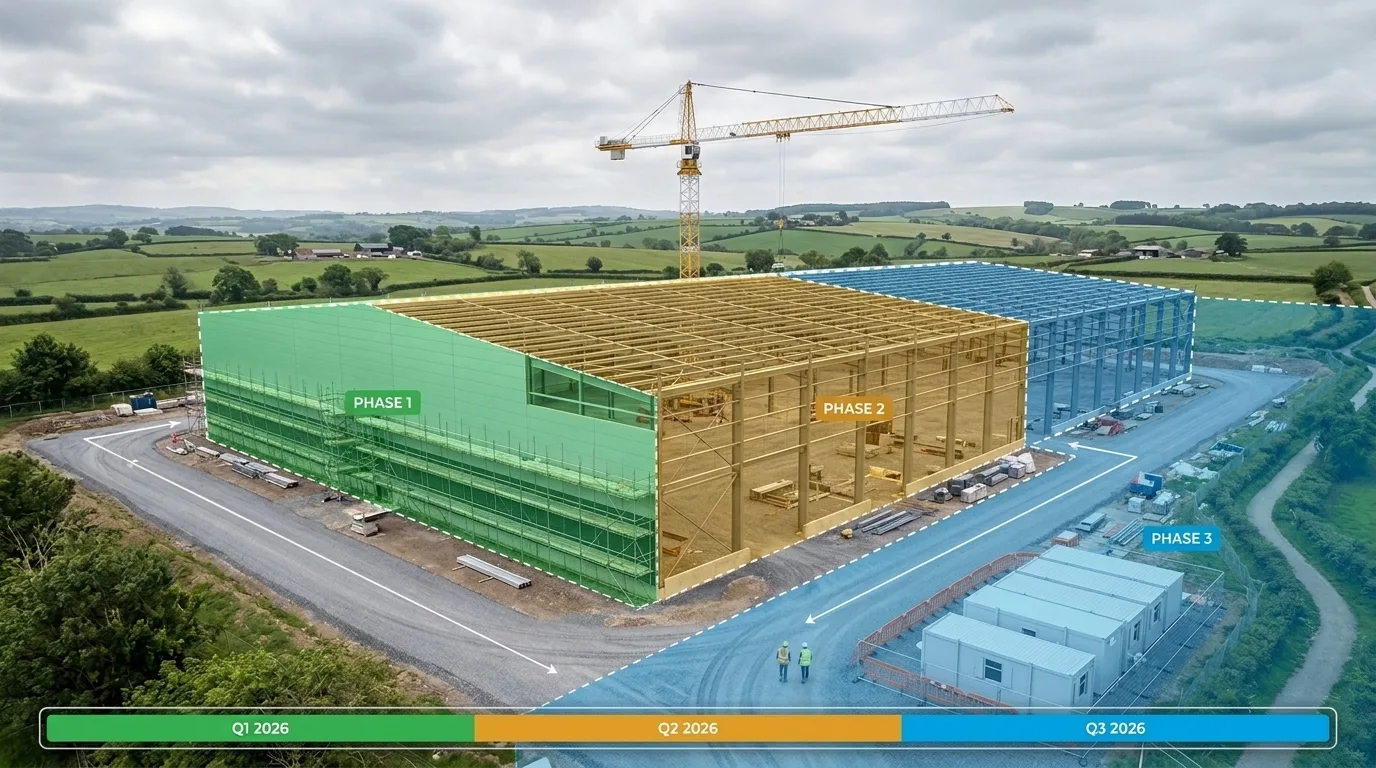
What This Covers
- Phased construction sequence visualisation
- Crane and plant positions
- Site compound and access logistics
- Construction traffic management context
Who Commissions This
- Contractors presenting build programmes to clients
- Developers communicating phased delivery to occupiers
- Planning teams illustrating construction management plans
Common Questions About Construction Phase CGI
What stage of construction should the CGI show?
Usually steel frame erection with partial cladding. That is the moment a building looks most dynamic, scale is legible, structure is visible, and the programme feels alive. Early groundworks look like a muddy field, practical completion looks like a finished building. StratumCGI can render any stage, but the mid-build shot is what investors and hoarding artwork almost always want.
Can StratumCGI deliver artwork sized for site hoardings?
Yes. Construction phase CGI is produced at print resolution for standard 2.4m hoarding panels, with safe zones accounted for at the panel joints. Delivery is print-ready PDF alongside the standard digital files. StratumCGI does not handle printing or installation, but works directly with the client's hoarding contractor so the artwork lands correctly on site.
Should the render include cranes, plant, and workers?
Usually yes. A construction phase render without activity reads as a dead site. StratumCGI populates the scene with tower cranes, mobile plant, welfare units, and PPE figures agreed with the client. Where the contractor's methodology is known, the plant matches it, which makes the render useful for programme storytelling rather than just decoration.
Night Security Render, After Dark
Night-time exterior render showing perimeter security lighting, CCTV positions, fencing, and operational lighting across a secure facility.
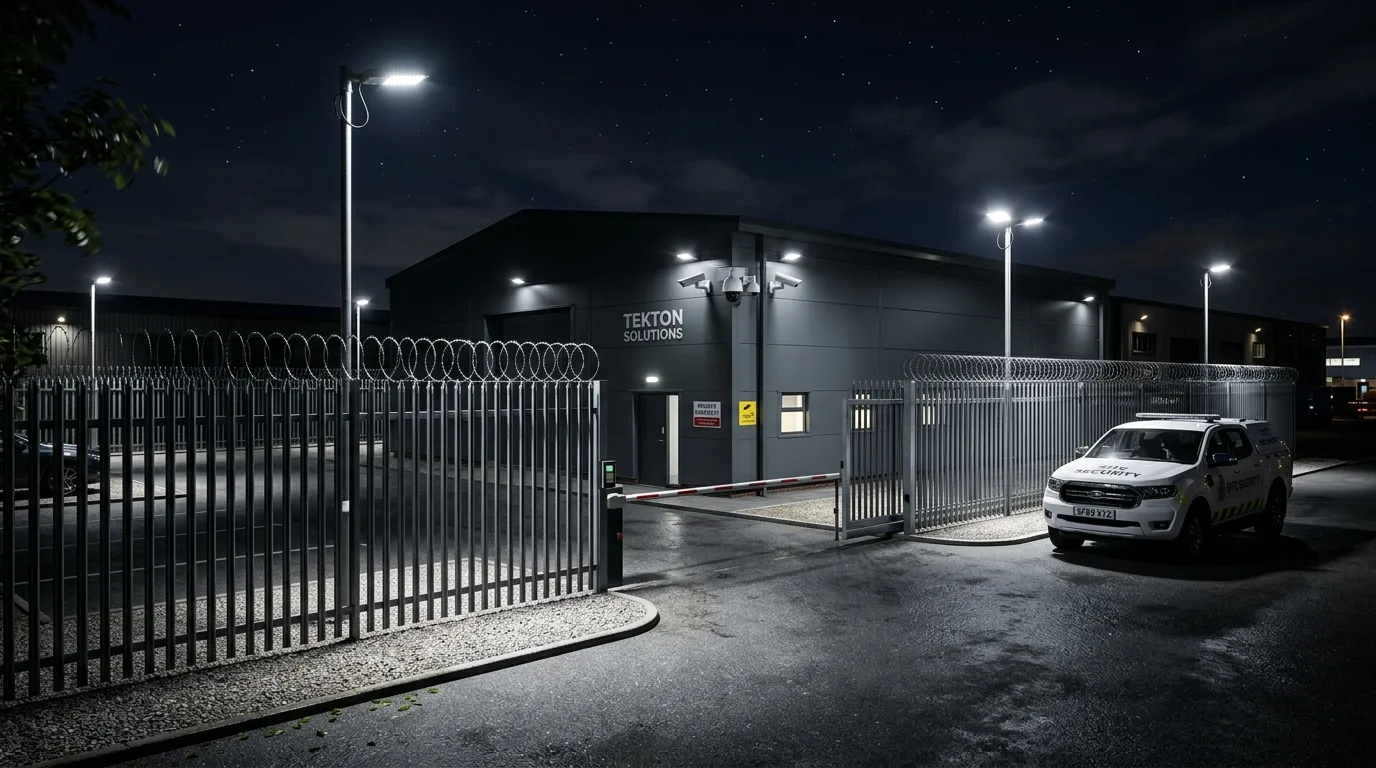
What This Covers
- Perimeter lighting design and coverage
- CCTV camera positions and sightlines
- Security fencing and access control
- Operational lighting for 24-hour facilities
Who Commissions This
- Facility operators demonstrating security provisions
- Developers presenting to security-sensitive occupiers
- Planning consultants addressing night-time impact concerns
Common Questions About Night Security Render
Why commission a night render specifically for security?
Because daytime renders say nothing about how the site behaves after dark, and external lighting is one of the most conditioned elements in industrial planning consents. A night render shows the security lighting scheme, CCTV gantries, access control, and the spill pattern in one image, which is what planners, insurers, and occupiers all want to see before signing off.
Can a night render support a lighting impact assessment?
Yes. StratumCGI models luminaire positions, mounting heights, and distribution patterns from the lighting engineer's drawings, then renders the scene from viewpoints near the sensitive receptors. The CGI sits alongside the photometric calculations, the numbers quantify the impact, the render shows it. Together they are much harder to object to than either on its own.
Who actually uses a night security render?
Developers discharging planning conditions on external lighting, occupiers assessing site security before signing a lease, and insurers reviewing risk. One image usually serves all three audiences, which is why the night render is often produced alongside the standard daylight hero shot rather than as a standalone commission.
Warehouse Interior CGI, Operational
Interior render showing warehouse racking systems, mezzanine level, loading dock, and operational lighting.
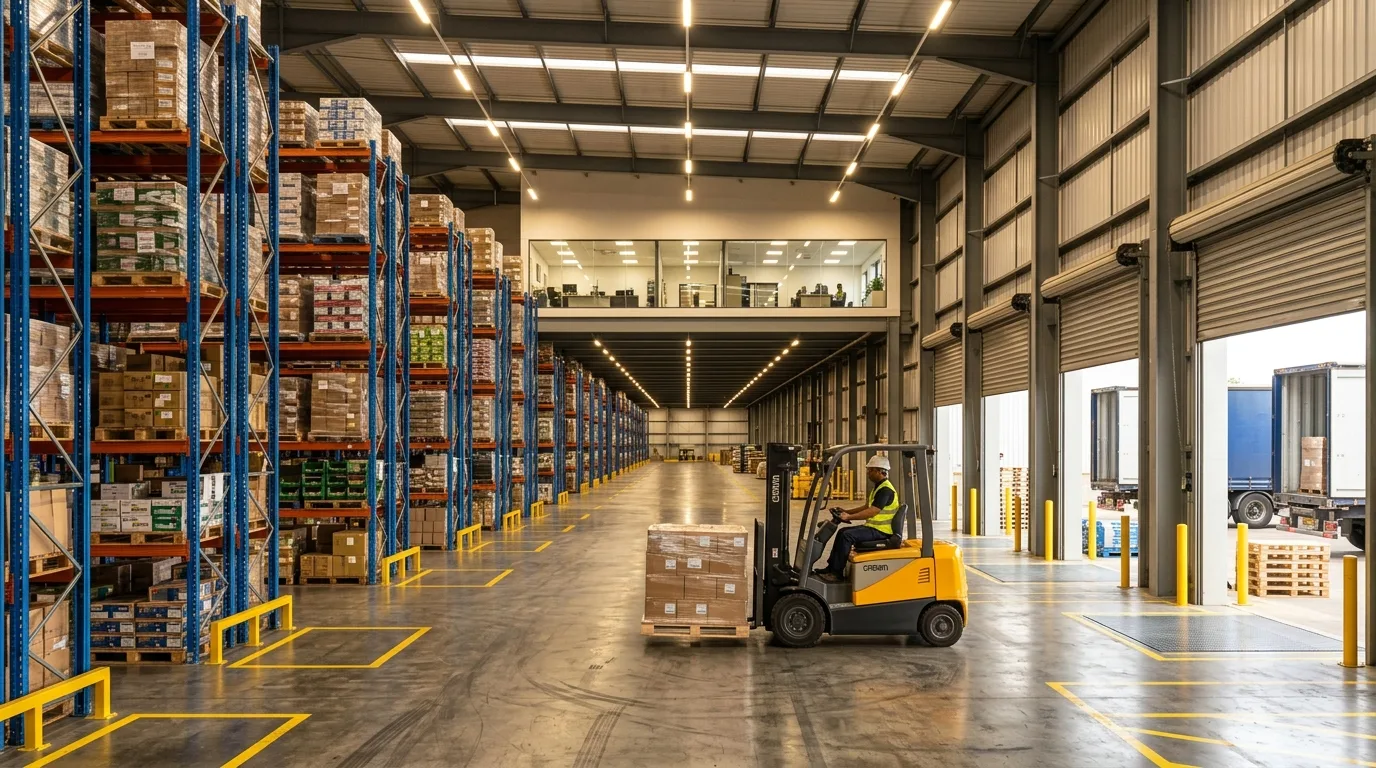
What This Covers
- Racking and storage configurations
- Mezzanine and office integration
- Loading dock and goods-in areas
- Lighting and operational environment
Who Commissions This
- Occupiers visualising fit-out before lease
- Letting agents marketing shell-and-core units
- Developers presenting speculative interior standards
Common Questions About Warehouse Interior CGI
What makes a warehouse interior CGI worth commissioning?
Clear height and racking density. Pre-let occupiers decide on a building based on how many pallets it holds and how their MHE moves through it. A CGI that shows the correct clear height, the right racking type, and realistic aisle widths is a much more persuasive pre-let tool than a plan drawing, especially for speculative units with no confirmed tenant.
Can StratumCGI overlay clear height dimensions on the image?
Yes, and it is often worth doing. Pre-let marketing usually wants the clear working height called out on the render, floor to underside of sprinkler or haunch, so the usable envelope is legible at a glance. StratumCGI produces a dimensioned version alongside the clean version, so the same model serves marketing and technical audiences.
Which racking systems can StratumCGI model?
VNA, wide-aisle adjustable beam, drive-in, push-back, and mezzanine decked systems are all standard. The layout comes from the racking supplier or the warehouse design consultant. Racking type changes the visual density of the interior completely, so getting it right matters, an occupier comparing a drive-in render to a wide-aisle render will spot the difference immediately.
Flythrough Animation, Motion
A single frame extracted from a CGI flythrough animation, showing motion blur and a dynamic mid-flight camera angle approaching a facility entrance.
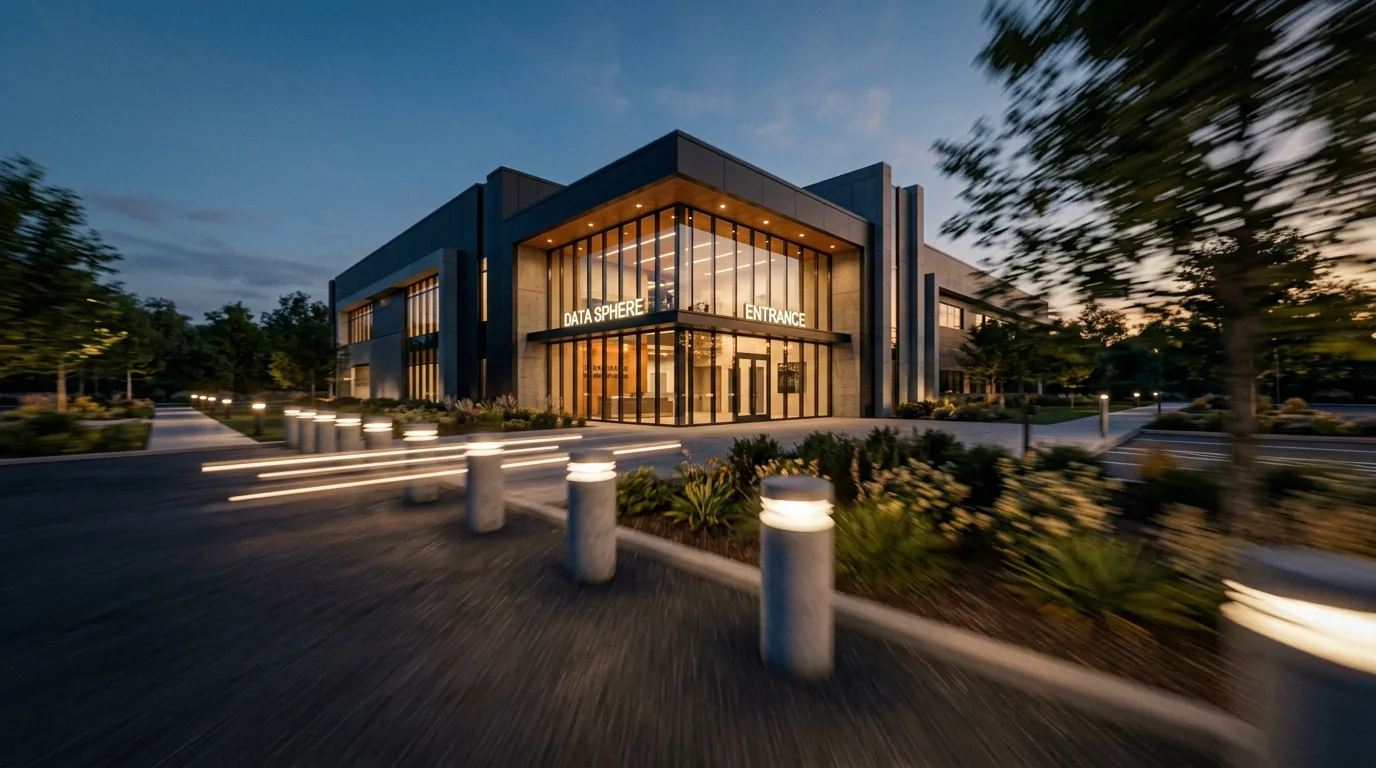
What This Covers
- Camera path and movement sequence planning
- Site arrival and approach experience
- Dynamic angles not achievable with stills
- Stakeholder presentation and marketing films
Who Commissions This
- Developers producing marketing films for leasing campaigns
- Planning teams presenting scheme walkthroughs at consultation events
- Operators demonstrating site circulation to occupiers
Common Questions About Flythrough Animation
How long should an industrial flythrough animation be?
60 to 90 seconds, usually. That is long enough to cover four to six scenes, exterior approach, perimeter views, a yard or operational shot, and a closing overhead, without losing the audience. Longer runs are possible for complex sites, but the marginal value drops fast after ninety seconds, and investor audiences stop watching before the end.
How does StratumCGI plan the camera path before rendering?
With a storyboard. Every major keyframe is presented as a still image showing the camera position and framing at that moment. The client approves the storyboard before any animation renders, because revising a flythrough after rendering has started is expensive and slow. Fixing the path upfront is the single biggest factor in keeping the budget honest.
What does StratumCGI deliver for a flythrough commission?
Standard delivery is a 4K UHD MP4 at 25fps plus a 1080p web version. Audio, music, and voiceover are optional extras. For clients with in-house video editing, StratumCGI can also supply frame sequences so the animation can be recut in post-production without going back to render.
360 Panorama Preview, Immersive
A flat equirectangular projection image showing a full 360-degree view around an industrial site, suitable for interactive VR viewing.
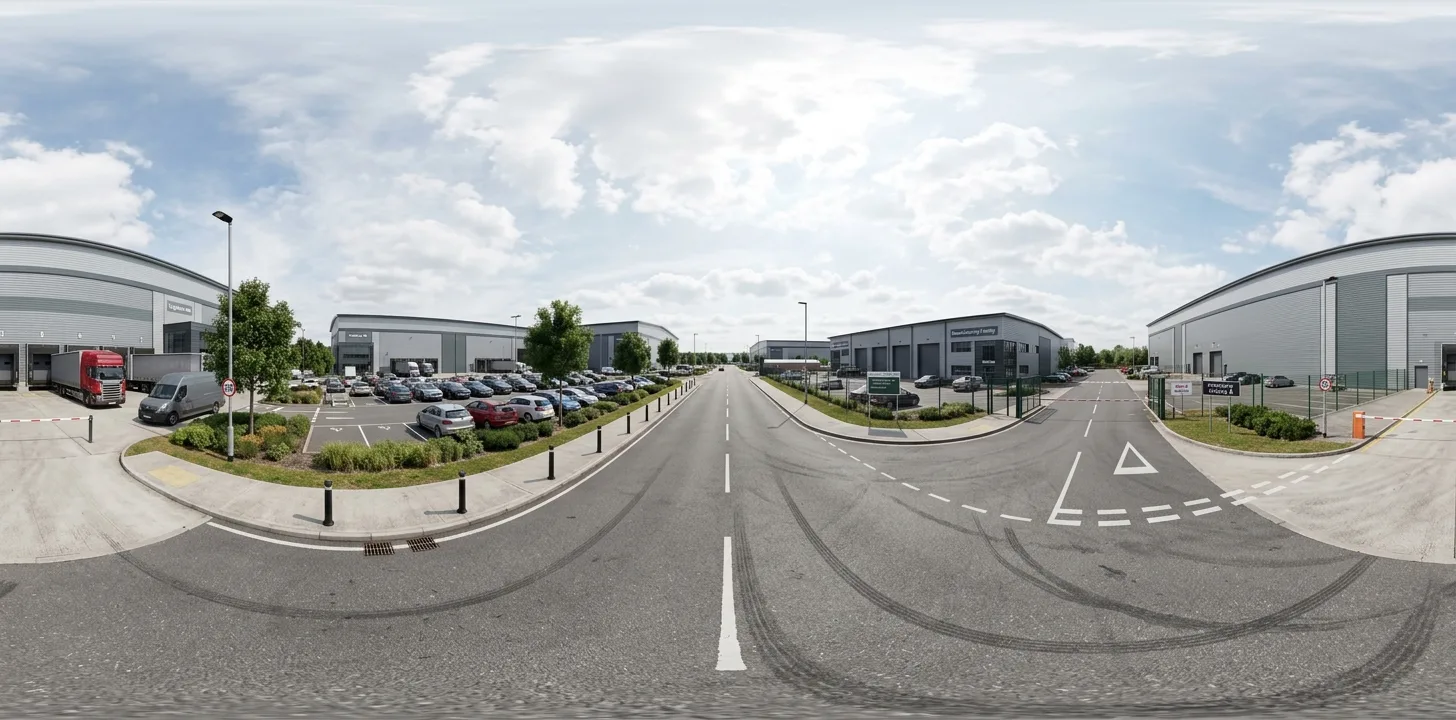
What This Covers
- Full 360-degree site context from a fixed position
- Interactive VR-ready viewing experience
- Immersive stakeholder walkthroughs
- Marketing suite and exhibition installations
Who Commissions This
- Developers installing VR stations in marketing suites
- Architects presenting immersive design reviews
- Exhibition teams preparing interactive installations for MIPIM or trade shows
Common Questions About 360 Panorama Preview
What do you actually get with a 360 panorama CGI?
An equirectangular JPEG plus a web viewer link that drops into a project website by iframe. The same file works in VR headsets for client meetings and pitch presentations. It is the cheapest way to let a prospect feel what it is like to stand inside a building that does not exist yet, which is why industrial park marketing suites have started building around them.
Can a 360 panorama include clickable hotspots and navigation?
Yes. Unit number labels, GEA callouts, amenity markers, and arrows linking between multiple panorama positions can be layered over the base image. A set of three or four connected panoramas effectively turns the marketing page into a virtual site tour, which matches the Matterport experience prospects are now used to from existing buildings.
Where should the camera go?
Depends on the purpose. For marketing a warehouse unit, yard-level at the main entrance and inside a representative bay. For masterplan context, an elevated or rooftop position. StratumCGI agrees the camera positions at brief stage, because 360 cameras pick up everything, and a poorly chosen spot shows you the wrong side of the site.
Turntable Animation, Presentation
A building rendered on a rotating turntable platform against a clean background, product-shot style, showing the scheme from a presentation angle.
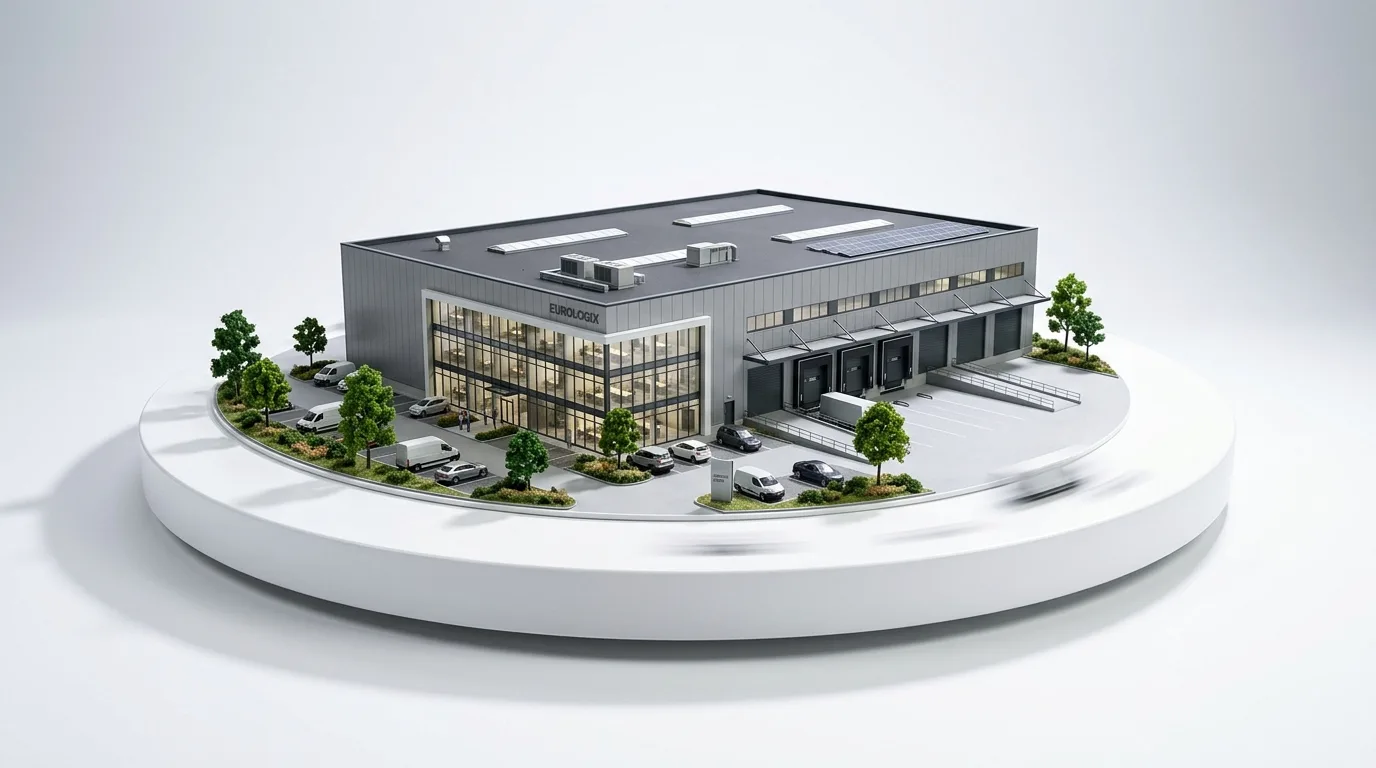
What This Covers
- Clean isolated building presentation
- 360-degree rotation sequence for web or presentation
- Product-style showcase of building design
- Investor and board-level presentation imagery
Who Commissions This
- Developers preparing investor pitch decks
- Architects presenting design award submissions
- Marketing teams producing web-based interactive building viewers
Common Questions About Turntable Animation
Why a turntable instead of a flythrough?
Because sometimes the building is the story, not the site. A turntable shows all four elevations at comparable screen time in a short seamless loop, which is exactly what you want on a website hero, a marketing suite display, or a social media post. Flythroughs are for places, turntables are for buildings.
What orbit angle does StratumCGI use?
Three standard options. A low ground-level orbit for facade detail and yard activity, a mid-level 30-degree orbit showing the full building profile, and an elevated 45-degree orbit that reveals the roof. The choice comes down to which elevation is the building's strongest asset, so it is usually agreed at brief stage against the actual design.
What file formats does StratumCGI deliver?
An MP4 loop at 1080p for website embed, a compressed WEBM for web performance, and an optional animated GIF for email and social use. A 4K UHD MP4 is available for presentation display screens in marketing suites. Loop duration is typically 20 to 30 seconds, short enough to hold attention, long enough to read the building.
Wireframe to Photoreal CGI, Production
Split-view image showing 3D wireframe model on one half and finished photoreal render on the other, demonstrating the CGI production method.
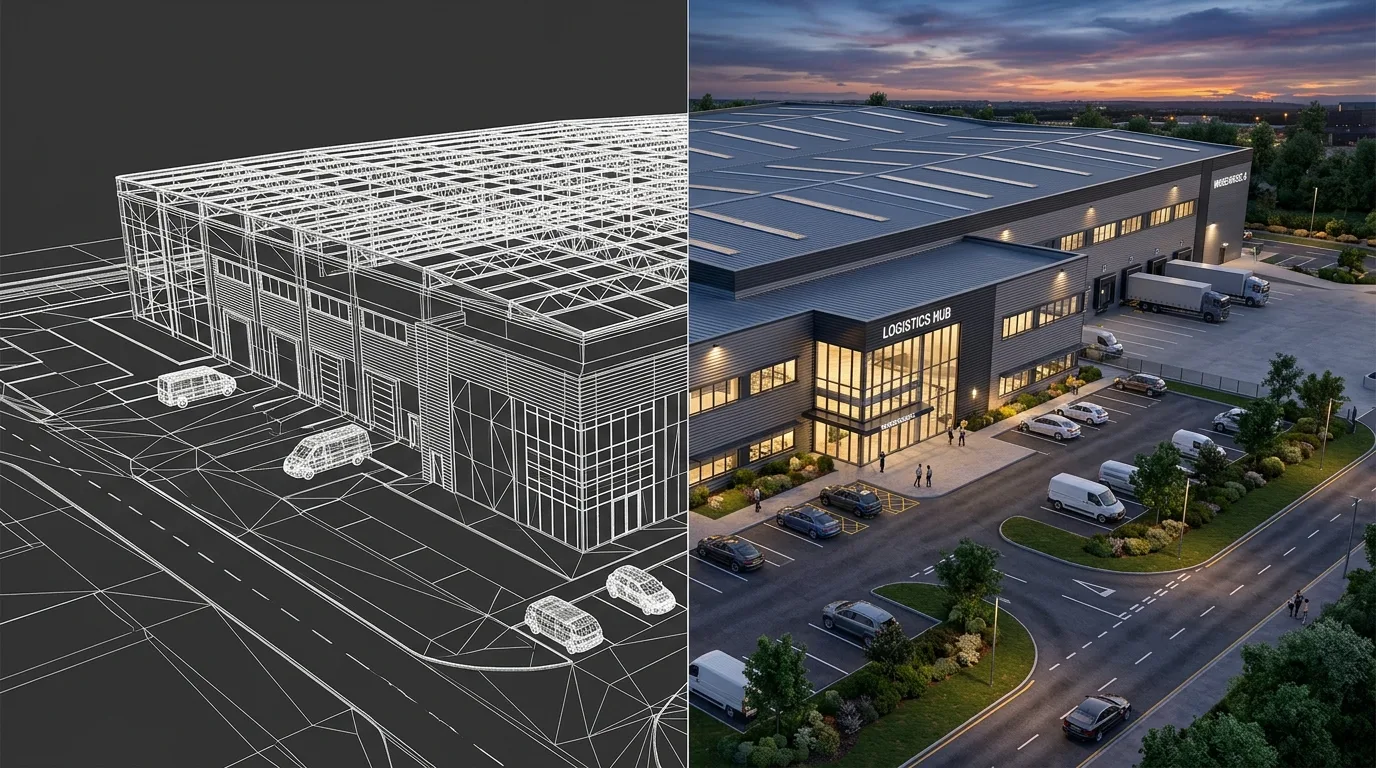
What This Covers
- 3D model geometry and mesh structure
- Material and lighting progression
- Before-and-after production comparison
- Technical capability demonstration
Who Commissions This
- Studios showcasing production methodology
- Developers wanting process transparency in presentations
- Marketing teams building case study content
Common Questions About Wireframe to Photoreal CGI
What does a wireframe-to-photoreal progression actually show?
The four stages a CGI goes through on its way to the hero image. Wireframe, grey model, textured, and final photoreal. Each stage exists for a reason, wireframe for geometry checking, grey model for camera and massing approval, textured for materials review, photoreal for the final output. StratumCGI delivers progression visuals so clients can see where their input is needed.
When in the process can a client still change things without blowing the budget?
At the grey model stage, before lighting and materials are applied. Changes are cheap when geometry is still flexible and expensive once the renderer has started doing atmospheric work. StratumCGI builds explicit sign-off gates at grey model, materials, and final lighting so clients know exactly when each type of change becomes hard.
Why would you commission a wireframe-to-photoreal sequence for yourself?
Mostly for pitch decks, proposals, and studio profile material. A side-by-side progression from wireframe to photoreal explains the CGI production process to clients who are commissioning visualisation for the first time, which takes a lot of friction out of the onboarding conversation and makes the process feel less like a black box.
Industrial CGI Services
StratumCGI produces photorealistic 3D visualisations for industrial property, from warehouse units and distribution centres to logistics hubs, data centre campuses, manufacturing facilities, and wider infrastructure schemes.
AI Data Centre CGI
CGI for hyperscale, colocation, and mission-critical data centre schemes, from campus exteriors to planning-stage visuals
Warehouse CGI
CGI for warehouses, fulfilment centres, and distribution hubs, including loading bays, yard layouts, and planning visuals
Industrial Park CGI
CGI for industrial parks and multi-unit employment schemes, with site-wide views for planning, marketing, and investor presentations
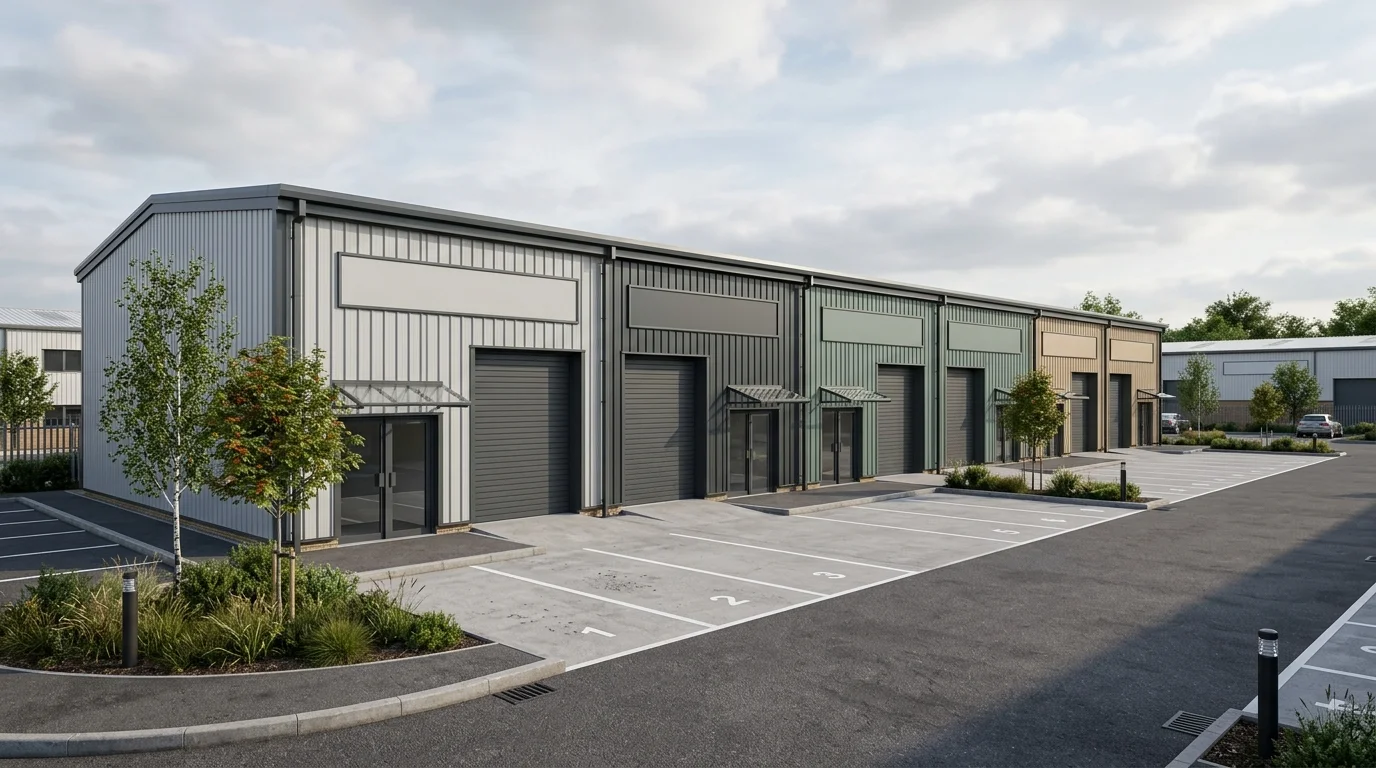
Light Industrial Unit CGI
Marketing CGI for light industrial units, occupier-ready light industrial unit frontage, and lease-ready light industrial units for letting to SME developers and trade-counter occupiers.
Logistics & Distribution CGI
Visualisation for industrial and infrastructure schemes that need clear site context, technical detail, and stakeholder-ready imagery
Planning Application CGI
Planning application CGI, verified views, and photomontage for industrial schemes that need accurate, stakeholder-ready planning images
Industrial CGI Animation & Flythroughs
Animated CGI and flythroughs that show site layout, vehicle movement, access, and scheme sequence more clearly than stills
Industrial Aerial CGI Renders
Bird's-eye CGI for masterplans, yard layouts, access routes, and wider site context across large industrial developments
Industrial Interior CGI
Interior CGI for offices, reception areas, control rooms, and operational spaces within industrial and technical buildings
StratumCGI delivers all eight service types from a single studio, so briefs that span multiple formats run through one coordinated team.
Discuss Your Industrial CGI ProjectNew CGI-led marketing extension
CGI-led industrial property marketing
StratumCGI now packages planning-grade CGI into industrial property marketing assets for warehouse, logistics, and data centre schemes moving from planning approval to pre-let and occupier launch.
Explore industrial property marketing packages
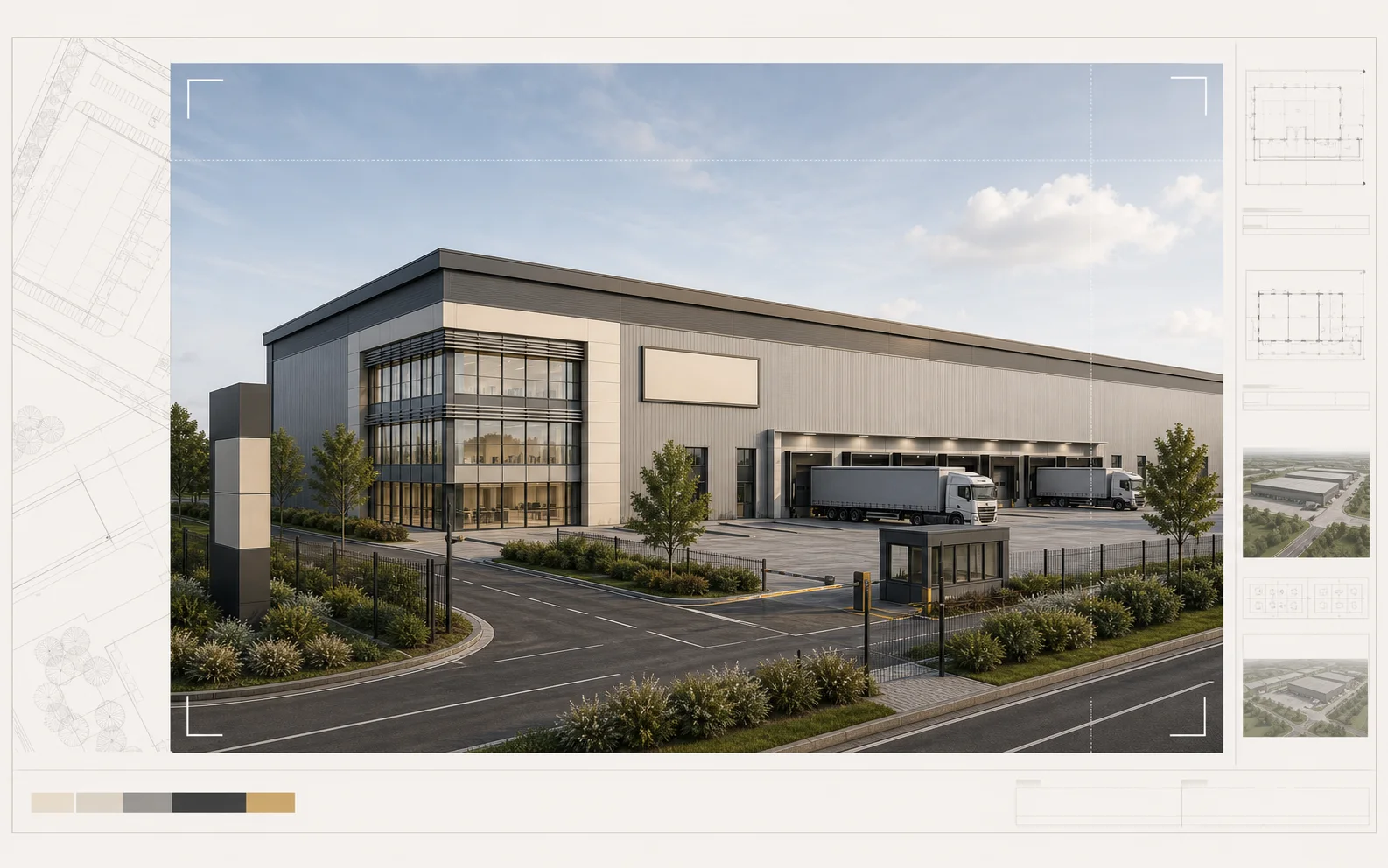
Planning stage
Planning Stage CGI Pack
Planning Stage CGI Pack turns one planning-grade model into 3 to 6 CGI views, branded press images, social image formats and print-ready files for committee packs, launch PR and agent email campaigns from £8,950.
Where the planning-stage CGI appears
The Planning Stage CGI Pack reuses one industrial building model across committee packs, press images and agent email assets, giving planning, PR and agency teams one consistent visual source.
- Planning-stage exterior CGI for committee packs
- Neutral signage and drawing-sheet framing for pre-launch press release
- Press, PDF and agent email image files exported from the same model
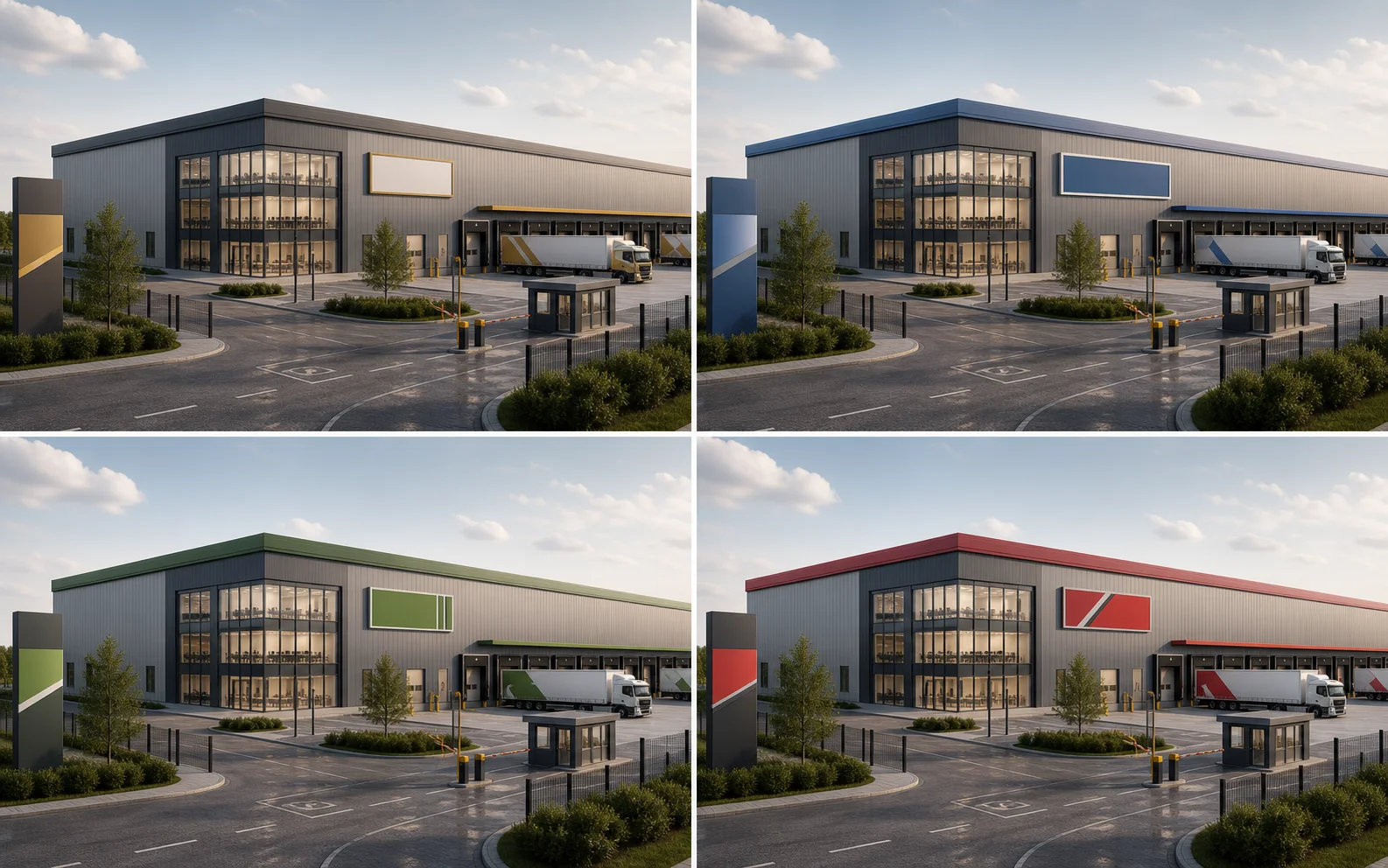
Pre-let stage, scheme-level CGI for institutional logistics and big-shed developers
Pre-Let Marketing Campaign
Pre-Let Marketing Campaign prepares planning-approved warehouse and logistics schemes for qualified occupier enquiries before practical completion. It delivers occupier-signage CGI variants, brochure spreads, scheme microsite images and LinkedIn image formats for leasing agents.
Where the pre-let campaign visual appears
The Pre-Let Marketing Campaign adapts the same logistics unit for occupier pitch decks, leasing brochures and scheme microsites, with roof-band colour, occupier signage and vehicle livery variants kept inside the CGI scene.
- Occupier-signage CGI variants for pitch decks
- Brochure spreads and microsite images for leasing agents
- LinkedIn image formats for the first pre-let campaign release
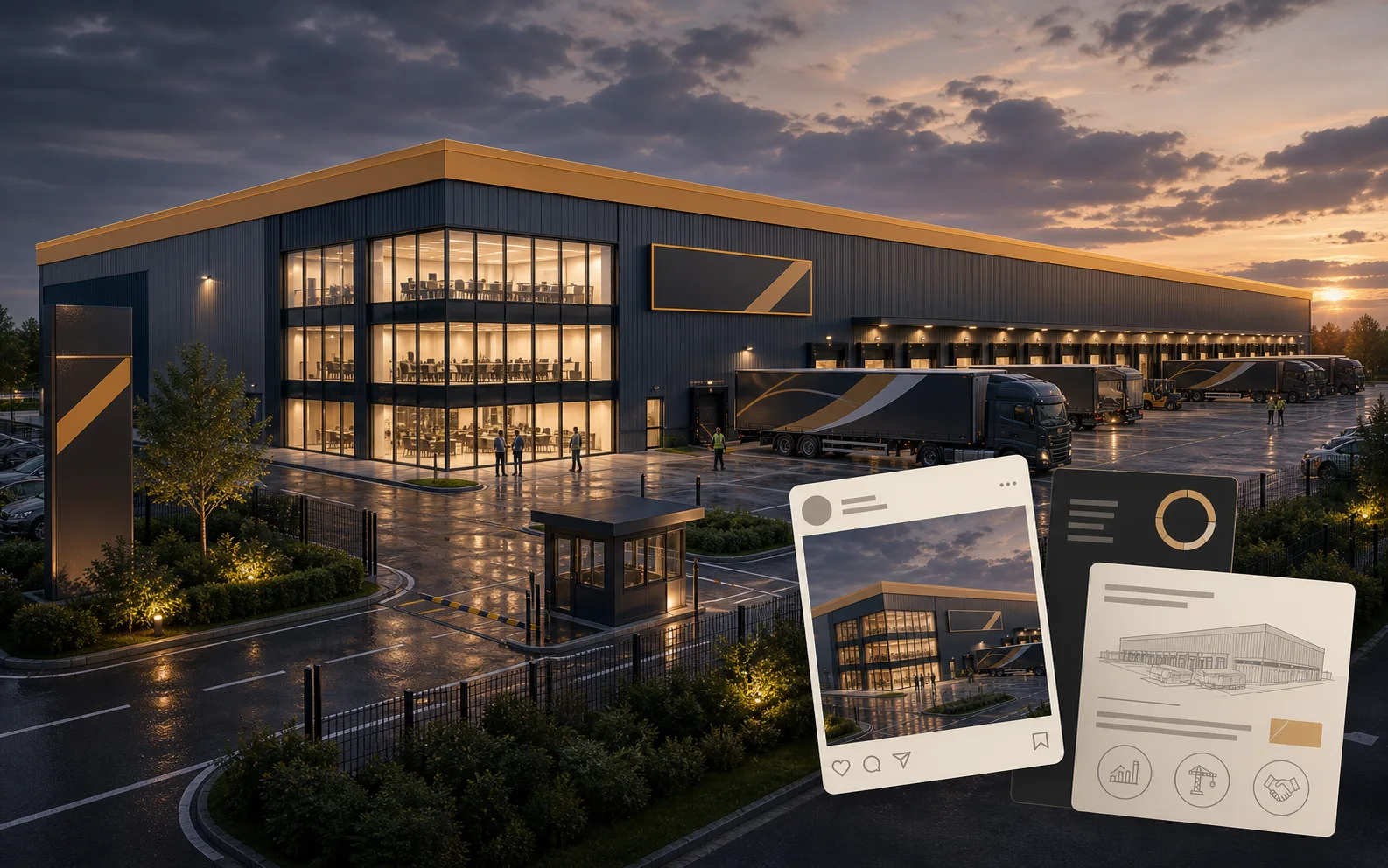
Occupier stage
Occupier Launch Campaign
Occupier Launch Campaign covers secured-occupier announcements and now-available relaunches. It delivers tenant-branded CGI when a lease is agreed, or unbranded availability graphics, investor update visuals and social thumbnails when the building is still available.
Where occupier launch assets appear
The Occupier Launch Campaign turns the completed building into announcement, investor update and social-channel assets. Tenant branding appears only when the occupier is named; otherwise the campaign uses availability graphics for agent and investor updates.
- Tenant-branded CGI for a secured-occupier announcement
- Investor update graphic and availability artwork for now-available buildings
- Social thumbnails and image formats for LinkedIn, Instagram, Facebook, X and YouTube
Typical Industrial CGI Process
Most industrial exterior CGI packs at StratumCGI reach final delivery in 12 to 15 working days. The five-stage process, brief, model build, draft views, review, and final delivery, is structured so review rounds address architecture and planning detail in one consolidated pass, not sequentially. AI data centre, warehouse, and industrial park briefs start with drawings, references, and target views.
-
01
Brief & Input Pack
StratumCGI receives drawings, site plans, references, and target views, then defines outputs, deadlines, and review points.
-
02
Model & Site Build
StratumCGI builds the massing model, site context, access routes, and key technical or operational elements around the scheme.
-
03
Draft Views & Composition
Draft CGI tests camera angles, lighting, facade detail, and planning context before the final finish is developed.
-
04
Review & Technical Refinement
Review rounds refine architecture, plant, servicing, landscaping, signage, and stakeholder-facing detail across the chosen views.
-
05
Final Delivery & Handover
Final stills, planning visuals, cropped presentation files, and web-ready exports are delivered in the agreed formats.
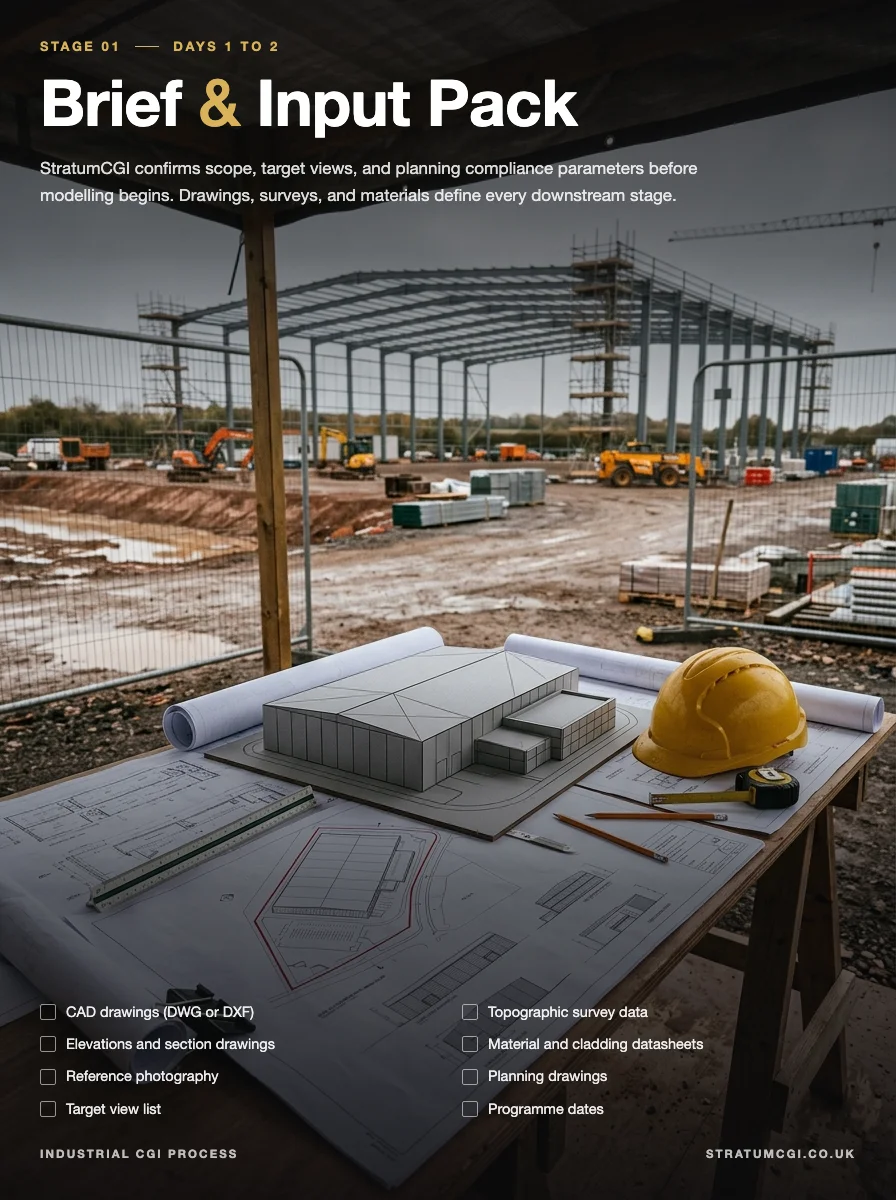
Every industrial CGI brief follows this five-stage process, whether the project is a single warehouse unit or a multi-building data centre campus.
Industrial CGI FAQs
The StratumCGI team answers common questions about industrial CGI briefs, timelines, file formats, and planning visuals.
What is commercial development CGI?
⌄
Commercial development CGI is photorealistic visualisation produced for commercial property schemes that need to win planning consent, secure investor confidence, and pre-let to occupiers before construction. Typical outputs include scheme hero images, verified views, aerial masterplan visuals, and pre-let marketing imagery for leasing brochures and microsites.
StratumCGI focuses specifically on the industrial side of commercial development: warehouses, logistics parks, data centres, big-shed schemes, last-mile depots, and cold-chain facilities. The studio does not work on prime residential, retail high-street, or CAT-A office fit-outs, so industrial briefs are not handled as a sideline.
How much does industrial architectural visualisation cost?
⌄
Industrial and warehouse exterior renders start from £1,800 for two angles, a front elevation and a secondary elevation, including the modelling stage.
Interior renders start from £1,700 for three views covering the reception area, control room, and office space, including modelling. Both prices include three rounds of revisions per image.
Complex infrastructure projects are quoted individually based on scope.
How long does industrial CGI take?
⌄
Interior renders typically take 7 to 10 days. Exterior renders take 12 to 15 days.
Commercial and infrastructure projects may require 3 to 4 weeks depending on technical complexity and detail requirements. A detailed schedule is provided during the discovery phase.
What makes your industrial renders look realistic?
⌄
StratumCGI renders in 3ds Max with Corona and V-Ray for still imagery, and Unreal Engine 5 for real-time and animation briefs.
The team's industrial sector focus, covering over 300 schemes across data centres, warehouses, and distribution parks, means cladding profiles, loading bay clearances, and security zone layouts are modelled to reflect actual site operation, not generic architectural convention.
What inputs does an industrial CGI brief need?
⌄
The ideal brief includes:
- CAD drawings (DWG or DXF)
- Site plans and elevations
- Material specifications
- Reference images
StratumCGI can also work from concept sketches or basic floor plans. The team covers all input requirements during the initial consultation.
Do you work with UK planning applications?
⌄
Yes. StratumCGI produces planning application visuals for warehouses, distribution centres, data centre campuses, and wider infrastructure schemes across England, Scotland, and Wales.
Deliverables include planning application CGI, verified views, and planning photomontage where projects need clearer planning-stage communication.
The team understands local authority requirements across England, Scotland, and Wales, including greenbelt and environmental considerations.
Can you visualise data centres and technical facilities?
⌄
Yes. StratumCGI specialises in technical and infrastructure projects including:
- Data centres
- Logistics hubs
- Distribution centres
- Industrial parks
StratumCGI has delivered CGI for data centres requiring security perimeters meeting CPNI (Centre for the Protection of National Infrastructure) guidance, HV switchgear compound renders, and operational interior views, providing the technical context local authorities and investors expect in planning-stage imagery.
Do you offer industrial animation and aerial CGI?
⌄
Yes. StratumCGI produces 3D animation flythroughs, walkthroughs, and aerial CGI for planning presentations and marketing materials.
These formats are well suited to demonstrating site layout, traffic flow, and operational aspects of commercial developments.
What file formats does StratumCGI deliver for industrial CGI?
⌄
Still images are delivered in high resolution in the following formats:
- JPEG
- PNG
- TIFF (for print)
For planning applications, specific formats and resolutions are provided as required by the relevant local authority. Animations are delivered in MP4 or MOV.
Discuss a brief with the StratumCGI team.
Get in Touch About Industrial CGICommission StratumCGI for Your Industrial CGI Project
The StratumCGI team reviews industrial CGI briefs from the first drawing issue through to final delivery, covering scheme type, required views, programme, and planning context. Use the project brief form below or contact the studio team directly to start the review.
George Nicola
Founder UK, Co-Founder Germany
george@stratumcgi.co.ukSpecialises in
Read bio
George brings 14 years across marketing and interior architecture into StratumCGI, and handles client conversations in English, German, French, Bulgarian, and Russian. He leads the studio's work on retail park, car showroom, and roadside hotel CGI, where brand-led exterior visuals and pre-let marketing imagery sit at the heart of the brief. He also runs other companies in the visual and product space, including Tallbox, which gives him a working understanding of how design, brand, and client delivery fit together on industrial briefs.
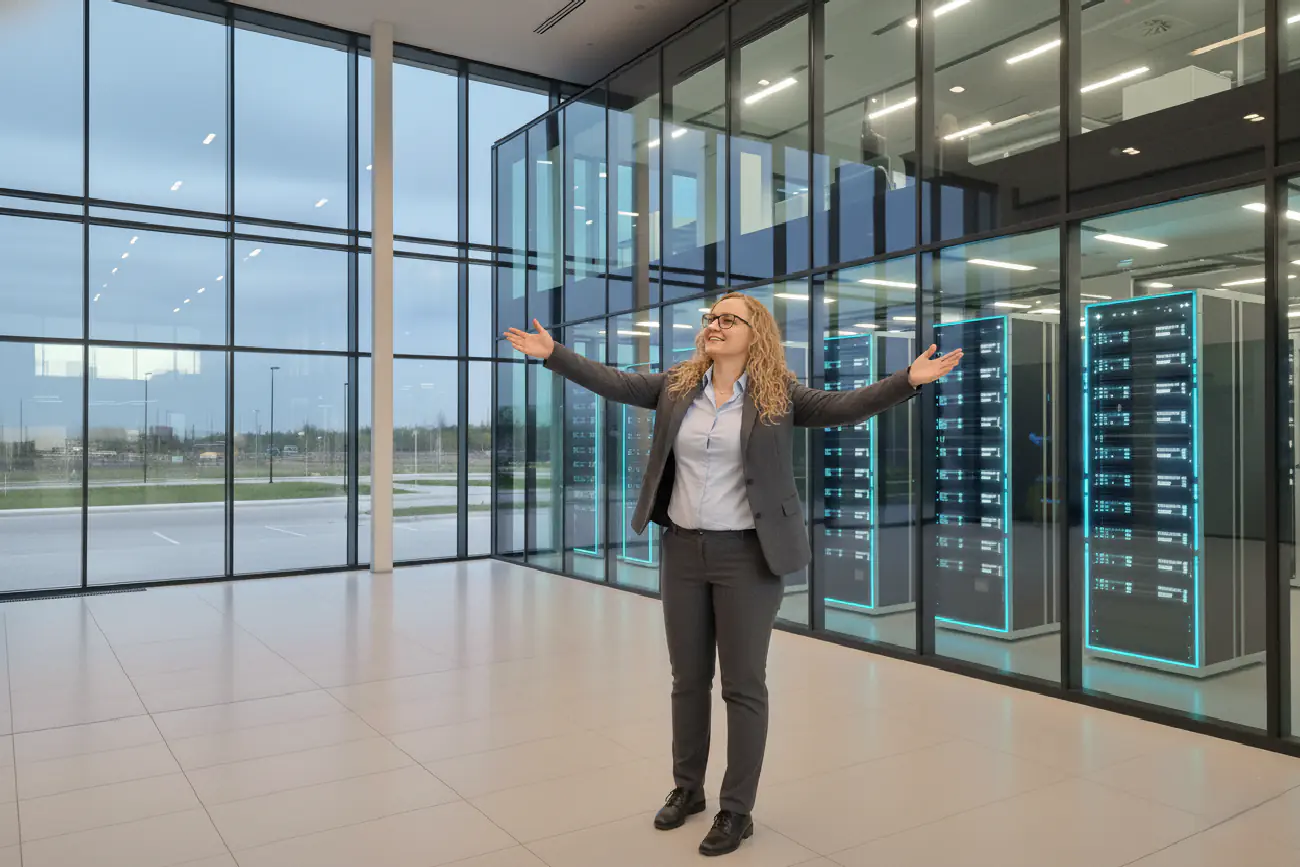
Nicolette Nolte
Head of Client Relations
nicolette@stratumcgi.co.ukSpecialises in
Read bio
Nicolette has 15 years of logistics and industrial client project management behind her, and works with clients in English, Swedish, and French. She leads StratumCGI's delivery on warehouse, cross-dock, and cargo terminal CGI, where HGV circulation, yard logic, and planning consultant liaison shape the brief. She runs StratumCGI's client relationships from first brief through to final delivery, keeping multi-stakeholder projects on time and on scope across warehouse, distribution, and planning workflows.

Claudio Zeccolella
Head of Visualisations
claudio@stratumcgi.co.ukSpecialises in
Read bio
Claudio has 11 years of high-quality 3D modelling experience focused on architectural and industrial subjects, and works with clients in English and Italian. His craft anchors StratumCGI's hyperscale data centre, life science facility, and film studio work, where photoreal cladding, materials, and night hero lighting carry the final image. He leads the visualisation craft at StratumCGI, owning the geometry, materials, and lighting decisions that turn site plans into photoreal industrial renders.

Kiril D.
Founder Germany, Co-Founder UK
kiril@stratumcgi.co.ukSpecialises in
Read bio
Kiril brings 22 years of BIM and industrial visualisation experience to StratumCGI, and works with clients in English and German. He owns the studio's BIM-to-CGI pipeline and leads technical work on AI data centre, BESS facility, and solar farm CGI, where engineering-grade accuracy and verified-view outputs matter as much as the visual. He works across the technical pipeline, translating BIM data, CAD drawings, and site documentation into accurate 3D environments for warehouses, data centres, and large-scale industrial schemes.
Submit Your Industrial CGI Brief
Share your project scope, drawings, timeline, and target deliverables. StratumCGI reviews each industrial CGI brief against the scheme type, required views, and delivery programme before confirming the next step.
Talk to the StratumCGI Team
Use the form for new project briefs, or contact the team directly if you already have drawings, a target programme, or a live planning submission to review. Delivery is remote-first, with calls and meetings arranged by appointment.
101 King's Cross Road
London, WC1X 9LP
Mail and legal correspondence address. Meetings by appointment.
Company registered in England & Wales