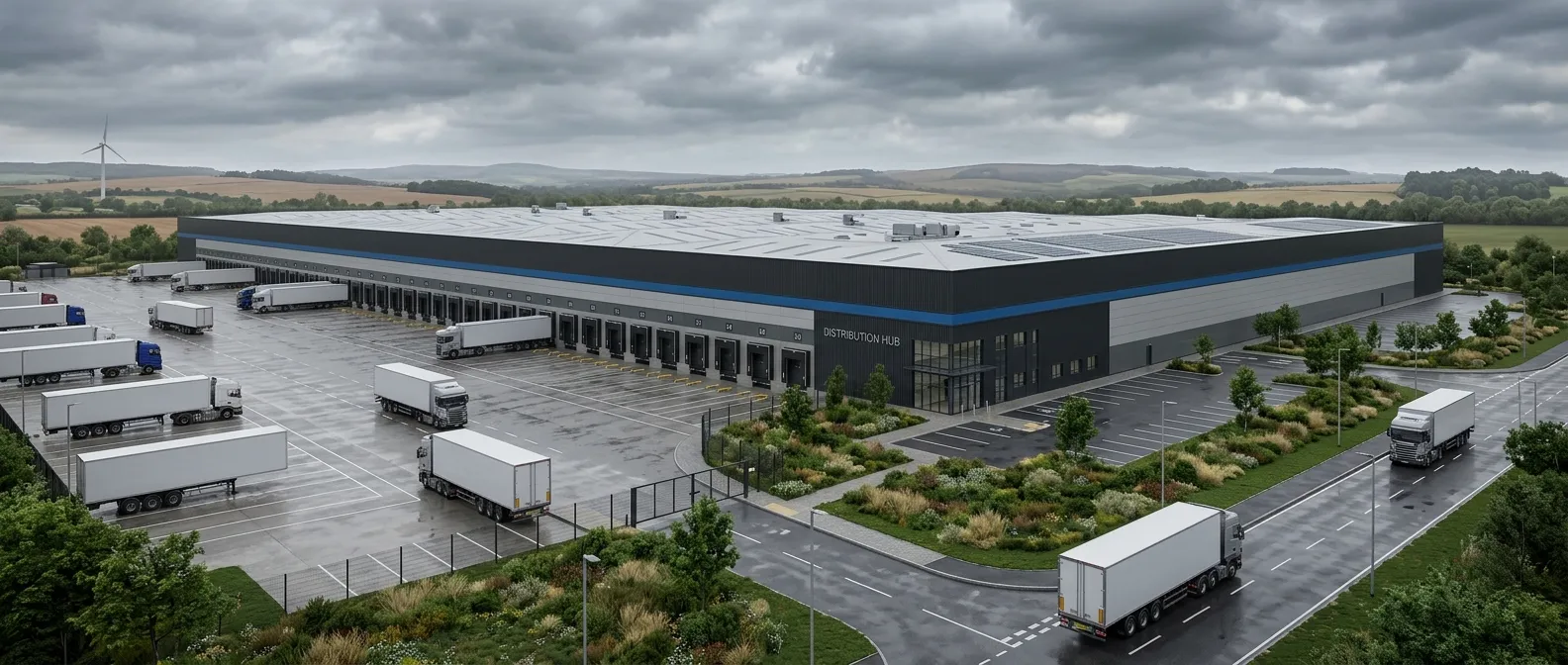
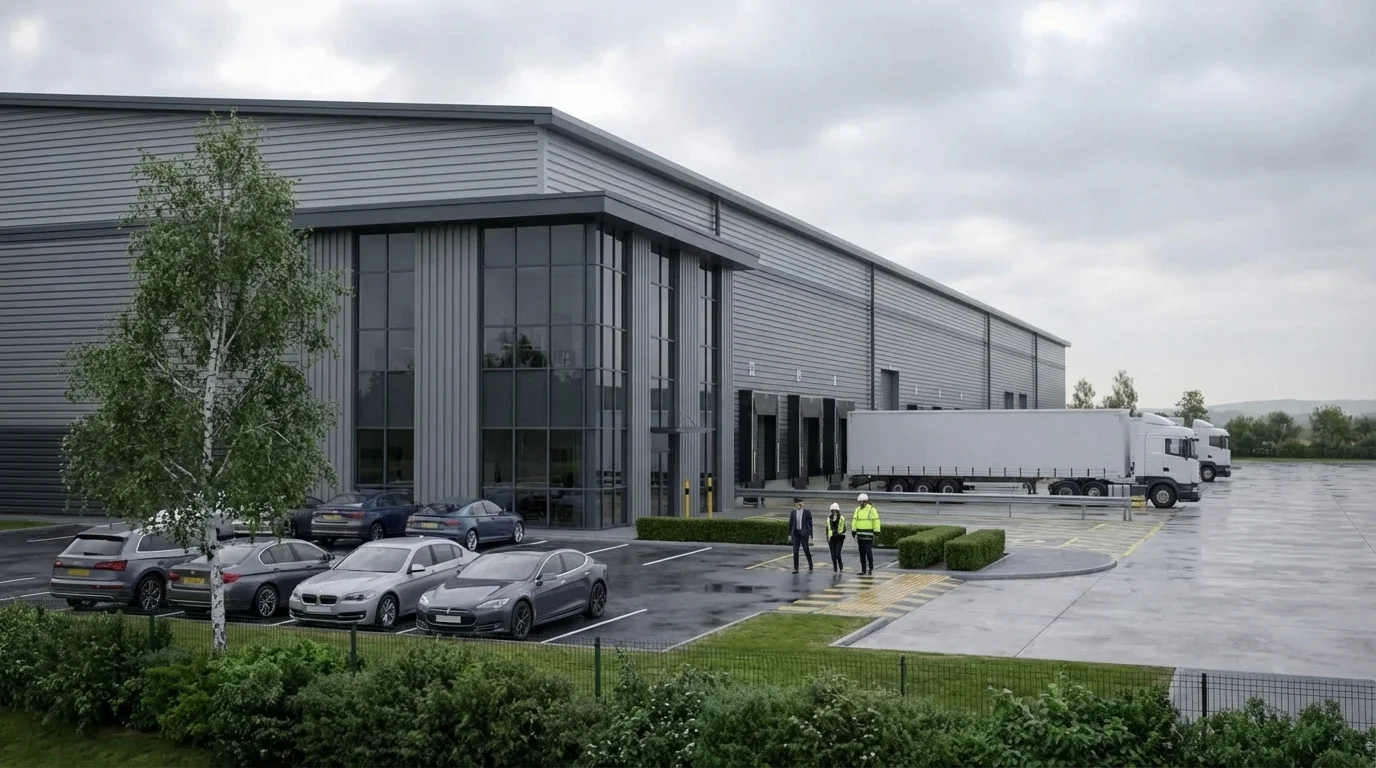
Temperature-controlled logistics facility CGI exterior showing an insulated warehouse envelope, roof plant screening, and service yard CGI for SCGI-007 by StratumCGI

Temperature-Controlled Logistics Facility CGI (SCGI-007)

Cold chain warehouse CGI for planning review, investor explanation, refrigeration plant screening, and insulated warehouse envelope communication.

SectorCold Storage, Logistics, Technical Facility
RegionUK, authority withheld
TypologyCold Chain Warehouse
OutputsPlanning CGI, Yard Views, Investor Pack Imagery
FocusInsulated Envelope, Plant Screening, Dock Discipline
ReferenceSCGI-007, anonymised
Commission Cold Storage CGI

The SCGI-007 temperature-controlled logistics facility CGI view set establishes five planning review signals before the page moves into technical notes.

The hero image coordinates the insulated warehouse envelope, roof plant enclosure, and service yard in one exterior planning frame. Compared with ambient warehouse CGI, the cold-store frame needs clearer plant screening, HGV turning-circle logic, and massing cues without revealing confidential site details.

This anonymised cold chain case study is published under StratumCGI's anonymisation policy. Client name, tenant identity, exact authority, floor area, and commercially sensitive refrigeration details are withheld. The page describes the visualisation problem and the cold storage typology without disclosing confidential scheme data.
Request a Temperature-Controlled CGI Quote

SCGI-007 Cold Chain Project Overview

SCGI-007 is a cold chain logistics CGI commission for a UK temperature-controlled warehouse. The brief required one coordinated model that could support planning review, technical review, and investor communication without exposing confidential project data.

Cold-store volumeInsulated warehouse mass, cladding rhythm, and parapet line had to read as one controlled envelope.
Plant strategyScreening, rooftop services, and acoustic enclosure logic had to stay plausible without naming the refrigerant system.
Service yard accessDock face, HGV movement, and controlled yard operation had to connect back to the warehouse architecture.

Chilled handling, frozen storage, and yard operation each had to relate to the architectural envelope, without publishing the authority, tenant, client, or floor area.

Why Cold Storage CGI Needs More Than Standard Warehouse Visualisation

EnvelopePanel rhythm, parapet depth, air-tight door interfaces
PlantRooftop condensers, acoustic screen, service access
LoadingDock seals, rapid-rise doors, trailer stand-off

Cold storage CGI carries a different technical burden from standard warehouse visualisation because the thermal envelope, refrigeration plant room, rooftop condensers, and acoustic plant screen affect planning judgement. Standard logistics CGI can focus on frontage, dock doors, vehicles, and landscaping. Refrigerated warehouse visualisation must also show how insulated cladding panels, parapet depth, plant access, dock seals, and rapid-rise doors form the working fabric of the scheme.

Refrigeration cutaway CGI showing the cold-store chamber, chilled storage zone, frozen storage zone, and rooftop plant connected by refrigerant pipework, by StratumCGI
  • Cold-store chamber
  • Chilled storage zone
  • Frozen storage zone
  • Refrigeration plant
  • Acoustic plant screen
stratumcgi.co.uk
Sector context cutaway. SCGI-007 did not specify a refrigerant or refrigeration system, so the cutaway is illustrative only and reflects general cold chain logistics CGI patterns.

The insulated warehouse envelope defines the external read of a cold-store building. Panel rhythm, air-tight junctions, door interfaces, and thermal envelope continuity need to remain visible where those details affect massing, service-yard logic, or planning review. StratumCGI models the external skin as a system rather than a flat colour block.

Refrigeration plant screening and temperature-controlled loading discipline add the second layer. Rooftop condensers, heat rejection equipment, acoustic screens, dock shelters, dock seals, trailer stand-off, and yard marshalling all change the CGI scope because each detail adds geometry, coordination, and review time.

Estimated CGI Pricing for a Temperature-Controlled Warehouse Scheme

Temperature-controlled warehouse CGI pricing depends on the amount of technical modelling, the number of planning views, and the level of plant detail crops required. The ranges below describe typical StratumCGI package structures for cold storage CGI and refrigerated logistics facility CGI. They are not the commercial terms paid on SCGI-007, which remain withheld under the anonymisation policy.

Pricing summary CGI showing the planning, developer, and technical-and-marketing temperature-controlled logistics facility CGI pack bands with indicative price ranges, by StratumCGI
Indicative pricing bands for temperature-controlled warehouse CGI, with the detailed package ranges listed below.
The pricing bands are indicative examples for temperature-controlled warehouse CGI schemes. The ranges do not confirm the price, scope, refrigerant system, BREEAM status, or full view list for SCGI-007.

Temperature-Controlled Warehouse CGI Package Ranges

Small planning CGI pack, 2 to 4 stills from supplied CAD£4,500 to £9,500
Developer CGI pack, 5 to 8 stills with service yard stills and aerial context£9,500 to £21,000
Technical and marketing CGI pack with plant detail crops, brochure crops, and investor pack imagery£18,000 to £36,000
Additional plant detail crop or dock equipment crop£650 to £1,600 per crop
Planning portal formatting and named crop exportsIncluded with planning-spec packages
Extra stakeholder revision round after agreed drafts£220 to £480 per frame per round

Typical six-frame cold storage CGI package

£12,000 to £28,000

The range depends on CAD or BIM quality, refrigeration plant screening complexity, service yard CGI detail, number of planning views, and the level of anonymisation required for publication.

Planning consultantMassing, plant screen line, landscape mitigation
DeveloperFunding deck geometry and board-pack clarity
Letting agentDock approach, yard turning, tenant-readiness imagery

Temperature-controlled logistics facility CGI production becomes more controlled when stakeholder requirements are mapped before modelling, camera-pack setup, and final still delivery.

Director Notes on Cold Chain Warehouse CGI for Planning Accuracy and Investor Communication

Studio detail of three physical material samples for SCGI-007 cold chain warehouse CGI: a horizontal-ribbed insulated cladding panel, an acoustic plant-screen mesh strip, and a charcoal plinth sample, by StratumCGI
  • Insulated cladding
  • Acoustic plant screen
  • Charcoal plinth
  • Material accuracy
stratumcgi.co.uk
The SCGI-007 cold chain warehouse CGI started from physical samples, not from default warehouse styling, so the cladding rhythm, plant screen, and plinth read truthfully on the rendered envelope.

Five Briefs Inside One Cold Storage CGI Commission

SCGI-007 landed on five desks before the first camera was set. The developer, architect, planning consultant, refrigeration consultant, and the investor and letting team each read the same cold chain model with a different question in mind. StratumCGI built one model that held all five answers at once, and material accuracy, envelope and parapet logic, dock equipment, landscape mitigation, ESG context, and tenant-readiness imagery stayed consistent across the whole SCGI-007 image set.

Developer

Commissioning SCGI-007 began with a confidentiality problem. The developer needed cold chain warehouse CGI that could carry a planning committee and a funder board pack without naming the tenant or the authority. The brief prioritised a clear cold-store mass, a legible ambient cross-dock zone, a disciplined HGV service yard, and imagery that would survive a confidential investor circulation.

Architect

From the architect's side of SCGI-007, the test was straightforward. The CGI had to follow the drawings rather than warehouse styling shortcuts. Insulated cladding panels, door positions, parapet line, dock levellers, staff entrance, and landscape edges carried the same hierarchy as the drawing pack, and the rendered material logic had to survive a technical review with the design team in the room.

Planning Consultant

On the planning side, SCGI-007 had to read cleanly at committee. Building mass needed to separate from plant screening, landscape mitigation had to register as designed infrastructure, and service yard lighting, HGV movement, and pedestrian routes had to match the planning drawings. Restrained contrast mattered here, because an overstated lighting pass or material treatment can weaken committee confidence in a planning submission.

Refrigeration Team

Plant zones drove the refrigeration consultant input on SCGI-007. No project-specific equipment claim could be published, but plant access, heat rejection equipment, acoustic enclosure, and roofline control still had to stay plausible to a specialist reading the renders. The published wording separates general refrigerant-sector context from any unconfirmed SCGI-007 equipment detail.

Investor and Letting Team

Operational readiness was the question for SCGI-007's investor and letting team. The cold chain facility had to read as a working asset before any occupier conversation. Dock approach, HGV marshalling, staff access, brochure crops, and investor pack imagery all carried that weight, and every output stayed NDA-safe for confidential circulation. Each lens changed geometry, camera list, or crop schedule, which is why the five briefs were answered from one coordinated SCGI-007 model.
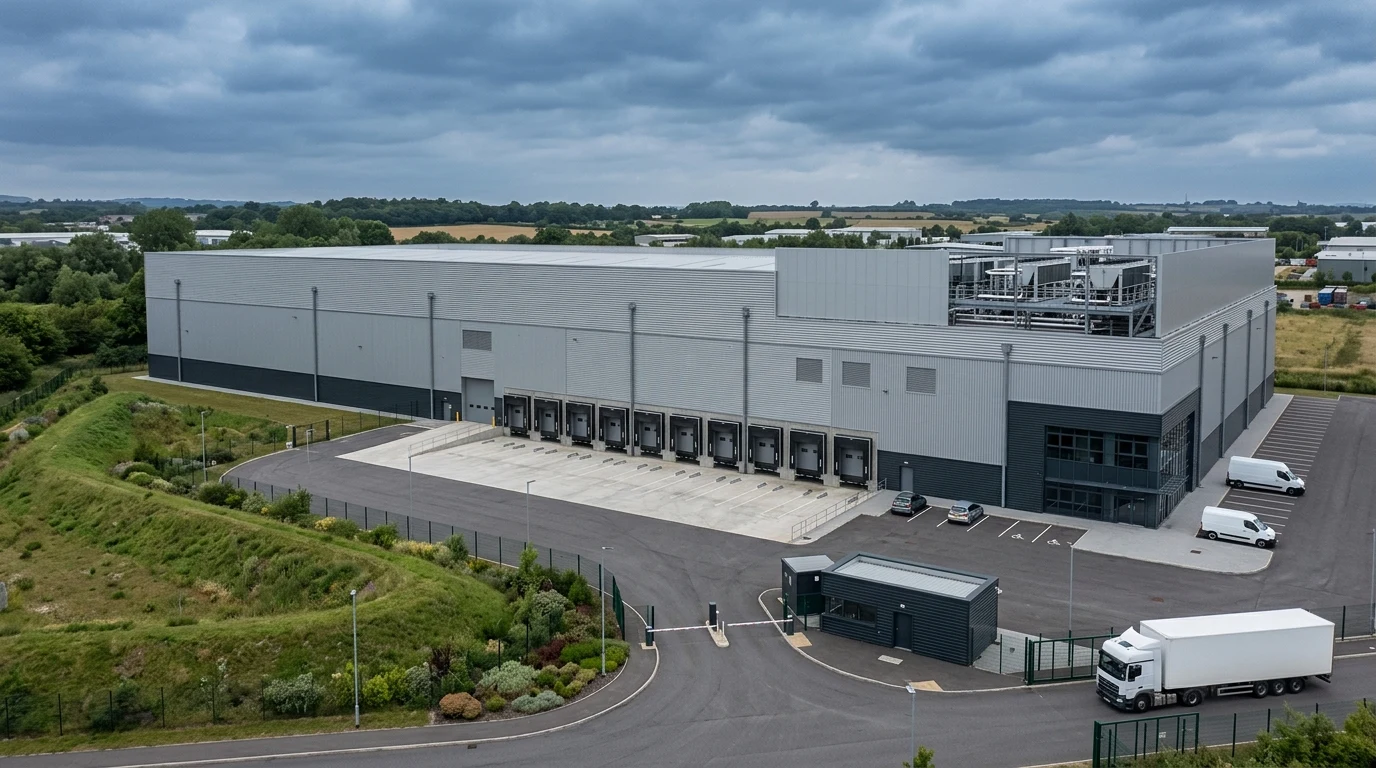
How StratumCGI Modelled Cold Storage CGI for Envelope, Plant Screening, and Yard Operation

Phase 1

Brief alignment and evidence gathering

Requested frames are mapped to stakeholder outcomes. Planning views need massing, roof plant screen line, landscape mitigation, and service access. Investor imagery needs aerial legibility and operational logic.

Phase 2

Model, material, and lighting setup

CAD, BIM, elevations, landscape plans, plant drawings, and facade schedules set the base geometry, parapet line, material palette, dock face, service routes, and lighting columns.

Phase 3

Review loops and final still delivery

Draft frames move through architecture, planning, MEP, and development review. Final delivery packages planning CGI, web images, investor pack imagery, and brochure crops.

Refrigerated warehouse visualisation is judged by planning, refrigeration, logistics, and investment specialists at the same time. A planner reviews massing, roofline, visual impact, and landscape mitigation. A refrigeration consultant reviews plant plausibility, roof plant enclosure logic, heat rejection equipment, and acoustic screen treatment. A logistics operator reviews yard flow. An investor reviews operational and commercial clarity. The same temperature-controlled logistics facility CGI must support all four reviews without exposing confidential project data.

Cold Chain Sector Context for Planning and Investor Imagery

£14bnCold chain GVA reported by the Cold Chain Federation in 2024
184,000UK jobs supported by cold chain activity
49%UK food and beverages requiring chilling or freezing
46%Energy cost increase reported for 2023 versus 2022

Cold chain sector context explains why planning CGI for refrigerated buildings needs more technical weight than a normal warehouse pack. The Cold Chain Federation 2024 report summary states that the UK cold chain contributes £14 billion GVA, supports 184,000 jobs, and generates £3.7 billion in tax revenue. That economic role matters for CGI because planners and investors are reviewing infrastructure that supports temperature-sensitive food, beverages, medicines, and horticultural products.

The same Cold Chain Federation summary states that 49 percent of UK food and beverages produced, valued at £50 billion, require chilling or freezing. The building envelope is therefore part of national product protection, not only a rentable shell. Refrigerated warehouse visualisation connects the insulated envelope, temperature-controlled loading bay, and service yard CGI to the safe movement of goods.

Energy, refrigerant, and ESG context also shape investor communication. GOV.UK guidance states that the UK is phasing down HFCs by 79 percent by 2030 compared with average use between 2009 and 2012. These references support low GWP sector context, but they do not confirm a BREEAM rating, refrigerant type, or renewable energy system for SCGI-007.

Aerial CGI showing a rooftop photovoltaic array alongside the screened roof plant zone and service yard of an anonymised UK temperature-controlled logistics facility, by StratumCGI
  • Rooftop PV, sector context
  • Acoustic plant screen
  • Service yard
  • F-gas regulation
stratumcgi.co.uk
Sector context aerial. The image illustrates the wider cold chain category. There is no claim that SCGI-007 carries a rooftop photovoltaic array or specific renewable energy provision.

Planning Visuals and Plant Screening Evidence

Planning visuals for SCGI-007 were framed around technical CGI for planning review, with no claim of measured photomontage or verified-view delivery. Planning views can still show visual impact context, roof plant screen line, landscape mitigation, service yard lighting, HGV movement, pedestrian routes, and acoustic plant enclosure. This page uses planning committee visuals as a communication category, not as a claim about a formal viewpoint verification workflow.

Refrigeration plant screening is often the point where a cold storage facility becomes visually different from an ambient logistics unit. A roof plant screen line can change perceived height, a plant room can change massing, and an acoustic plant enclosure can alter the architectural rhythm of the service elevation. For example, a parapet that looks clean in elevation can become visually complicated when heat rejection equipment, access routes, and screens sit behind it. Cold storage CGI should resolve that complication into a restrained image register that a planning committee can assess.

Planning impact view CGI of an anonymised UK cold storage warehouse seen from a public footpath roughly 400 metres away, showing landscape buffer, hedgerow, and parapet plant screen, by StratumCGI
  • Landscape buffer
  • Public viewpoint
  • Plant screen line
  • Visual mitigation
stratumcgi.co.uk
Distant landscape-impact view from a public footpath, the kind of frame a planning committee uses to assess visual mitigation.
Roofline section CGI of an anonymised cold storage warehouse showing the parapet plant screen, refrigeration condenser tops, gantry walkways, and access ladders behind the screen line, by StratumCGI
  • Parapet line
  • Plant screen
  • Condenser zone
  • Gantry access
stratumcgi.co.uk
Roofline section study showing how the parapet, acoustic screen, and condenser zone resolve into one controlled silhouette.

Landscape mitigation needs the same measured treatment. Bunds, trees, fences, surface water edges, staff paths, lighting columns, and HGV yard markings need to read as coordinated planning evidence rather than decorative background. Service yard CGI supports that evidence when vehicles, dock levellers, trailer bays, and pedestrian routes are placed with operational discipline. The result is planning CGI that lets the authority assess impact and lets the project team explain mitigation.

The planning evidence also shapes CAD coordination, BIM coordination, camera-pack setup, stakeholder review, and final still delivery. Once the plant screening evidence, yard operation, and planning image register are agreed, the project can move through drawing review, model build, draft camera pack, stakeholder review, and final still delivery.

Cold Storage CGI Workflow from Brief Setup to Final Still Delivery

The SCGI-007 timeline below describes a typical temperature-controlled logistics facility CGI workflow. Exact dates are withheld, but the sequence reflects how a cold storage CGI commission moves from brief and confidentiality setup to final still delivery and crop pack exports.

Methodology diagram showing the cold chain warehouse model in wireframe, clay-massing, and final photoreal stages, by StratumCGI
Three-stage methodology view for the cold chain warehouse model, with the brief-to-final workflow listed below.
Stage 1Brief and confidentiality setup, including anonymisation constraints, stakeholder roles, view list, and publication limits.
Stage 2Drawing review, including CAD or BIM, elevations, landscape plans, facade schedules, and available plant drawings.
Stage 3Model build, including insulated warehouse envelope, dock face, HGV yard, plant screen, staff routes, and landscape mitigation.
Stage 4Envelope and refrigeration plant coordination, including parapet line, roof plant enclosure, acoustic screen, and service access checks.
Stage 5Draft camera pack, including planning views, service yard stills, investor pack imagery, and brochure crops.
Stage 6Planning and investor review, including feedback on material accuracy, plant screening visual treatment, HGV movement, and image register.
Stage 7Final still delivery and crop pack, including planning CGI, web images, print assets, and NDA-safe publication versions where agreed.

SCGI-007 connects most directly to case studies that share dock discipline, service-yard geometry, planning submission imagery, material hierarchy, and operational constraints. The warehouse exterior dock leveller CGI case study overlaps with SCGI-007 on dock levellers, service yard views, and planning submission imagery.

The big-box warehouse CGI case study shows larger-scale logistics massing and investor communication. The non-standard logistics typology case study shows how operational CGI explains constraints that do not appear in a standard distribution warehouse.

Readers comparing service capability can use the industrial architectural visualisation portfolio for the complete proof set, the industrial CGI services page for service positioning, and the anonymisation policy for confidentiality details. These links keep the SCGI-007 page connected to relevant industrial CGI proof without pulling the page away from cold storage CGI.

Commission

Temperature-controlled logistics CGI

Planning CGI, aerial views, service yard stills, investor pack imagery, and brochure crops, prepared from your CAD or BIM, elevations, site plan, landscape plan, plant details, and viewpoint list. NDA-safe publication on request.