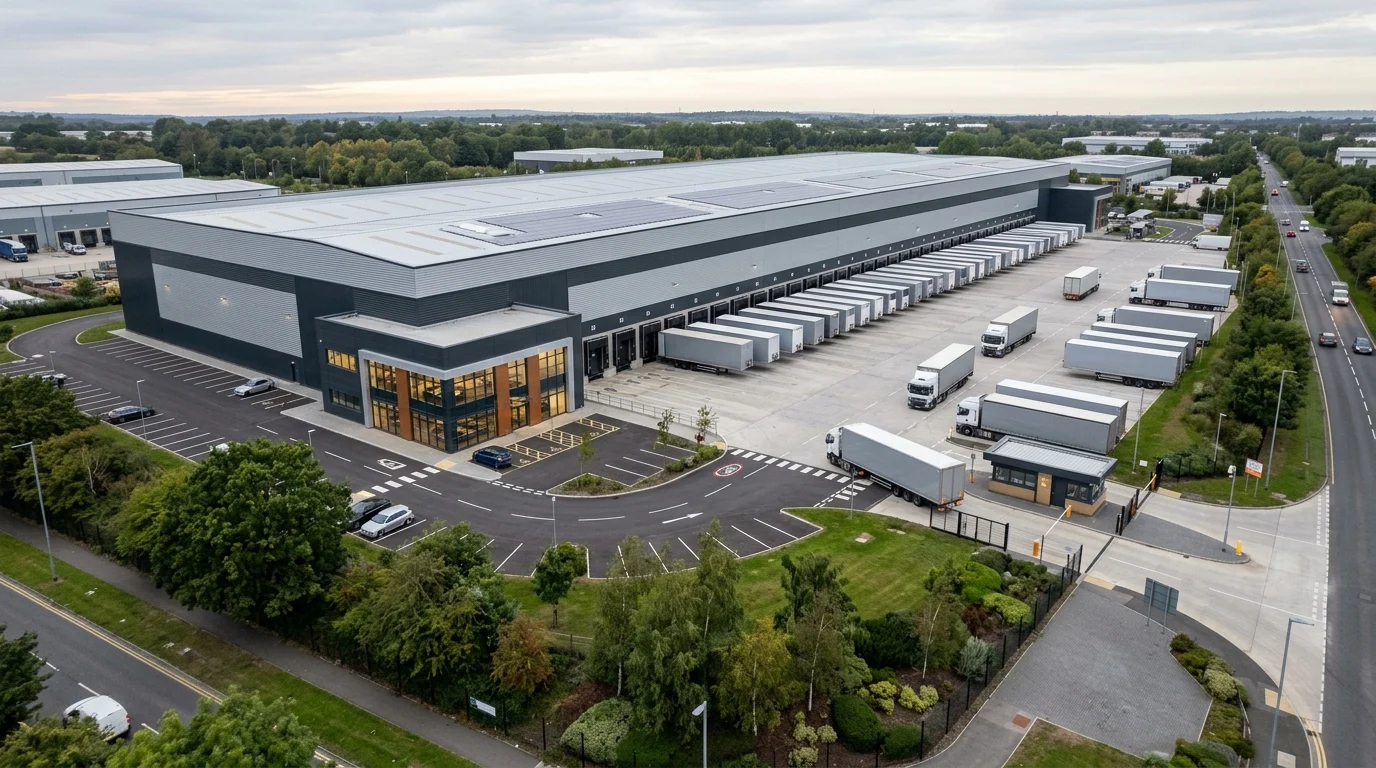
Golden Triangle Logistics Park CGI
Used for investor review
Big-box logistics park CGI for a Golden Triangle location, showing masterplan layout, unit flexibility, and estate infrastructure.
BTS warehouse and logistics CGI
Build-to-suit logistics space is a warehouse, distribution centre, or specialist logistics facility configured around one occupier's operation before construction. StratumCGI produces photoreal build-to-suit logistics visualisation for developers, agents, architects, and occupier teams, with one coordinated 3D model rendering planning evidence, pre-let marketing views, investor review frames, and occupier approval imagery from the same geometry.
Build-to-suit (BTS) logistics space is industrial real estate procured around one named occupier: a warehouse, distribution centre, or specialist logistics facility designed and built for a single tenant under a long-term agreement. The developer funds the asset, the architect resolves the shell, and the occupier brief drives site selection, clear internal height, dock configuration, yard depth, power capacity, and any automation infrastructure required for the operation.
Because the building does not exist when the deal is being negotiated, every reviewer assesses computer-generated imagery (CGI) rather than a finished asset. The visualisation has to read as operationally accurate and commercially marketable at the same time.
Select your parameters below to instantly check visual package suitability and typical delivery timeframes.
Recommended Visualisation Tier
6 premium marketing frames: corner aerial, gatehouse arrival sequence, HGV swept-path yard visual, and 3 standard interior racking setups.
100% Confidential. NDA signed before file exchange.
While standard warehousing is constructed to planning-neutral speculative parameters, a build-to-suit scheme is modelled directly from the tenant's corporate real estate brief and vehicle access schedules. The visual assets must substantiate operational feasibility at the gatehouse approach, the dock line, and internal automation envelopes before construction contracts are finalized.

In commercial real estate vocabulary, the occupier signs the long-term lease, the developer funds and builds the asset, and the facility itself is the warehouse, distribution centre, cold store, fulfilment hub, or specialist freight building configured around the occupier brief. Lease length, break clauses, and rent review pattern sit outside this page; the visualisation question is what the building has to prove visually before any of those terms are signed.
Build-to-suit logistics CGI runs the occupier's operation through the consented shell before construction, so the developer, the supply chain director, and the corporate real estate manager can read the building as a working facility rather than a drawing.
StratumCGI assembles the operational-fit model from the architect's CAD or BIM, then renders each frame as an internal workflow: automated guided vehicles (AGVs) tracing a put-away route from the dock to high-bay racking, counterbalance forklifts looping the marshalling aisle, and pickers feeding the mezzanine pack-out level.

The operational-fit test answers six questions before construction starts:
Build-to-suit is a procurement route, not a building type. The same long-term lease and developer-funded model can deliver any of the seven UK warehouse typologies below, and each one changes what the CGI has to prove. The operational-fit test above renders them all from the same coordinated 3D model.
Largest UK warehouse typology by floorplate and clear height. High-bay big-box facility built around throughput, dock-leveller density, and yard depth, configured for a single occupier moving pallets between inbound HGVs and outbound trunking.
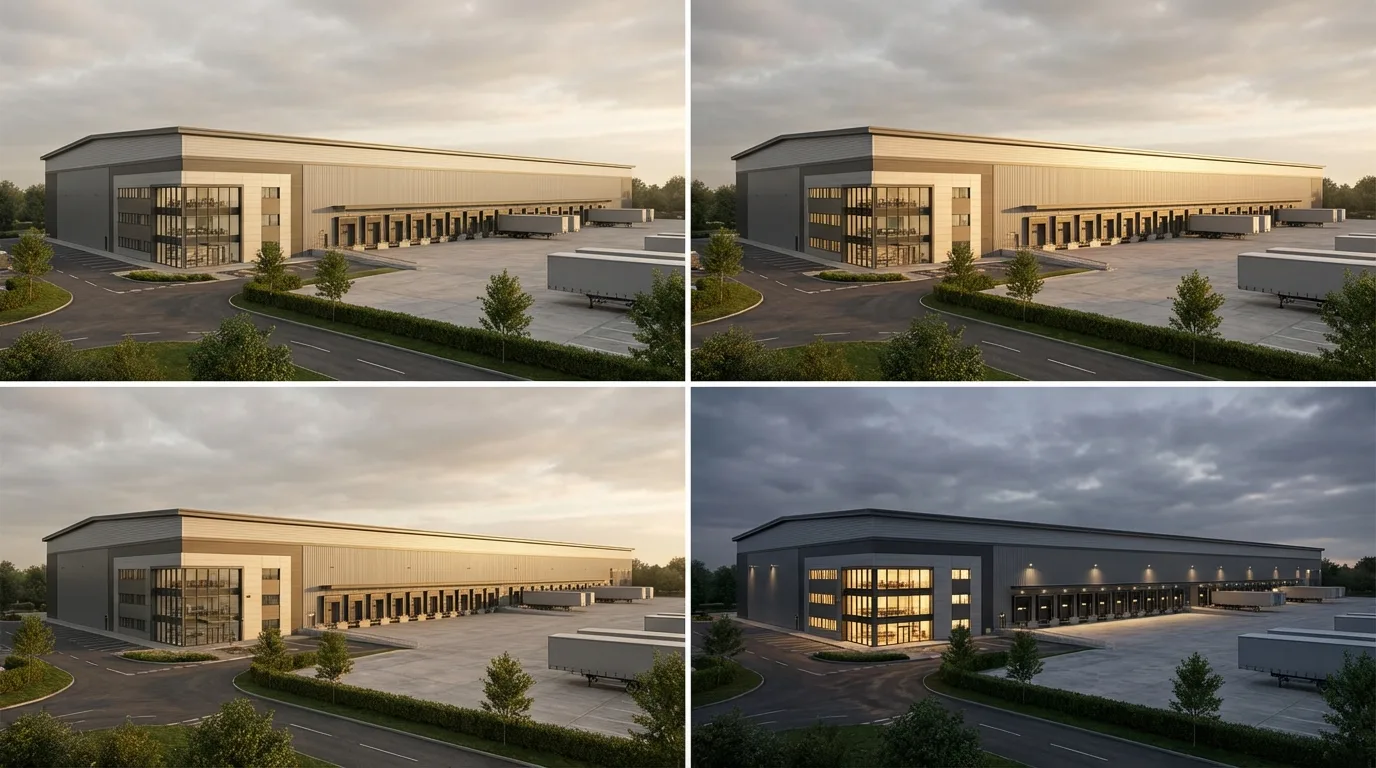
Third-party logistics (3PL) facility leased to a single operator that handles multiple shippers under one roof. BTS shell carries flexible racking, multiple zoned operations, and an office frontage scaled to admin-heavy use.
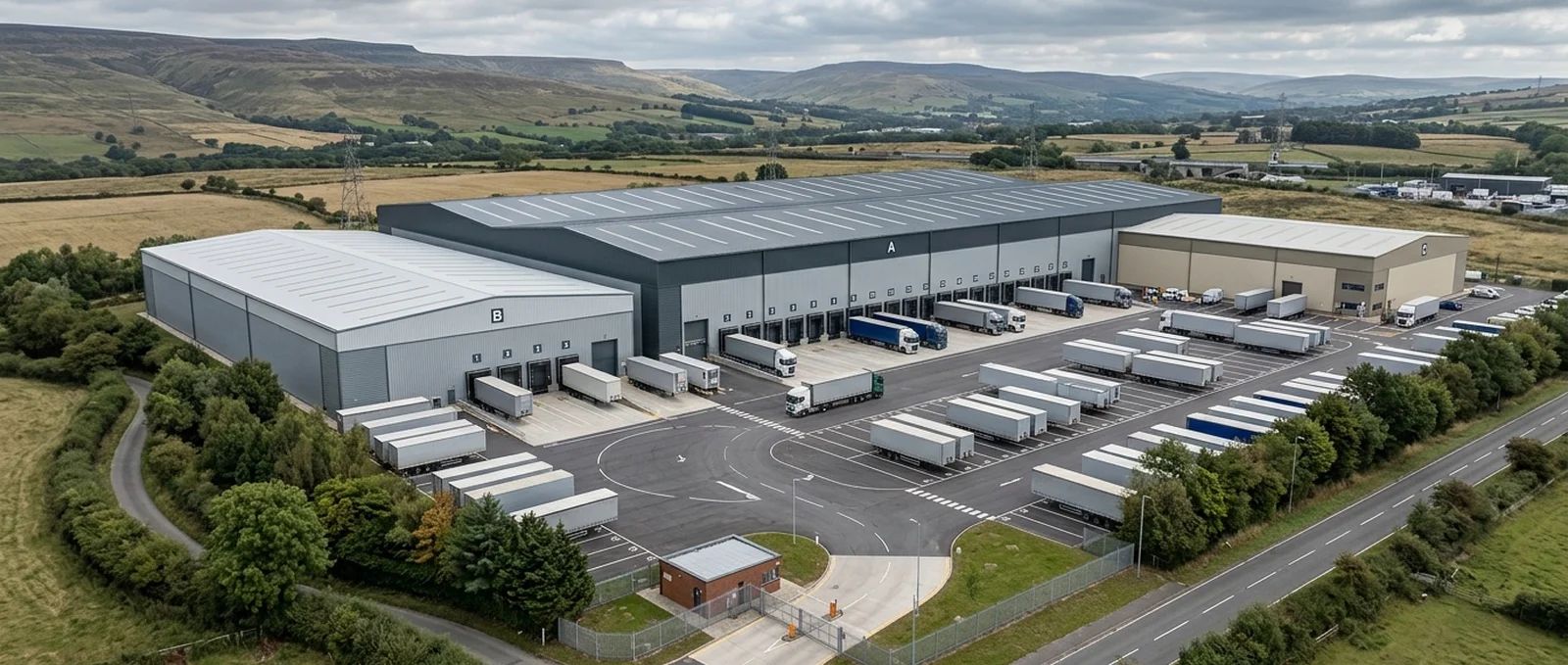
Owned and operated by one company for its own stock. BTS spec follows the occupier's racking plan, automation envelope, and supply chain SKU mix directly, with no need for tenant-flex shell margins.
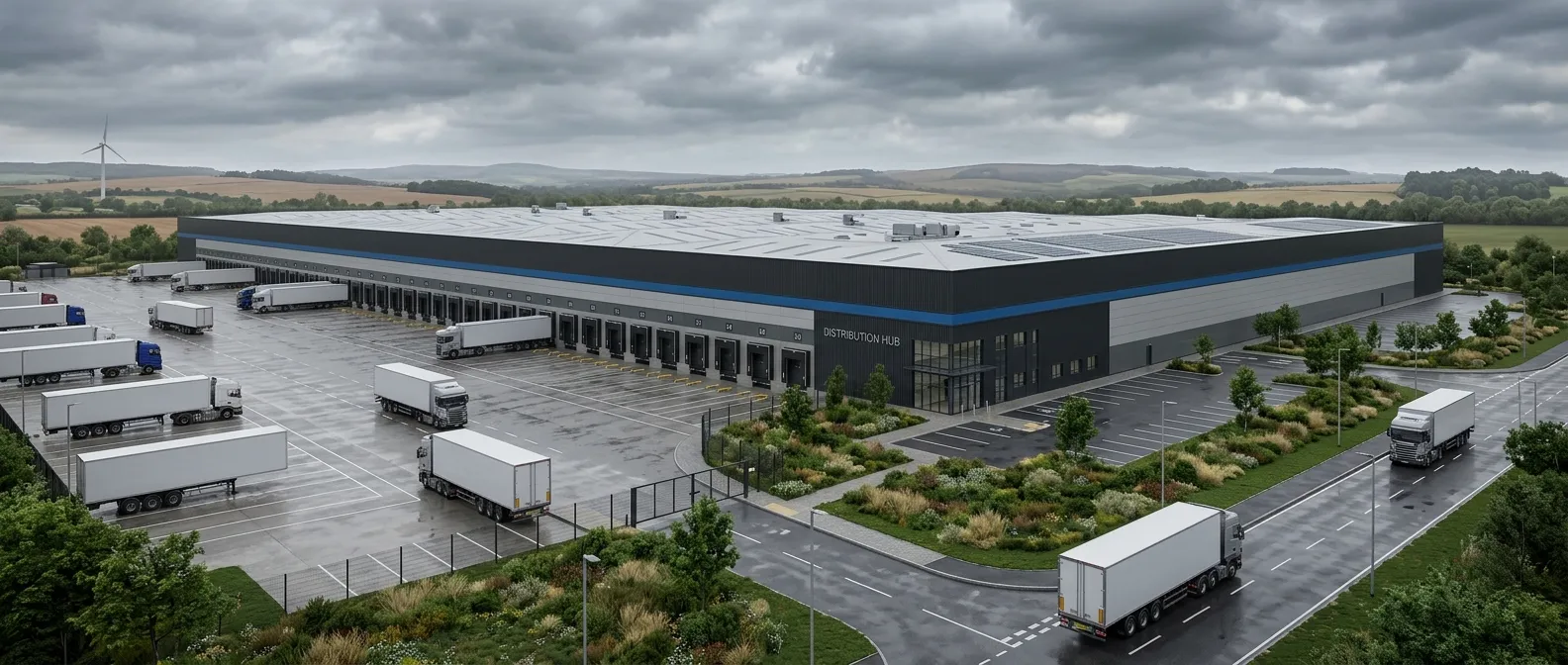
Holds imported goods before customs duty is paid. BTS render must show HMRC-compliant secure perimeter, ANPR-controlled gatehouse, segregated bonded storage area, and audit-grade access logging infrastructure.
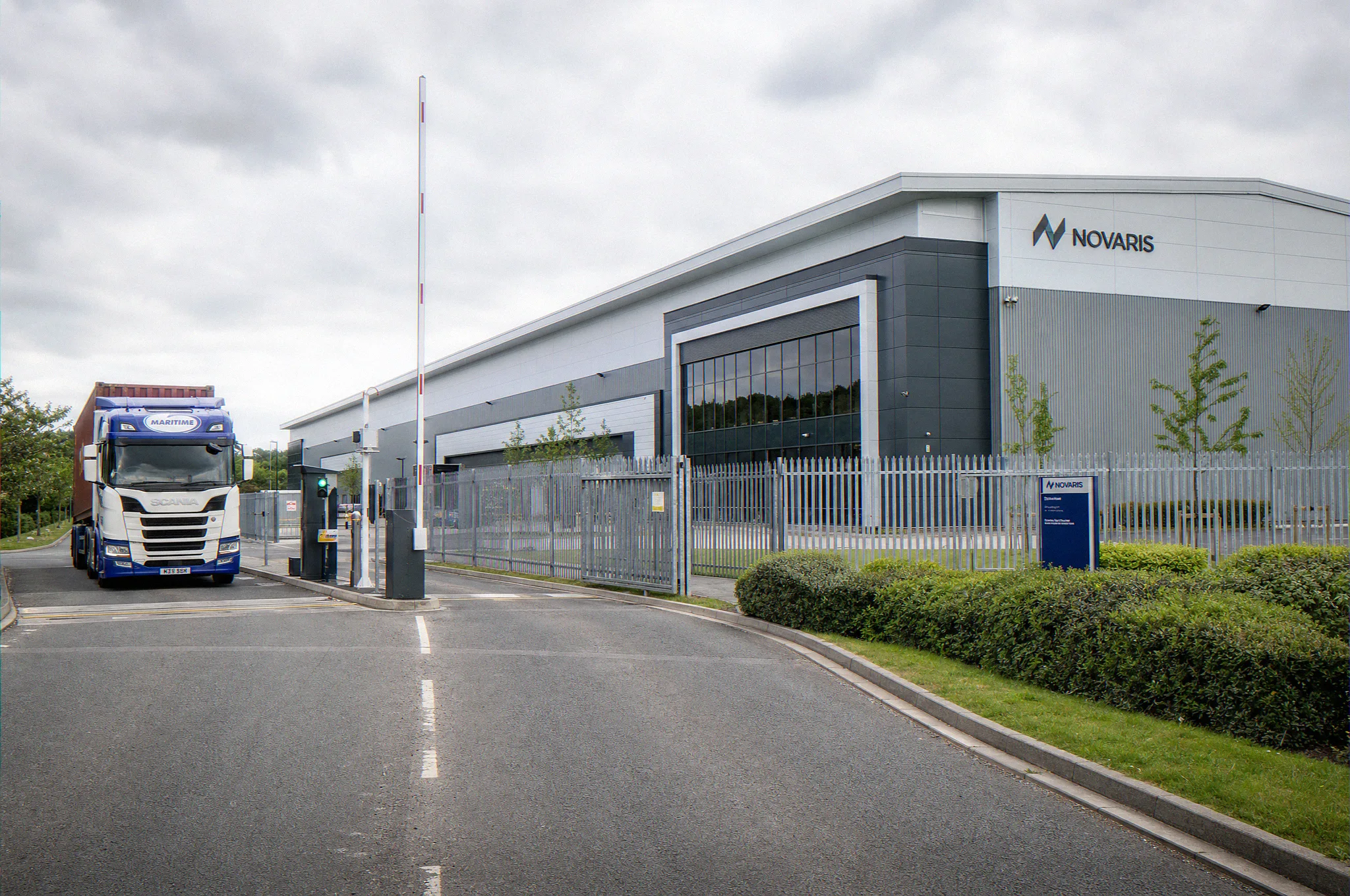
Temperature, humidity, or atmosphere managed for cold-chain food, pharmaceutical, or specialist freight. BTS visual evidence covers insulated envelope, dock-shelter sealing, refrigeration plant screening, and BREEAM-eligible fabric performance.
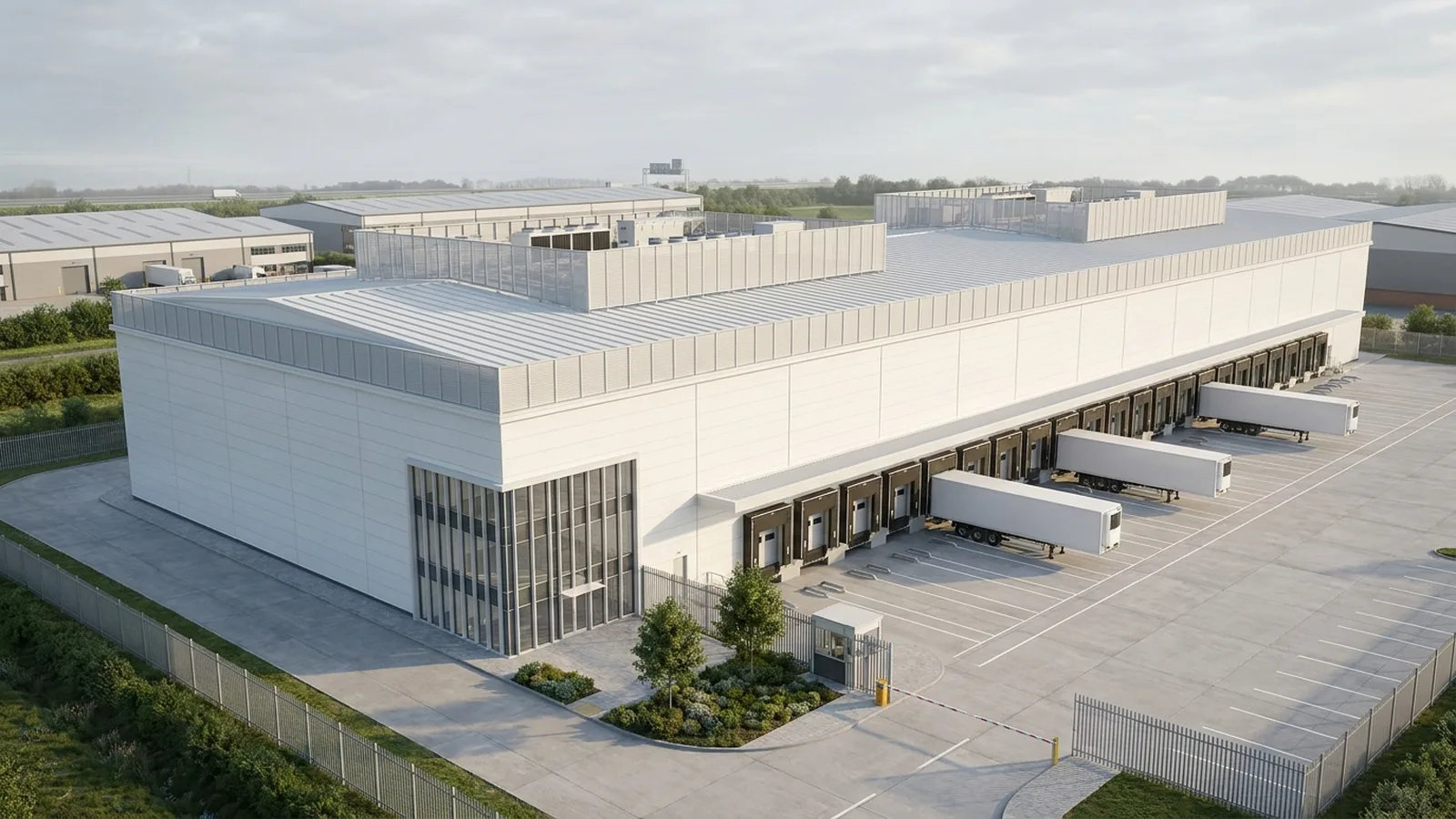
Automation-led facility built around ASRS, AGVs, robotic pick stations, and integrated WMS infrastructure. BTS CGI shows the automation envelope inside the shell, charging zones, and the IT room footprint at the right scale.
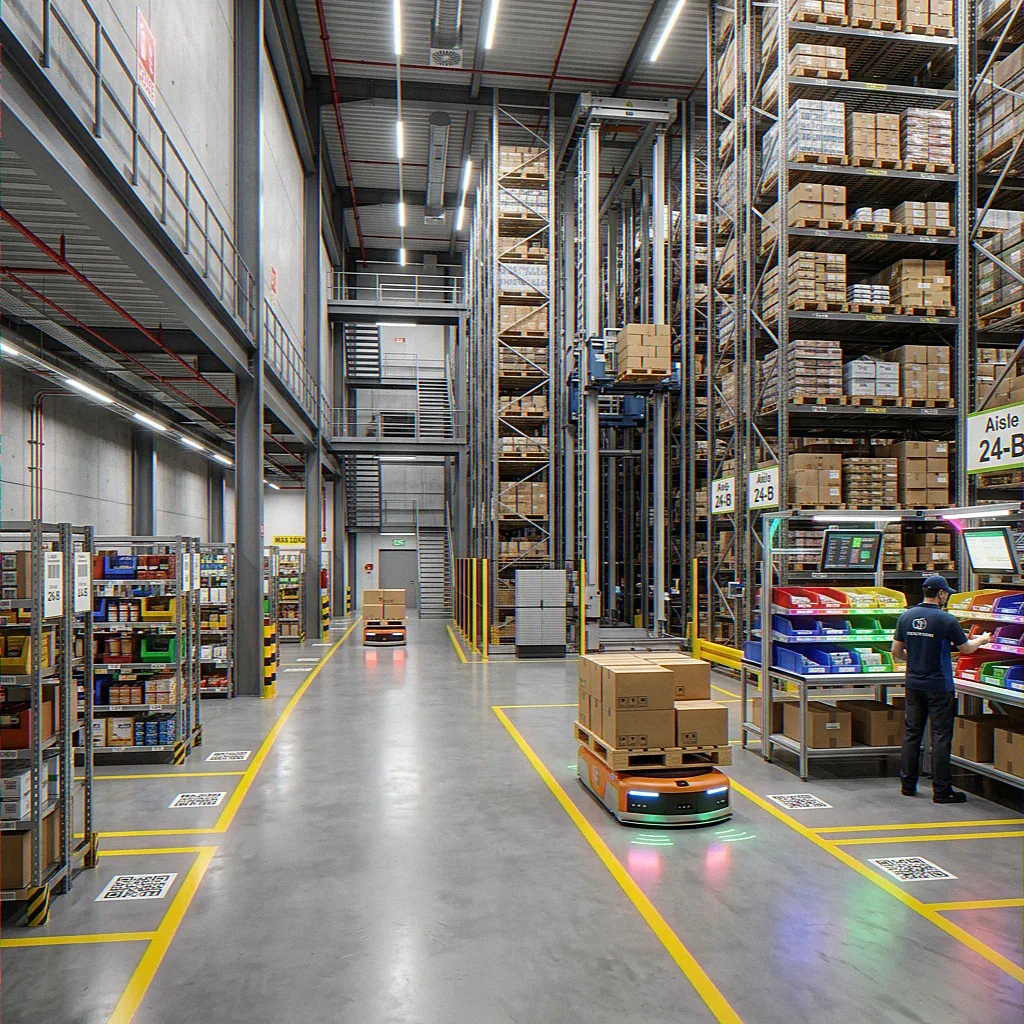
Holds mixed shipments from multiple suppliers before consolidation for downstream distribution. BTS layout configures dock-door zoning by supplier, cross-dock lanes, and a marshalling deck sized for the consolidator's flow pattern.
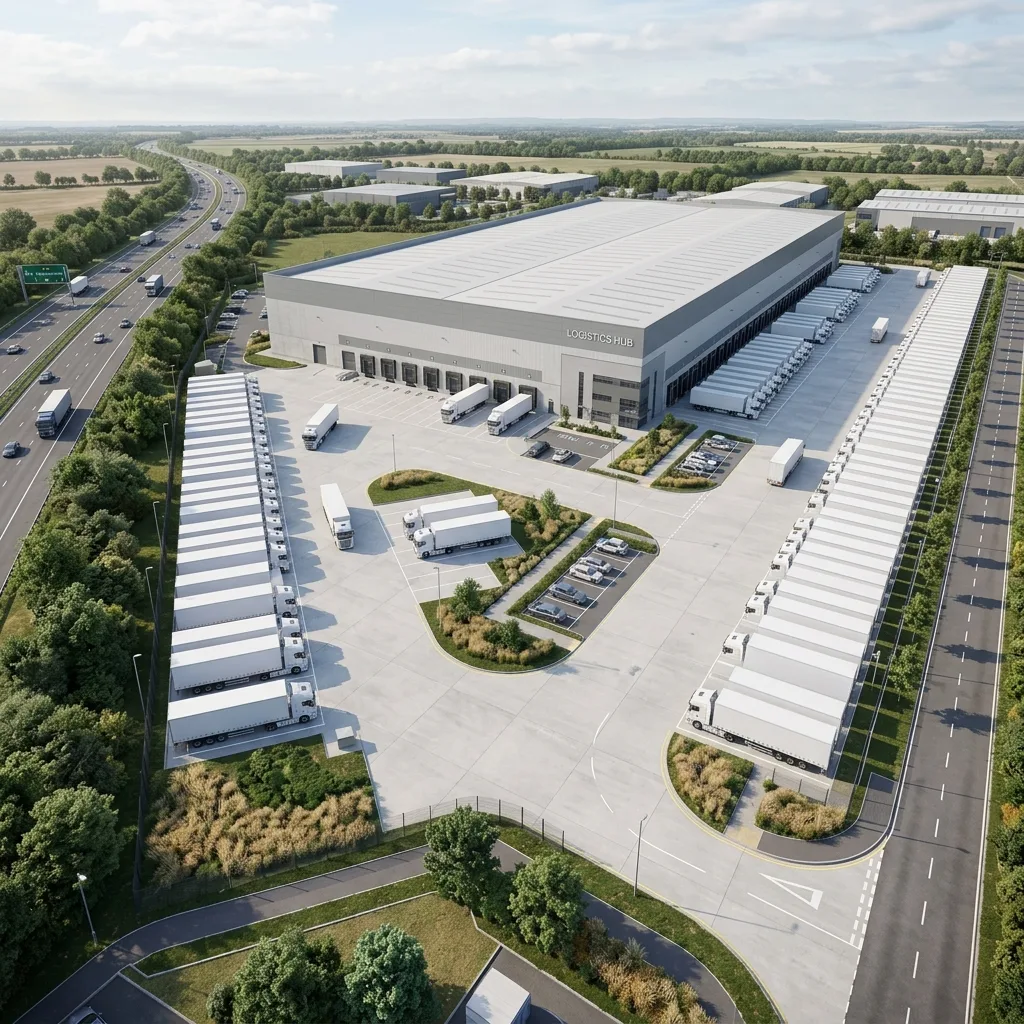
For the broader typology context across UK industrial real estate, see the warehouse typology decision guide.
A build-to-suit logistics programme passes through six review audiences between brief and ground-break. Each audience reads the same CGI for a different signal, so the visualisation has to satisfy planning, commercial, financial, and operational tests in parallel.
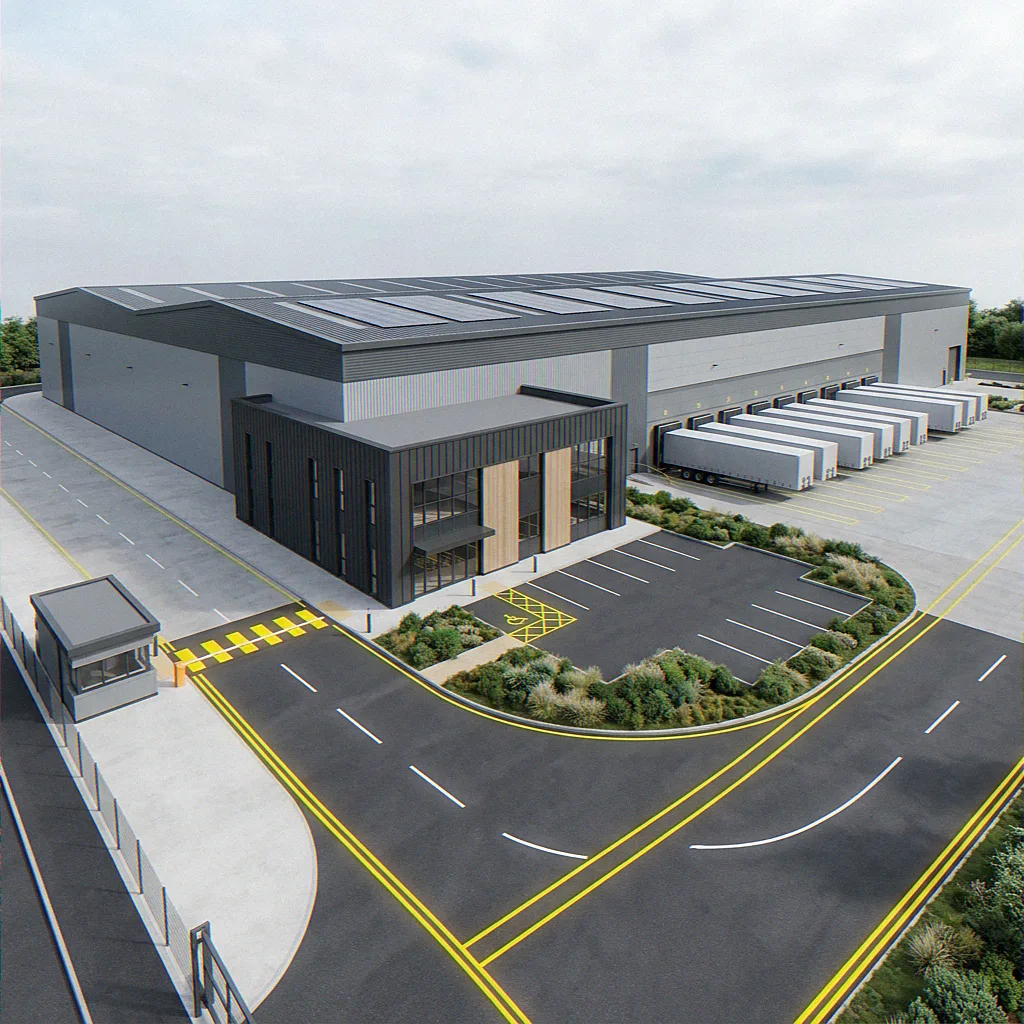
Reviews CGI against the occupier brief: clear height, dock count, yard depth, HGV circulation, racking density, and staff welfare frontage.
Tests whether the rendered building supports the planned throughput, automation zones, and inbound/outbound flow before signing heads of terms.
Uses CGI to attract occupiers, secure planning consent, and underwrite the scheme with funders before construction draws begin.
Needs a hero render that communicates yard depth, dock count, and facade quality to a target occupier shortlist in a single image.
Examines the CGI inside the investment committee pack to confirm the asset presents as a let, income-producing logistics building.
Submits CGI with the planning application as evidence of massing, materials, landscape buffer, and visual impact from agreed viewpoints.
StratumCGI packages the same coordinated 3D model into deliverables for each of these audiences: a planning pack for the planning officer, a pre-let campaign for the leasing shortlist, and an occupier programme for the named-occupier board review.
Build-to-suit decisions happen before the building exists. Planning, pre-let marketing, investor review, and occupier approval all run in parallel against drawings, and each audience needs a different visual proof from the same scheme. One coordinated 3D model serves every output, so the planning pack, the pre-let brochure, the investor IC paper, and the occupier presentation stay visually consistent.

BTS CGI is not just prettier speculative warehouse imagery. It changes the render from flexible shell evidence into occupier-specific operating proof: branded fit-out, named vehicle mix, automation zones in their final configuration, and racking density that matches the occupier's pallet plan.
The single-model approach also reduces revision risk across stakeholder reviews. When the planning officer asks for a verified view, the leasing agent asks for a hero exterior, and the occupier asks for an interior racking check on the same week, all three outputs come off the same approved geometry. The StratumCGI five-stage CGI process formalises this, with shell sign-off at week two and downstream views rendered against the locked model.
A build-to-suit decision is taken when the land is still a field. The CGI carries the evidence load: it lets the planning officer, the leasing agent, the investor, and the named occupier see the consented scheme in its full operational form before construction breaks ground. The aerial pair below reads the same UK logistics site twice, first as raw greenfield agricultural land, then as the consented BTS warehouse with rooftop photovoltaics, full dock-leveller run, and gatehouse access.


The same consented shell can be rendered three ways: planning-neutral, speculative leasing, and named-occupier build-to-suit. The geometry does not change; the camera, the dressing, the activity, and the branding do. The table below summarises how the CGI treatment differs by commercial mode.
A speculative render of a UK logistics scheme carries no occupier branding. The speculative brief is about the building as a leasable asset, not the tenant inside it.
The build-to-suit version of the same scheme takes a named occupier livery, signage, and frontage onto the same building.
Stratum's revision policy puts that branding swap at a re-quote, not a revision: lighting and framing adjust inside an agreed brief, but a new branding direction sits outside that brief and earns its own fee.
A speculative render resolves the scheme at shell depth: the warehouse, the yard, and the immediate context.
A build-to-suit render extends that geometry to dock face, interior racking, and full estate context. Stratum's Pro Pre-Let Launch Kit, the eight-image productised tier, carries four modelling days against the three-image Lite kit's two.
Either render is built from the architect's drawings, elevations, and material specification, the same evidence sequence UK warehouse schemes like Magna Park, Symmetry Park, and Omega Warrington are designed against.
On a speculative render of a UK logistics scheme, the yard carries a mixed HGV fleet in neutral livery. The buyer audience is leasing agents and investors, not a single occupier.
On the build-to-suit render of the same scheme, the yard takes named-carrier liveries and the operator-specific vehicle mix the occupier actually runs.
The mix follows the sector: parcel HGV for fulfilment briefs, chilled rigid for temperature-controlled work, three-shift HGV for grocery regional distribution.
A speculative render sits in daytime light. The buyer audience is reading the building, not its operating hours.
A build-to-suit render of the same scheme can carry the time of day the occupier actually runs, without a new fee line.
Stratum's revision policy puts time-of-day adjustment inside the scope of an agreed brief, the same scope that covers framing and post-production.
A speculative render is built to land on a leasing shortlist and in an investor deck.
A build-to-suit render of the same scheme goes into named-occupier review alongside planning and investor sign-off. The productised kit underneath each role differs: Stratum's Standard Pre-Let kit carries six images plus an aerial for shortlist work, while the Pro Pre-Let kit takes that to eight images plus a thirty-second flythrough for occupier-grade review.
The agent audience driving the speculative side is the UK industrial set: SEGRO and Tritax on the developer side, JLL, Savills, Knight Frank, Avison Young, and CBRE on the agency side.
The geometry does not change between a speculative render and a build-to-suit render. The same coordinated 3D model serves both. What changes is the dressing layer: livery, vehicle mix, signage, lighting.
Stratum's modelling reuse rule treats the first CGI kit on a scheme as the model carrier, two modelling days for a Lite-tier Pre-Let Launch Kit. The second and third CGI kit on the same scheme are re-dressings, where modelling drops to half a day each.
The saving flows to the buyer. A Lite kit at full model cost sells at £6,500. The re-dressed Lite kit on the same scheme sells at £4,500, while the studio still holds its 35 percent margin.
The rule survives only on asset hygiene. The scheme master file is saved with clean assets, named layers, and reusable lighting rigs from the first project, or the reuse saving evaporates.
For the broader speculative typology context, see the full warehouse typology range.
A build-to-suit logistics programme runs through feasibility, planning, pre-let, investor review, and launch. The CGI deliverables shift in scope and audience at each stage, but the 3D model carries forward, so geometry approved at planning is the same geometry rendered for pre-let and occupier review.
| Stage | Primary audience | CGI deliverables |
|---|---|---|
| Feasibility | Developer, occupier brief team | Massing study, site test-fit, aerial CGI |
| Planning | Planning officer, consultee | Verified views, photomontage, landscape screening renders |
| Pre-let | Leasing agent, target occupier | Hero exterior, yard view, interior racking, brochure crops |
| Investor review | Investment committee, funder | Occupied scene, IC pack crops, scheme aerial |
| Occupier approval | Named occupier board | Branded fit-out, named-occupier exterior, operational interior |
| Launch | Press, social, partners | Social crops, flythrough animation, event renders |
For the full pre-let marketing scope, see industrial property marketing packages.
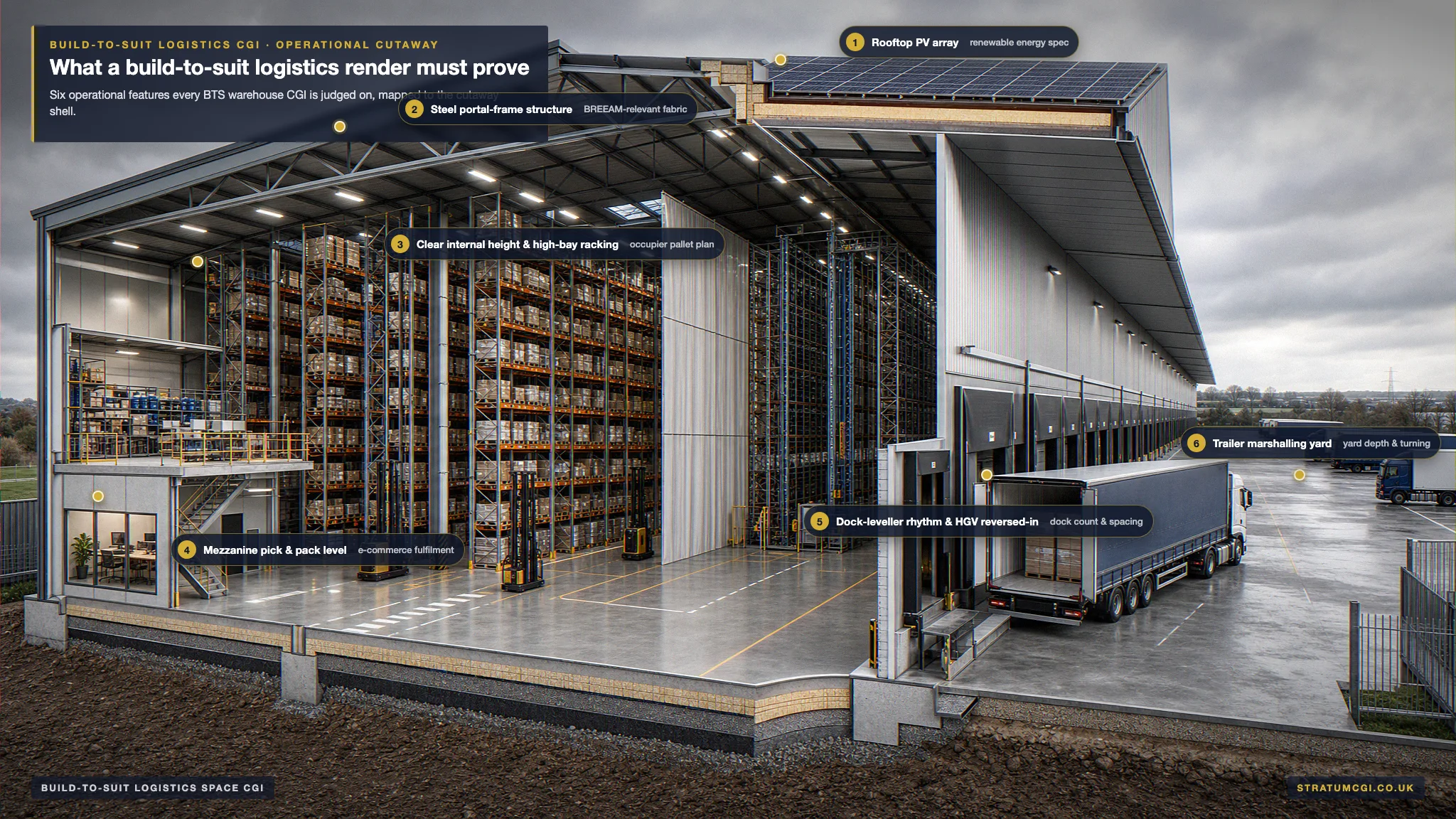
A build-to-suit logistics CGI is judged on operational fit. The render has to make clear how the building works on a normal shift, not just how it looks on a brochure cover. The annotated cutaway below maps six features every BTS render is judged on, and the checklist underneath itemises the full specification StratumCGI models from the architect's drawings and the occupier brief.
| Clear internal height | Matched to occupier racking plan and automation envelope |
| Dock doors and dock levellers | Count, spacing, leveller type, and dock shelter visible at correct rhythm |
| Yard depth and trailer parking | HGV swept paths, trailer bay count, marshalling yard discipline |
| Gatehouse approach | Security perimeter, ANPR lane, weighbridge if specified |
| Racking density and automation | Adjustable pallet, very narrow aisle, mezzanine, ASRS where briefed |
| Power infrastructure | Substation footprint, EV charging stalls, rooftop PV array |
| Office and welfare frontage | Two-storey office block, glazing, staff entry, cycle store |
| ESG features | BREEAM-eligible landscape, biodiversity strip, EPC fabric cues |
For the high-specification warehouse benchmarks each UK typology is judged against, see the UK warehouse typologies guide.
Build-to-suit logistics CGI sits inside StratumCGI's broader warehouse and logistics portfolio. The case studies below show the visual proof StratumCGI has delivered for big-box logistics, cold-chain, and last-mile schemes, anonymised where the occupier brief required confidentiality.

Big-box logistics park CGI for a Golden Triangle location, showing masterplan layout, unit flexibility, and estate infrastructure.
Cold-chain build-to-suit CGI showing insulated envelope, plant screening, and service-yard discipline for a temperature-controlled logistics building.
Distribution warehouse CGI communicating facade quality, loading-bay rhythm, and yard layout for a West Midlands BTS scheme.
Compact urban logistics depot CGI addressing van circulation, frontage quality, and pedestrian separation on a constrained site.
A clean brief shortens the CGI programme. The checklist below lists what StratumCGI needs to start a build-to-suit logistics commission and quote accurately against the project scope.
| Architect's CAD or BIM | Revit, Navisworks, or DWG package with shell, structure, and yard |
| General arrangement drawings | GA plans, elevations, sections at the latest signed-off revision |
| Site plan | Boundary, levels, vehicular access, landscape buffer, neighbouring context |
| Occupier specification | Clear height, dock count, automation zones, racking plan, vehicle mix |
| Verified viewpoints | Agreed with the planning authority, with photographic baselines if available |
| Stage and audience | Feasibility, planning, pre-let, investor, occupier, or launch |
| Brand assets | Occupier livery, signage, and any approved palette for named-occupier views |
Brief intake follows the StratumCGI five-stage CGI process. Coordinated 3D modelling sits inside the broader industrial CGI service stack.
These questions cover the commercial and definitional gaps most build-to-suit logistics clients need answered before briefing the visuals.

A warehouse, distribution centre, or specialist logistics facility configured around one occupier's operation before construction, funded by the developer against a long-term lease.
Build-to-suit CGI carries named-occupier branding, fit-out, vehicle mix, and operational lighting. Speculative CGI keeps the shell neutral and flexible.
Corporate real estate managers, supply chain directors, developers, letting agents, investors, planning consultants, and architects.
Clear height, dock door count, yard depth, HGV swept paths, racking density, automation zones, power infrastructure, EV charging, rooftop PV, and BREEAM-relevant features.
Architect's CAD or BIM, GA plans and elevations, site plan, occupier specification, dock count, yard layout, and verified viewpoint references.
Yes. One coordinated 3D model serves planning-neutral, speculative leasing, and named-occupier build-to-suit renders from the same consented geometry.
Planning CGI, pre-let marketing packages, operational-fit studies, and board review sets, prepared from your CAD or BIM, elevations, site plan, and occupier brief. NDA-safe publication on request.
Request a Quote