Warehouse and logistics
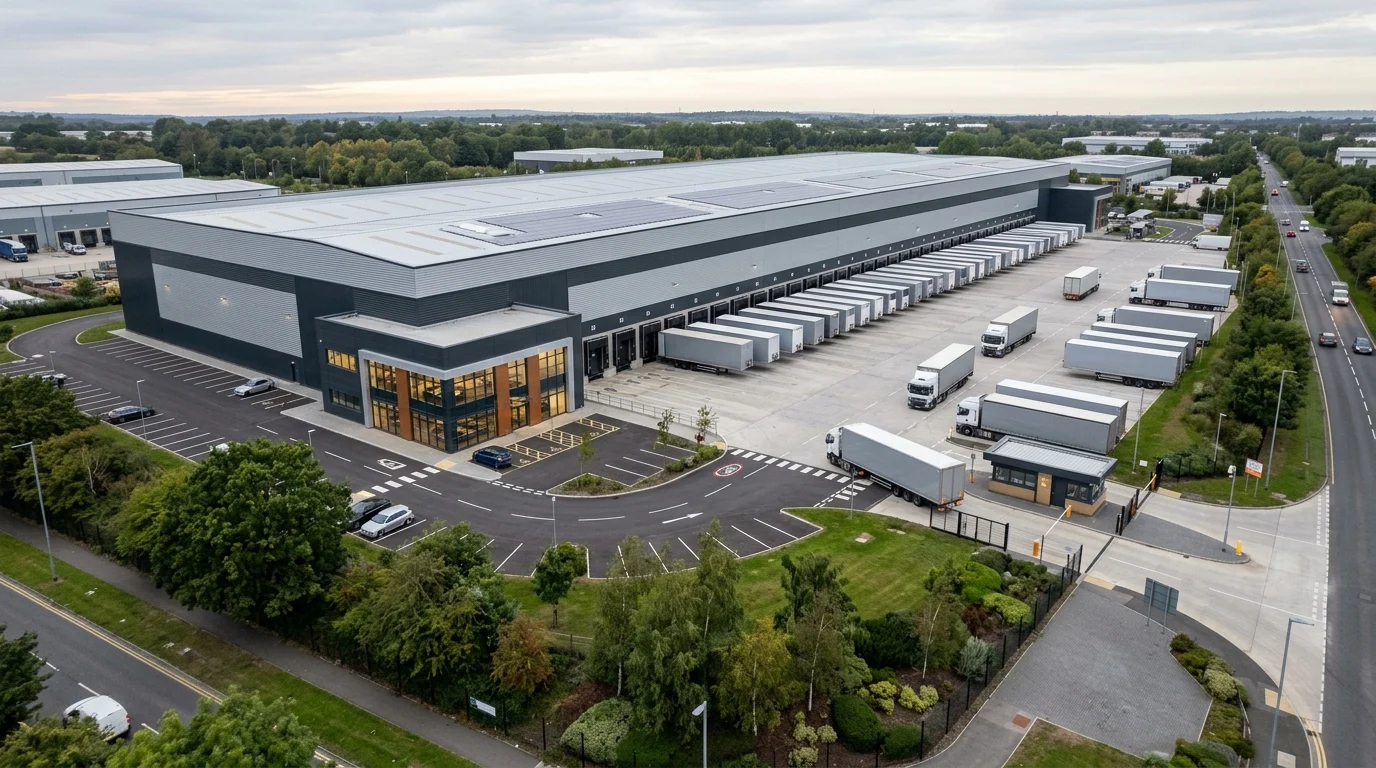
What the CGI proves: Dock count, yard depth, HGV swept-path, parking ratio
Cameras: aerial · ground · dock-face
Open briefIndustrial CGI Services
Photoreal industrial CGI for warehouse CGI, logistics CGI, data centre CGI, and light industrial estate schemes, with three revision rounds included and a delivery schedule scoped to each brief. Used as planning application CGI, pre-let marketing imagery, and investor presentation material across the UK in 2026.
Industrial CGI studio for UK logistics developers, planning consultants, architects, and agents







One coordinated 3D production pipeline visualises nine UK industrial typologies, from the dock-line of a big-box distribution centre to the frontage rhythm of a multi-unit light industrial estate.
Industrial park CGI is the multi-unit estate and employment-land typology in industrial CGI.
What the CGI proves: Dock count, yard depth, HGV swept-path, parking ratio
Cameras: aerial · ground · dock-face
Open briefWhat the CGI proves: GIA footprint, dock count, HGV swept-path, gatehouse
Cameras: aerial · approach · dock-face
Open briefWhat the CGI proves: Mezzanine GIA, yard depth, van-bay count, queue lanes
Cameras: aerial · ground · interior
Open briefWhat the CGI proves: Substation, perimeter security, plant deck, cooling capacity
Cameras: aerial · perimeter · plant
Open briefWhat the CGI proves: Unit count, shared yard, estate roads, masterplan footprint
Cameras: masterplan · frontage · ground
Case studyWhat the CGI proves: Frontage glazing ratio, cladding spec, office content %, signage zone
Cameras: frontage · ground · interior
Open briefWhat the CGI proves: Insulation U-value, dock-thermal seal, plant deck, cold-store volume
Cameras: aerial · dock-face · plant
Case studyWhat the CGI proves: Van bay count, drive-through route, site coverage, parking ratio
Cameras: aerial · ground · van-bay
Case studyWhat the CGI proves: Production hall clear height, M&E routes, loading bays, services zone
Cameras: aerial · ground · interior
Request briefStratumCGI visualises nine UK industrial typologies, with cross-dock logistics CGI, cold-chain warehouse CGI, sustainability-certified industrial estate CGI, hyperscale data centre CGI, battery energy storage CGI, and substation visualisation grouped under their parent brief.
For a decision-frame guide to each typology, including occupier mapping, planning evidence requirements, and CGI brief differences per type, see the UK warehouse typologies guide.
StratumCGI produces sector-specific CGI for 20 further UK building types beyond the core warehouse, data centre, and industrial park sectors shown on the StratumCGI homepage. Developers, operators, and investors commission these visuals because energy, commercial, and infrastructure schemes each require accurate cladding, plant, access, and operational detail.
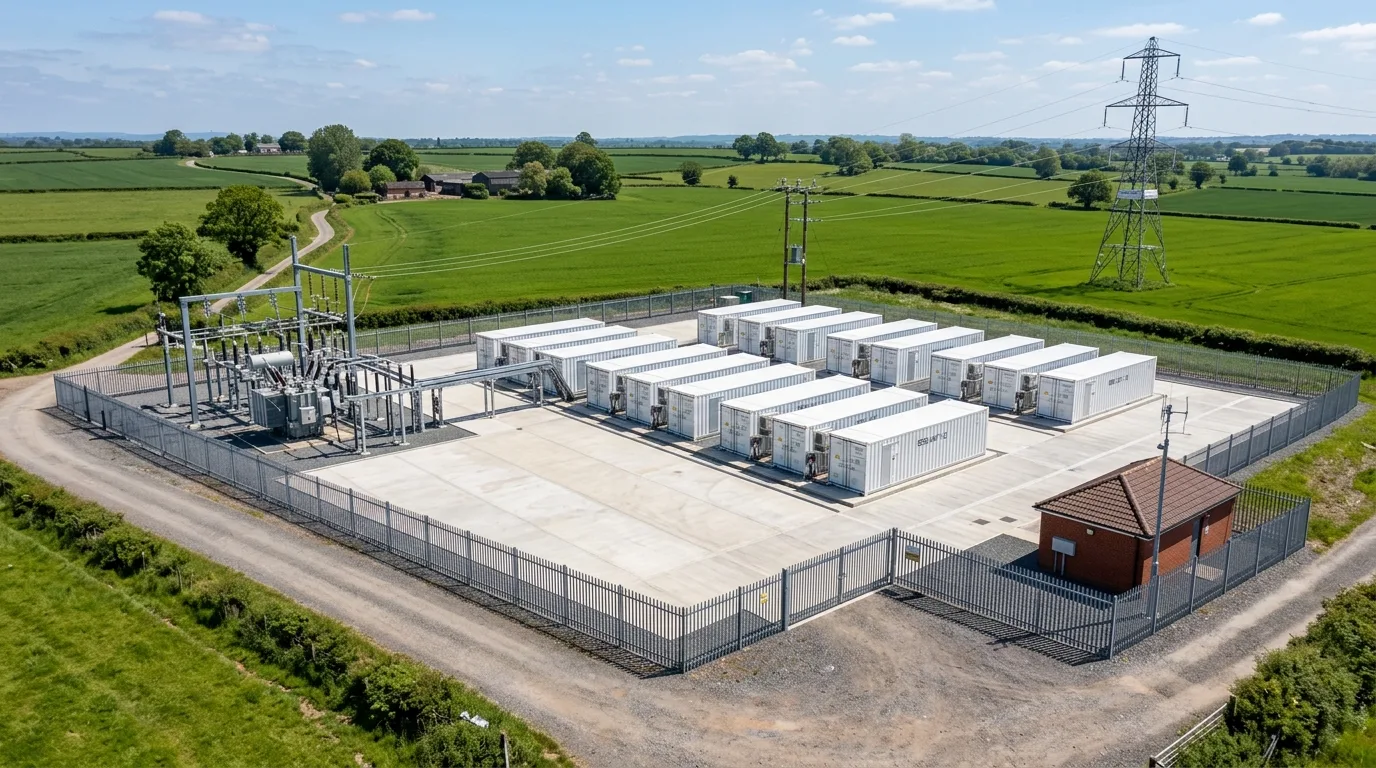
Exterior render of a battery energy storage system facility showing container-mounted battery units, transformer yard, grid connection infrastructure, and security perimeter.
What This Covers
Who Commissions This
Common Questions About BESS Facility CGI
StratumCGI models containers either to generic IEC-standard proportions or to specific OEM dimensions where a supplier has been selected. Transformer bays and cable routes are taken from the electrical layout. Accurate container sizing is important because planning officers increasingly scrutinise BESS massing.
Yes. StratumCGI can produce verified views from agreed assessment viewpoints with the BESS facility inserted into baseline photography. These images support LVIA submissions and are prepared to the methodology set out in SNH/NatureScot or equivalent guidance.
Overhead line gantries, cable route entry points, DNO compound fencing, and transformer plinths are modelled from the electrical infrastructure layout. Including these elements confirms the technical credibility of the CGI for planning and investor audiences.
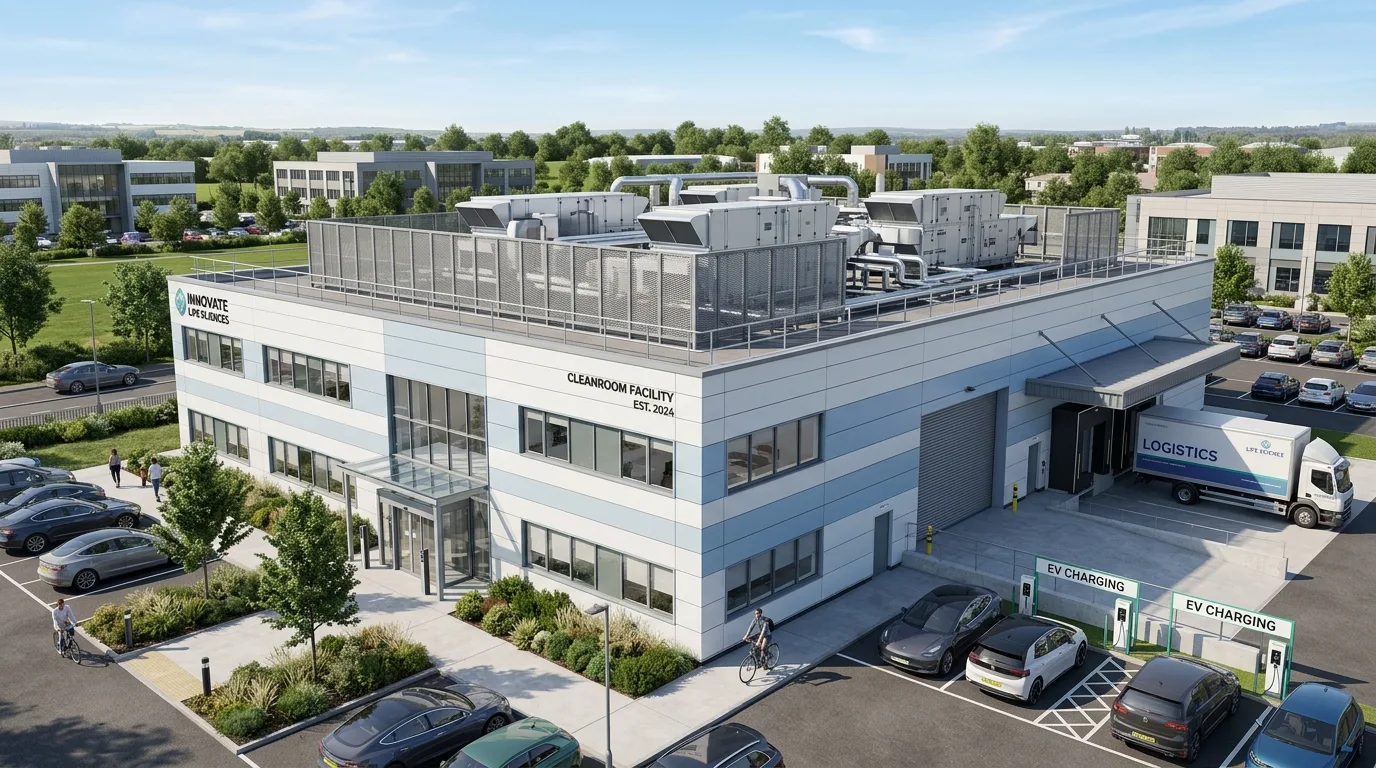
Exterior render of a life science and cleanroom facility showing laboratory-grade cladding, dedicated air handling plant, and secure goods-in area.
What This Covers
Who Commissions This
Common Questions About Life Science Facility CGI
A clean exterior render of a modern lab or research building with controlled-environment features visible: sealed glazing, roof plant, secure goods entrance, and staff entry. StratumCGI produces these for speculative science parks and purpose-built occupier facilities.
A science facility has distinct visual cues: specialist cladding, dedicated plant enclosures, controlled-entry areas, and higher-quality public realm. StratumCGI adjusts the level of detail on these elements so the building reads as a lab, not a shed.
Early enough to support pre-application discussions with the local authority and marketing to biotech occupiers. StratumCGI often produces the first render at RIBA Stage 2 or 3 once the massing and facade strategy are agreed.
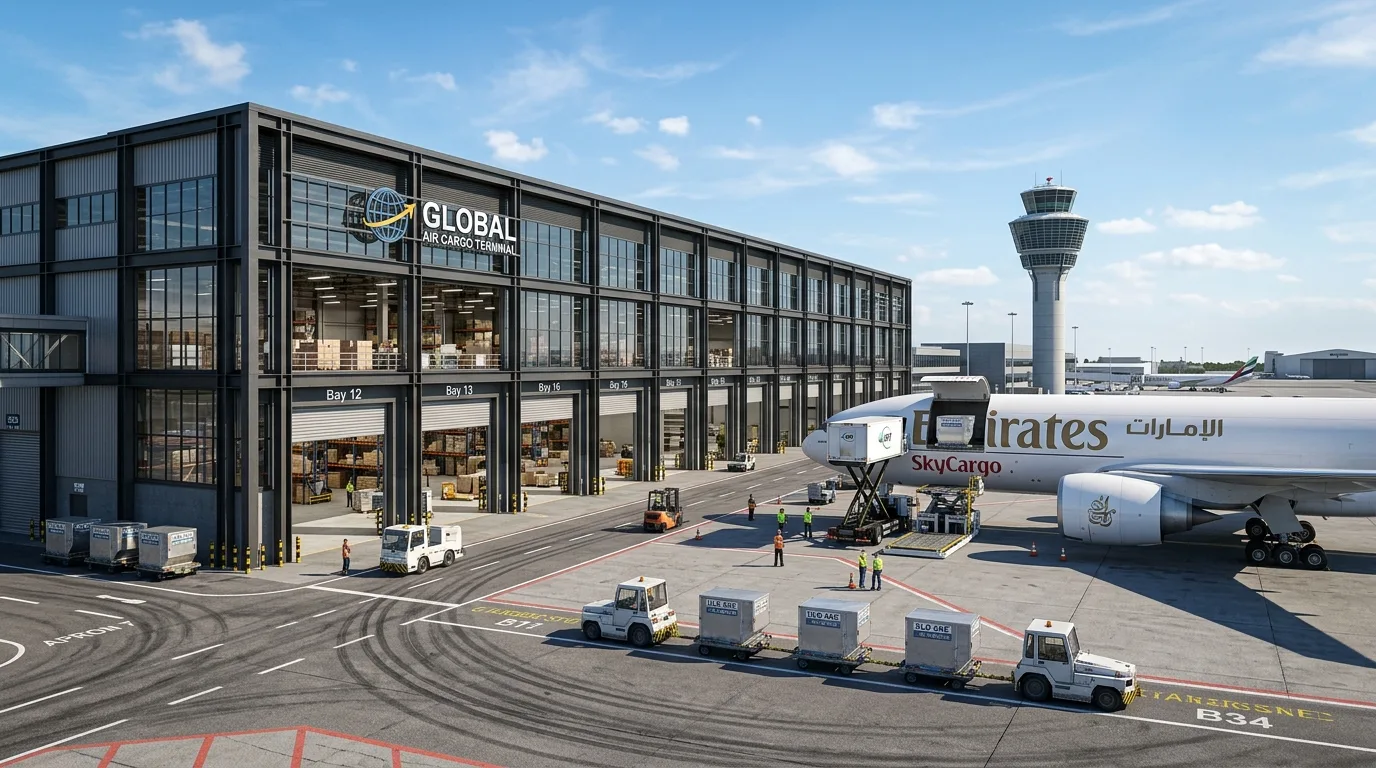
Apron-side view of a cargo terminal with aircraft stands, freight handling areas, and airside security infrastructure.
What This Covers
Who Commissions This
Common Questions About Airport Cargo Terminal CGI
Airside and landside boundaries, security lanes, and vehicle access control points are modelled from the airport master plan drawing. The visual separation of these zones is a regulatory requirement in planning submissions to airport authorities and the Civil Aviation Authority.
Yes. StratumCGI models aircraft to correct proportions for the designated stand type, from narrowbody freighters to widebody cargo aircraft. Apron ground markings, lead-in lines, and FOD boundary treatments are included where the brief requires a credible airside scene.
Unit load devices, baggage dollies, high-loader vehicles, and cargo transporters are placed in the apron scene to illustrate operational density. Equipment type is selected to match the handler's actual fleet profile or agreed with the client for speculative facilities.
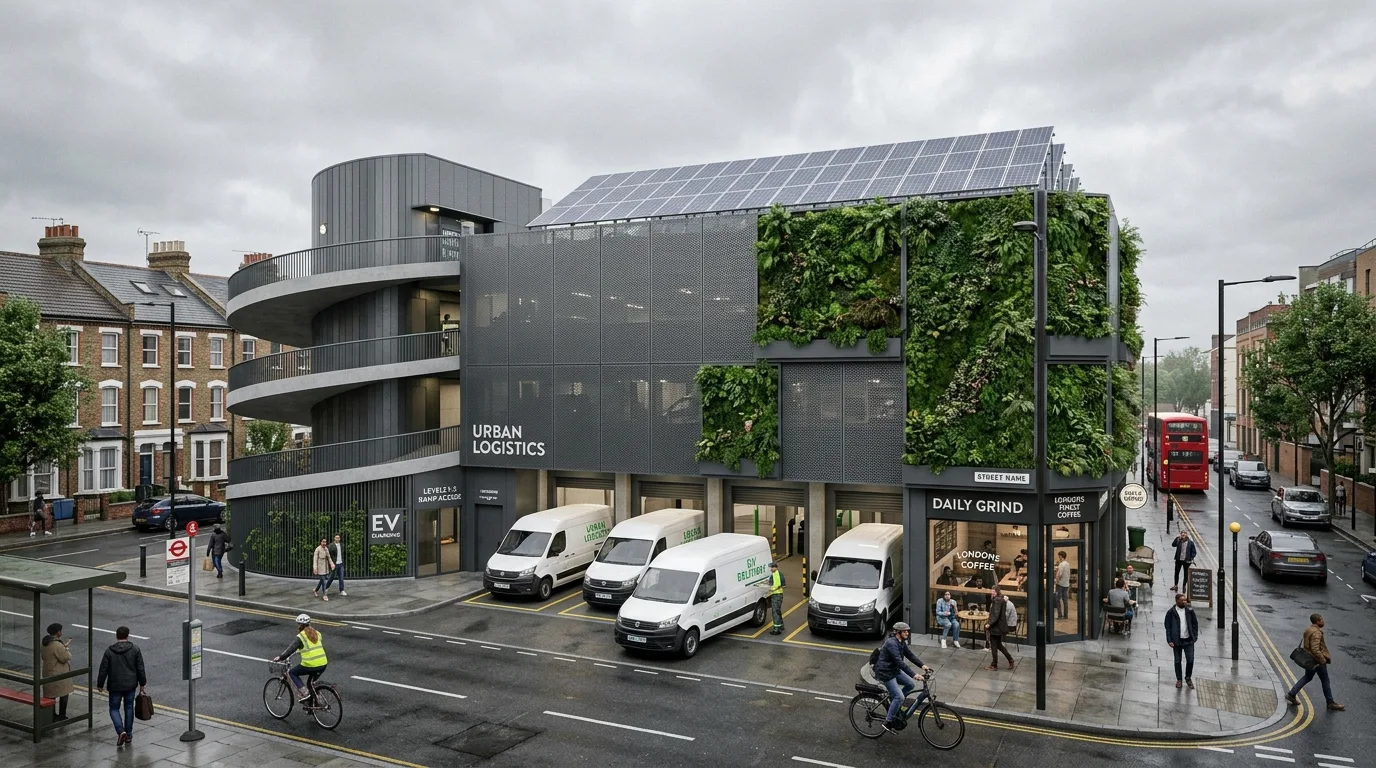
Exterior render of a compact multi-storey urban logistics hub on a tight inner-city site, with electric delivery vans, rooftop solar panels, and pedestrian-friendly ground floor.
What This Covers
Who Commissions This
Common Questions About Last-Mile Urban Depot CGI
Ramped vehicle access, mezzanine sortation decks, and ground-floor unloading bays are modelled from the architect's section drawings. A cutaway or elevated camera angle is often used to show the operational stacking logic, which is a common planning requirement for urban logistics applications.
Yes. Electric delivery vans, rapid-charge bays, cable management raceways, and solar canopies are modelled to the operator's specification. Including EV infrastructure in the CGI is increasingly requested by planning authorities requiring sustainable transport commitments.
Ground-floor retail or community uses, cycle parking, pedestrian routes, and street tree planting are modelled from the active frontage strategy drawing. This content demonstrates compliance with urban design SPD requirements in boroughs requiring ground-level activation.
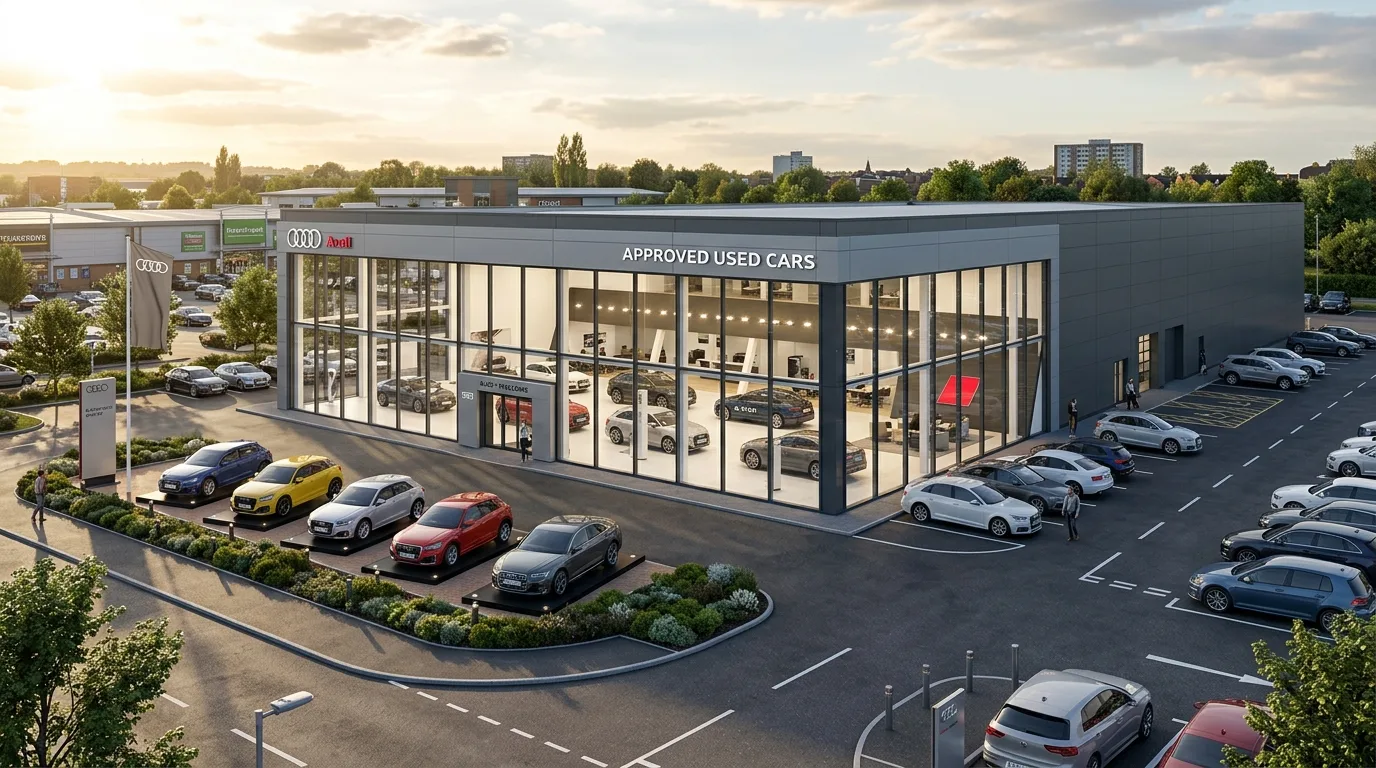
Exterior render of a car dealership built as a big shed portal frame with full-height glass showroom frontage, forecourt displays, and customer car park.
What This Covers
Who Commissions This
Common Questions About Car Showroom CGI
The glazed frontage is the hero. Car showroom CGI relies on interior lighting pushing through floor-to-ceiling glass, with display vehicles visible from outside. Dusk and evening renders are common because they make the showroom glow against the forecourt.
Yes. Where the dealer brand is not yet agreed, the showroom is rendered in a neutral specification with generic signage. Once a franchise is confirmed, the CGI can be updated with OEM colours, totem signs, and approved branding.
A site plan, elevations, and a sense of the intended franchise or brand tier. If the OEM is known, their brand guidelines help with signage proportions and colours. A concept layout is enough to begin, detailed interiors can follow later.
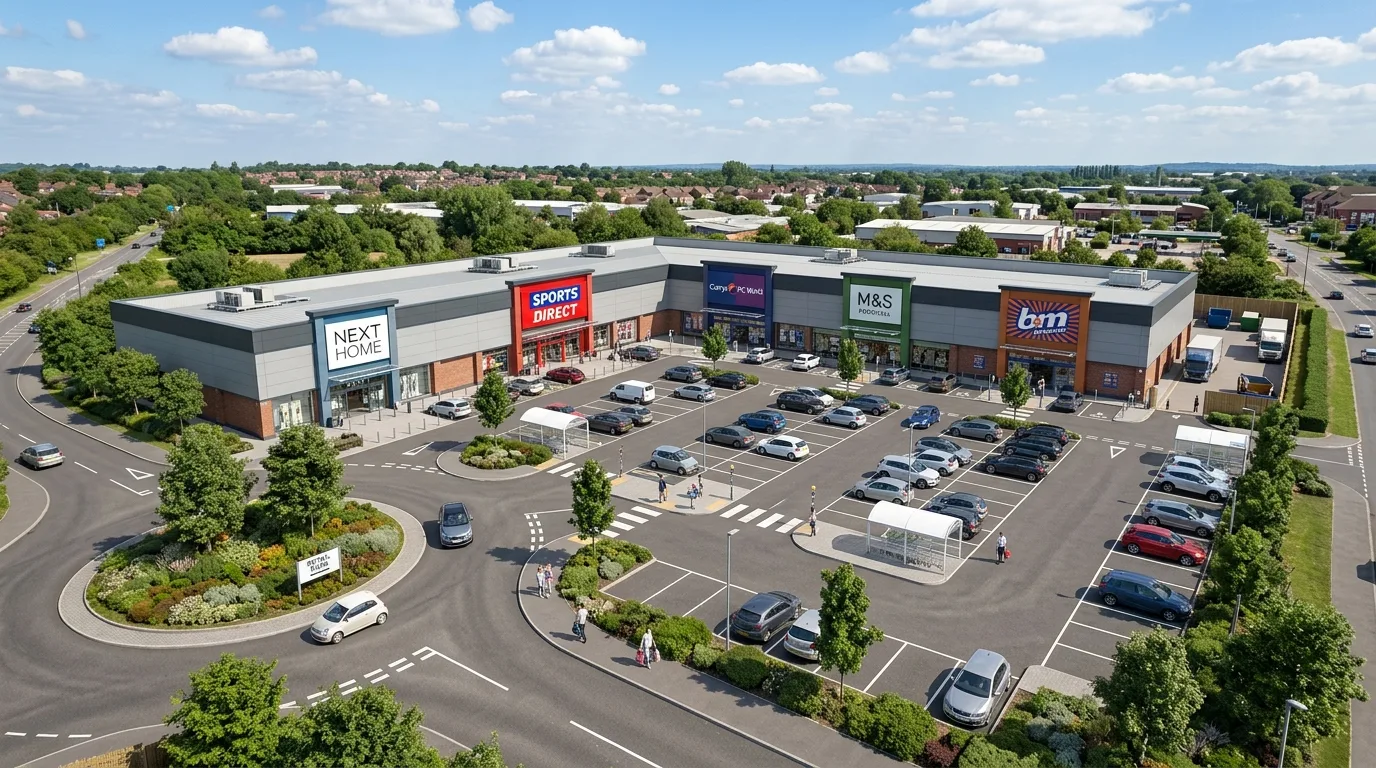
Big-box retail warehouse units in an L-shaped arrangement with central car park, landscaped entrance, and service yard.
What This Covers
Who Commissions This
Common Questions About Retail Park CGI
Making a scheme with unknown tenants still feel alive. Retail parks are often marketed before occupiers sign, so StratumCGI balances neutral fascias with realistic branding cues, enough to sell the scheme without misrepresenting future tenants.
Full, but not crowded. A sparsely populated car park reads as a failing scheme, a packed one looks chaotic. StratumCGI typically places vehicles at around sixty to seventy percent occupancy, with pedestrians and trolleys in natural positions to show the scheme working on a normal trading day.
Yes, and the two often reuse the same 3D model. Planning visuals emphasise landscaping, massing, and context. Leasing visuals focus on fascia prominence, customer flow, and unit legibility. Running both from one model keeps branding and signage consistent across the marketing and consent process.
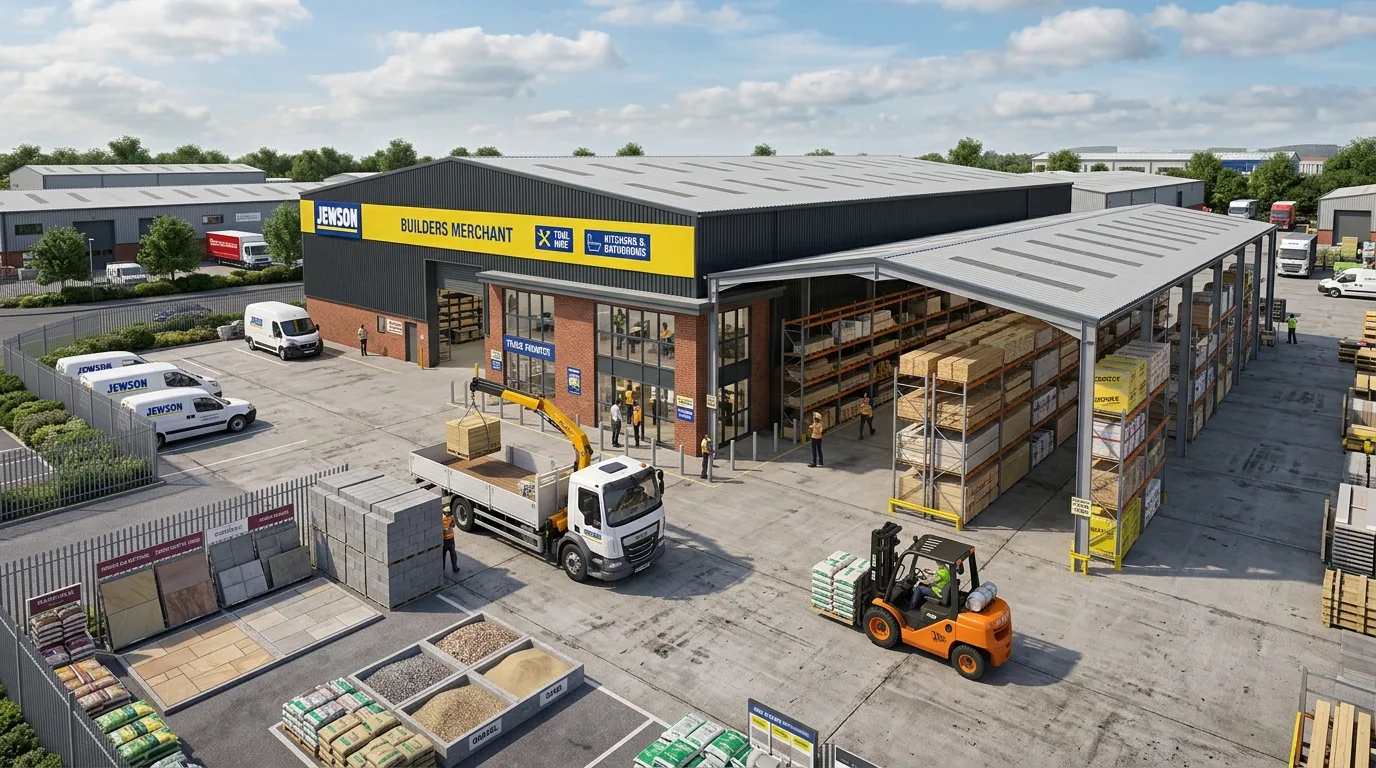
Builders merchant with covered loading canopy, external timber and materials racking, trade counter office, and operational yard with forklift.
What This Covers
Who Commissions This
Common Questions About Trade Counter CGI
Because the covered loading canopy, external racking, and forklift zones are the whole point of the building type. A trade counter rendered as a generic shed loses its identity. StratumCGI treats the canopy and racking as the hero of the frontage, not an afterthought.
Yes. Trade counters live or die on throughput, so the CGI should read as operational. StratumCGI places trade vans mid-loading, a forklift moving a pallet, and a few customers at the counter entrance. An empty yard makes the building look like a warehouse with no tenant.
Usually yes. Planners care about massing, canopy height, and yard screening. Operators like Jewson, Travis Perkins, or Selco care about racking layout, vehicle flow, and customer separation. StratumCGI frames the view so both audiences see what they need in a single image.
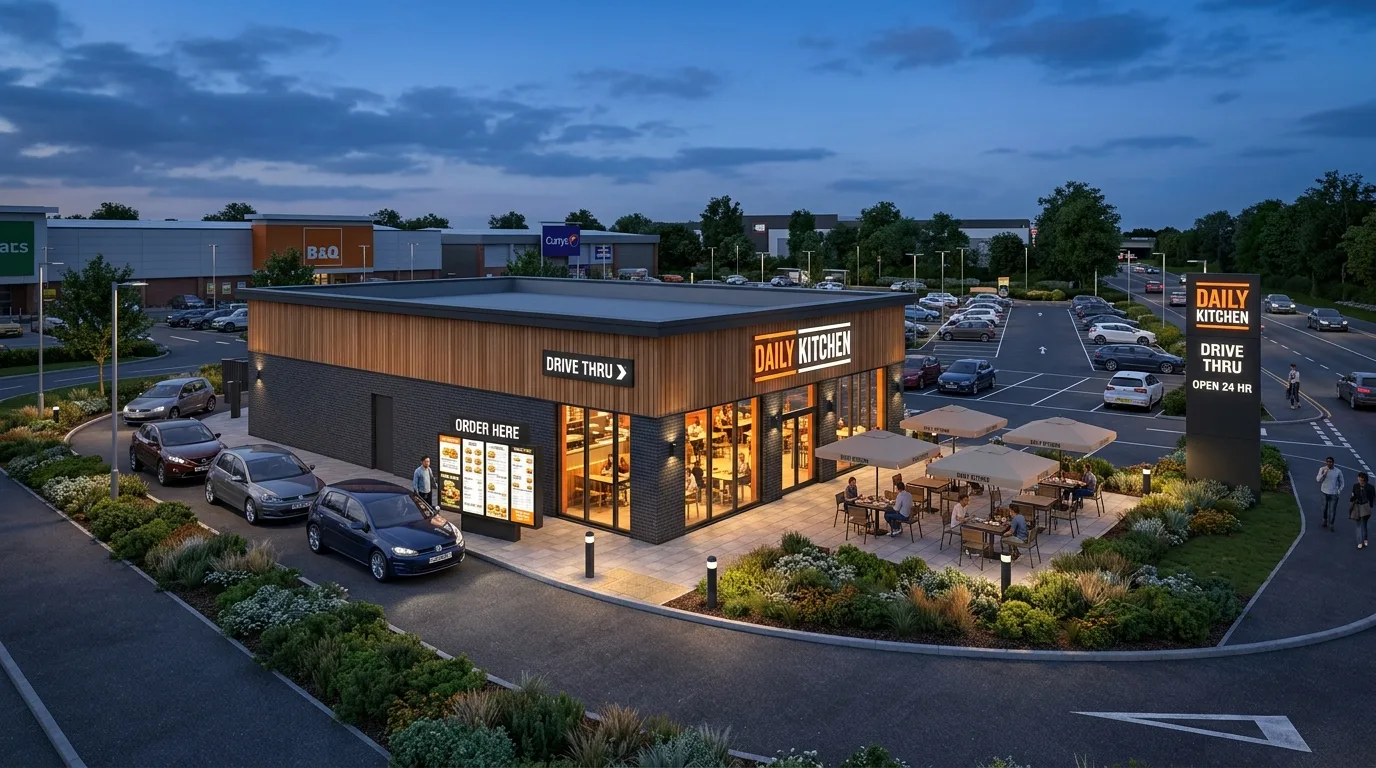
QSR drive-through pod with drive lane, outdoor seating terrace, customer car park, and blue-hour lighting on a retail pad site.
What This Covers
Who Commissions This
Common Questions About Drive-Through Restaurant CGI
Because the brand shows up best when the fascia, menu boards, and canopy lights are glowing. Daylight renders flatten QSR buildings into generic boxes. StratumCGI almost always delivers a dusk or blue-hour version alongside the daylight view so clients can show planners and franchise managers the scheme at its strongest.
Very. Planning officers routinely push back on stacking capacity, and a CGI that shows fewer queuing bays than the drawings will get flagged. StratumCGI models the lane geometry from the transport layout exactly, including bypass lanes and the order point canopy, so the image matches what has been submitted for consent.
Yes. Each chain publishes its own signage proportions, colour palette, and canopy style. StratumCGI works from the client's brand pack or the OEM's published guidelines, and the fit-out architect usually signs off the render before it goes to planning or marketing.
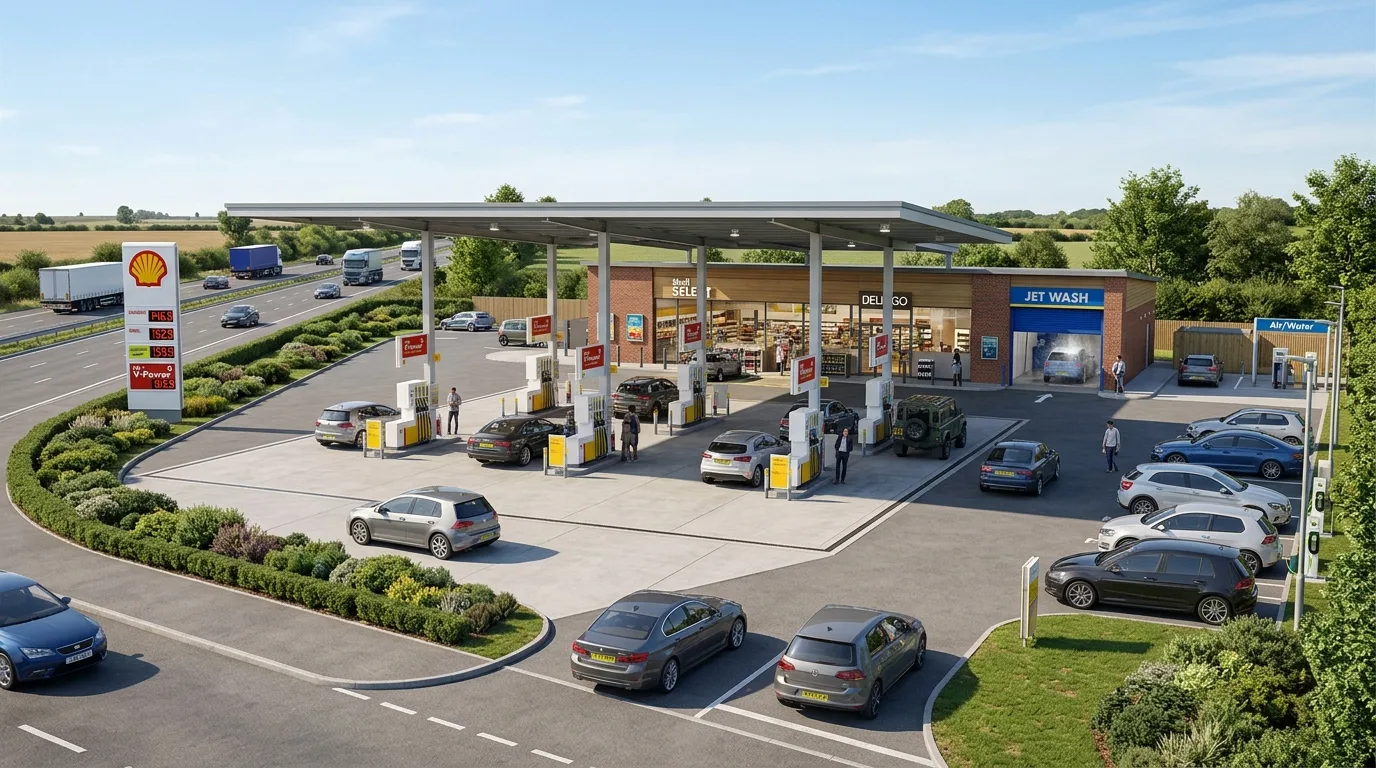
Modern petrol station with steel fuel canopy, pump islands, convenience store, jet wash bay, and roadside price totem.
What This Covers
Who Commissions This
Common Questions About Petrol Station CGI
The canopy. If the steel canopy proportions, soffit lighting, and pump island spacing are wrong, fuel retailers spot it immediately. StratumCGI models canopies from the operator's standard structural drawings, because this is the element that decides whether the image reads as a real forecourt or a stock illustration.
EV provision is now expected on almost every new forecourt render. StratumCGI adds rapid charger bays, canopy extensions over EV spaces, and dedicated lane markings from the electrical layout. Fuel retailers increasingly use these visuals to show planners how the site is future-proofed beyond petrol and diesel.
Yes. Each brand has its own canopy livery, totem design, and price display standard. StratumCGI works from the operator's brand manual where available, or neutral forecourt styling for speculative schemes. Totem height is often a planning flashpoint, so accurate proportions matter.
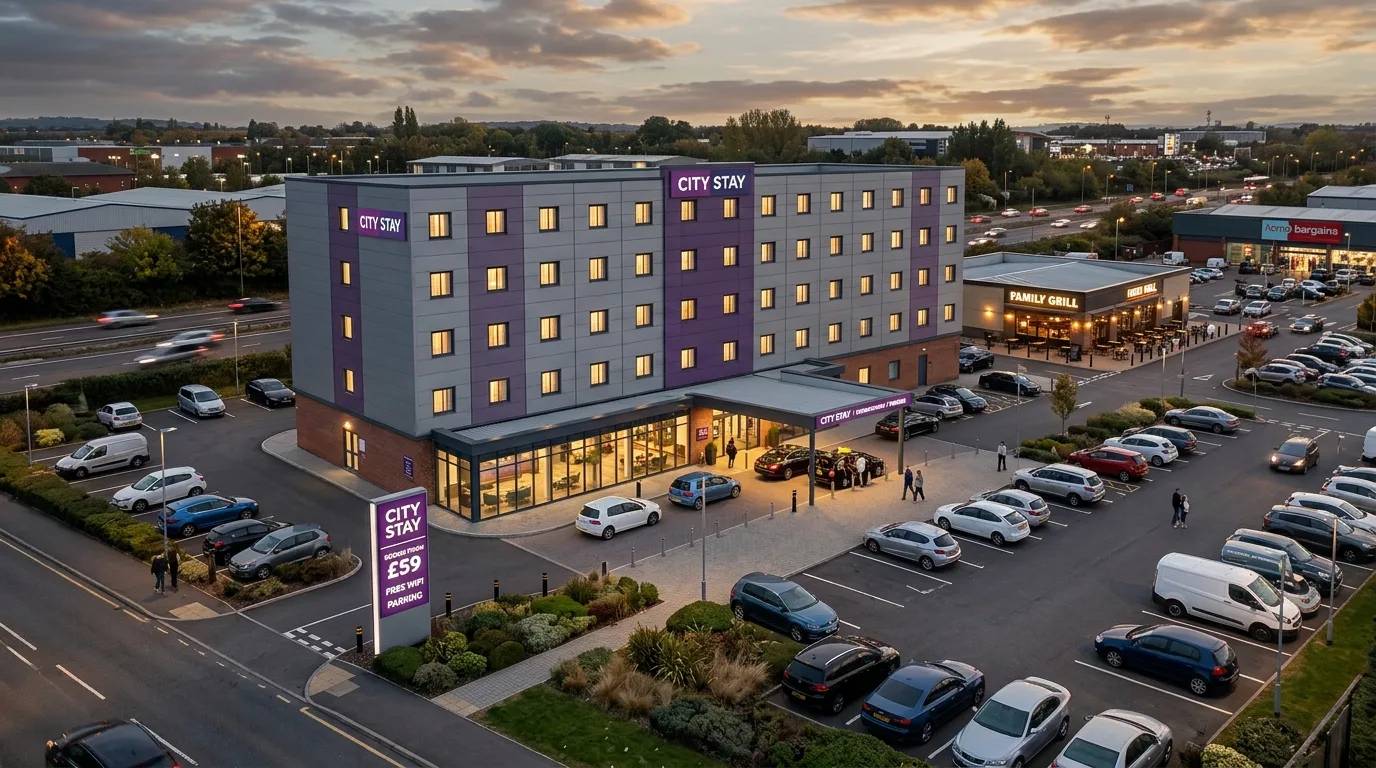
Budget roadside hotel on a retail park with porte-cochere entrance, regular bedroom window grid, car park, and neighbouring commercial units.
What This Covers
Who Commissions This
Common Questions About Roadside Hotel CGI
The porte-cochere. The covered drop-off is where guests form their first impression, and it is where the operator brand is most concentrated, the canopy, the sign cabinet, the flag poles, the entrance doors. StratumCGI almost always leads the set with a hero shot looking across the entrance approach rather than a flat side elevation.
Budget hotel operators work to tight design codes. Window modules, spandrel colours, entrance canopy proportions, and flag pole positions are all specified in their brand manual. StratumCGI builds from those standards so the render passes operator sign-off first time, rather than coming back for colour and proportion corrections.
Usually both. Roadside hotels are rarely standalone, they sit beside drive-throughs, petrol stations, and retail units, and planners expect to see that relationship. StratumCGI renders the adjacent commercial context so the hotel reads as part of a working roadside scheme, not an isolated block floating on a blank site.
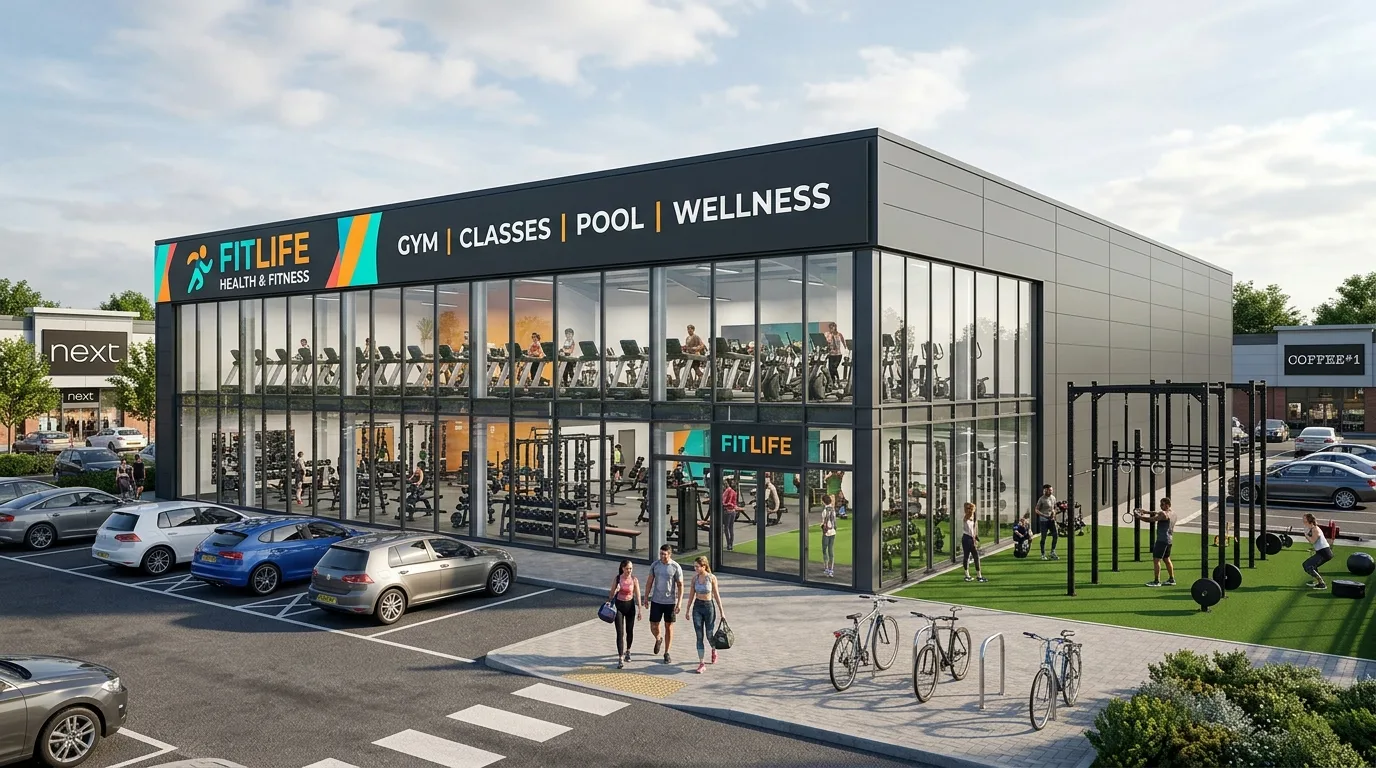
Large format gym in a big shed unit with full-height branded glass frontage, outdoor training area, bicycle racks, and retail park car park.
What This Covers
Who Commissions This
Common Questions About Gym and Leisure CGI
Life behind the glass. A gym with a dark interior looks like a warehouse. StratumCGI lights the inside, places treadmills, rigs, and moving figures visible through the frontage, and pushes the brand colour onto structural columns and fascia. The building has to feel used, not just built.
Dusk, most of the time. The branded fascia glows, the interior lighting pushes through the glass, and the building becomes a beacon on an otherwise quiet retail park. StratumCGI still delivers a daylight version for planning, because case officers often want to see massing and materials under neutral light, but the marketing hero is almost always the evening shot.
They are no longer a nice-to-have. Planners expect outdoor HIIT areas, sheltered bike racks, and pedestrian routes from the car park because they tick well-being and active-travel boxes. StratumCGI models these directly from the site plan and populates them with runners, cyclists, and small groups using the equipment, which makes the whole scheme feel inhabited rather than staged.
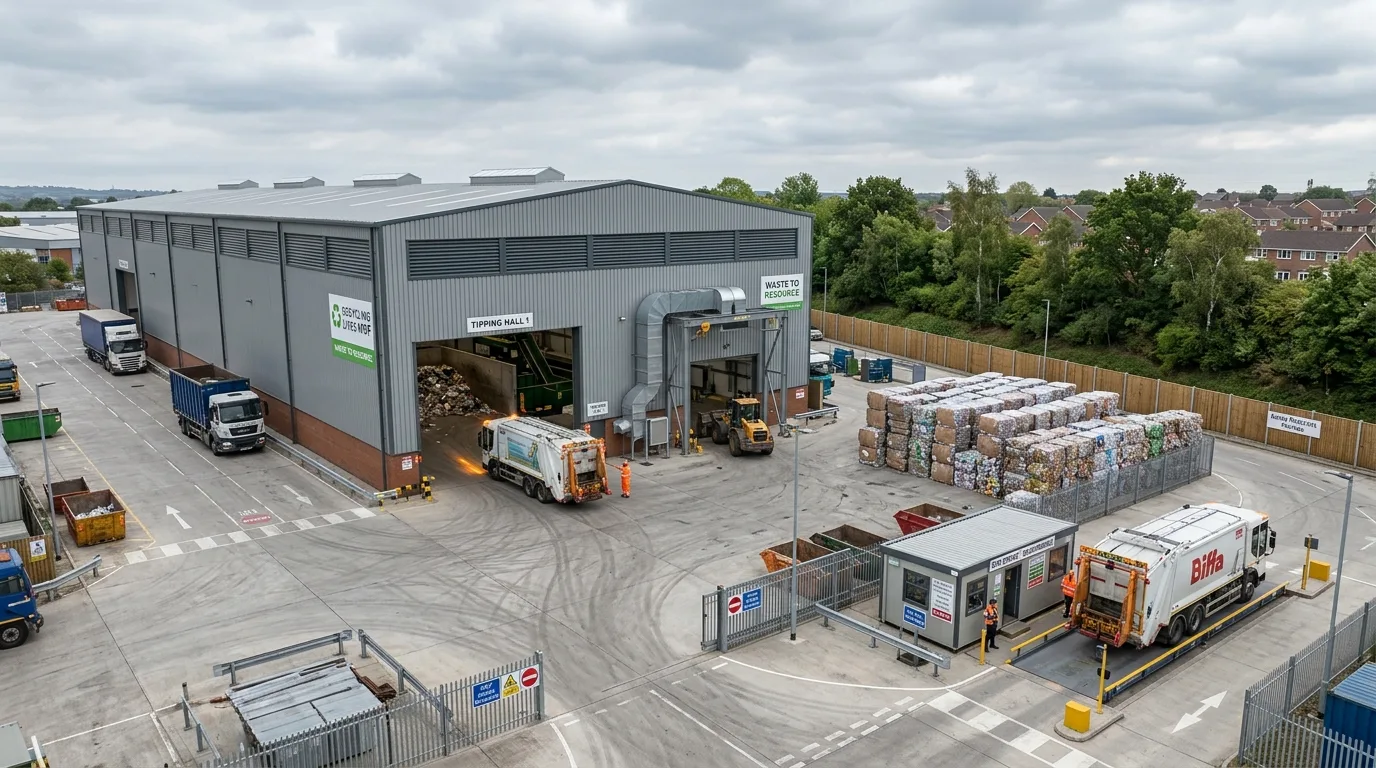
Exterior render of a materials recovery facility showing the tipping hall entrance, sorting building, baled output storage, and vehicle circulation yard.
What This Covers
Who Commissions This
Common Questions About Waste and Recycling Facility CGI
Because almost every waste application faces local objection, and words alone rarely overcome it. A clear render showing the building, the screening, and the traffic flow gives planners, councillors, and residents something concrete to react to. StratumCGI is often commissioned specifically to defuse the "what will it actually look like" question before it reaches committee.
Honesty works better than gloss. StratumCGI renders the scheme as it will actually be built, including bunding, tree belts, enclosed tipping halls, and realistic vehicle activity. A render that over-prettifies the site gets picked apart at consultation, while a grounded, accurate visual tends to build trust with objectors rather than inflame them.
A site plan, elevations, the landscape and screening strategy, and the transport layout showing HGV routes. That is usually enough to produce a planning-grade CGI. Operational details like sorting equipment or bale storage can be added later if the application needs to show process flow alongside external views.
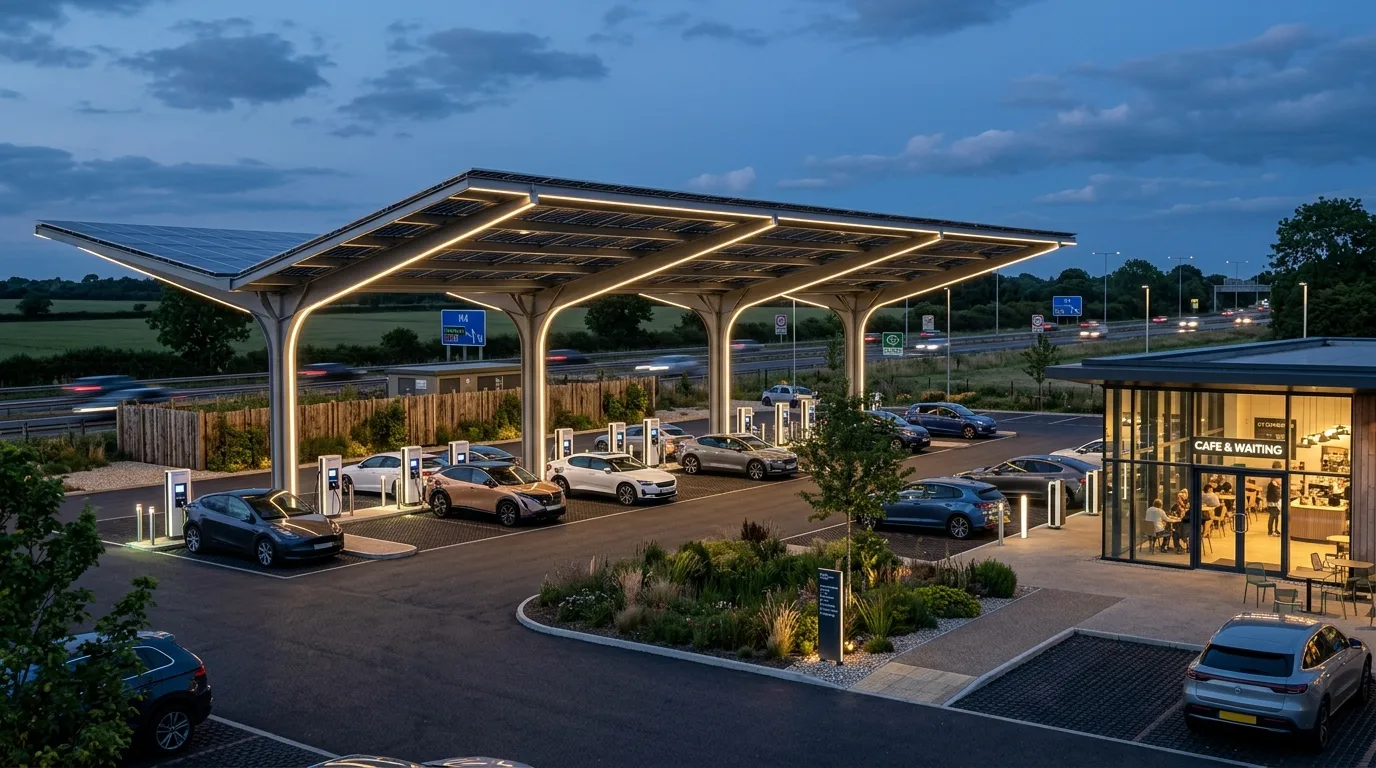
Exterior render of an electric vehicle charging forecourt with canopy structure, solar panel roof, multiple charging bays, and landscaped waiting area.
What This Covers
Who Commissions This
Common Questions About EV Charging Hub CGI
The canopy. A hub without a sheltering roof looks like a supermarket car park with a few chargers bolted in. StratumCGI builds the canopy as the main architectural gesture, usually with integrated solar panels, because that is what distinguishes a purpose-built charging destination from a retrofit and what operators like Gridserve, InstaVolt, and Osprey want to see in marketing material.
Exactly the number the planning application has consented. Bay count is usually a conditioned parameter, so StratumCGI models bay markings, cable posts, and canopy columns to match the electrical layout. A render that shows twelve bays when the application says eight causes problems later, so accuracy here is not optional.
Increasingly yes. A twenty-minute charge is twenty minutes to kill, and planners now expect to see cafes, toilets, and sheltered dwell areas as part of the scheme. StratumCGI renders these alongside the chargers so the hub reads as a destination, not just infrastructure, which matches how operators are actually positioning new sites.
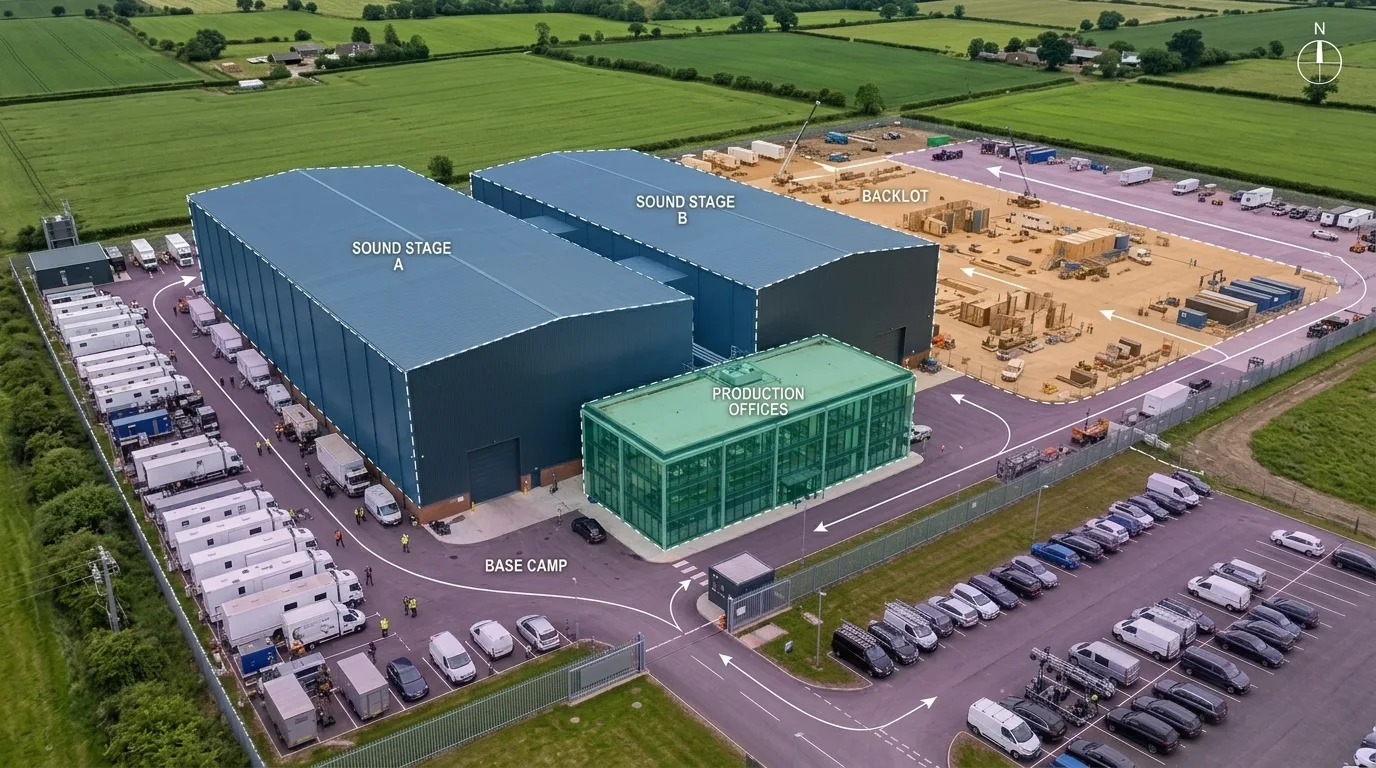
Sound stage complex with production offices, backlot, base camp, and site zone overlay showing facility layout.
What This Covers
Who Commissions This
Common Questions About Film and Television Studio CGI
Because sound stages are big windowless boxes, and a ground-level view makes them look like ordinary warehouses. An aerial or elevated render shows the full campus, stages, production village, base camp, backlot, which is what investors and studio operators actually need to see. StratumCGI leads most studio sets with an elevated hero shot for this reason.
Taken directly from the structural drawings. Stage internal volume, grid height, and door proportions are what production companies care about when they are deciding whether a facility can take their shoot, so the CGI has to match the stage spec exactly. An aspirational stage with the wrong grid height loses credibility the moment a location scout compares it to the technical pack.
Usually developers, investors, and enterprise zone promoters, rather than the production companies themselves. The CGI is used to pre-let stage capacity, support planning submissions, and pitch to local authorities backing the creative economy. StratumCGI builds the image to serve all three audiences from one model.
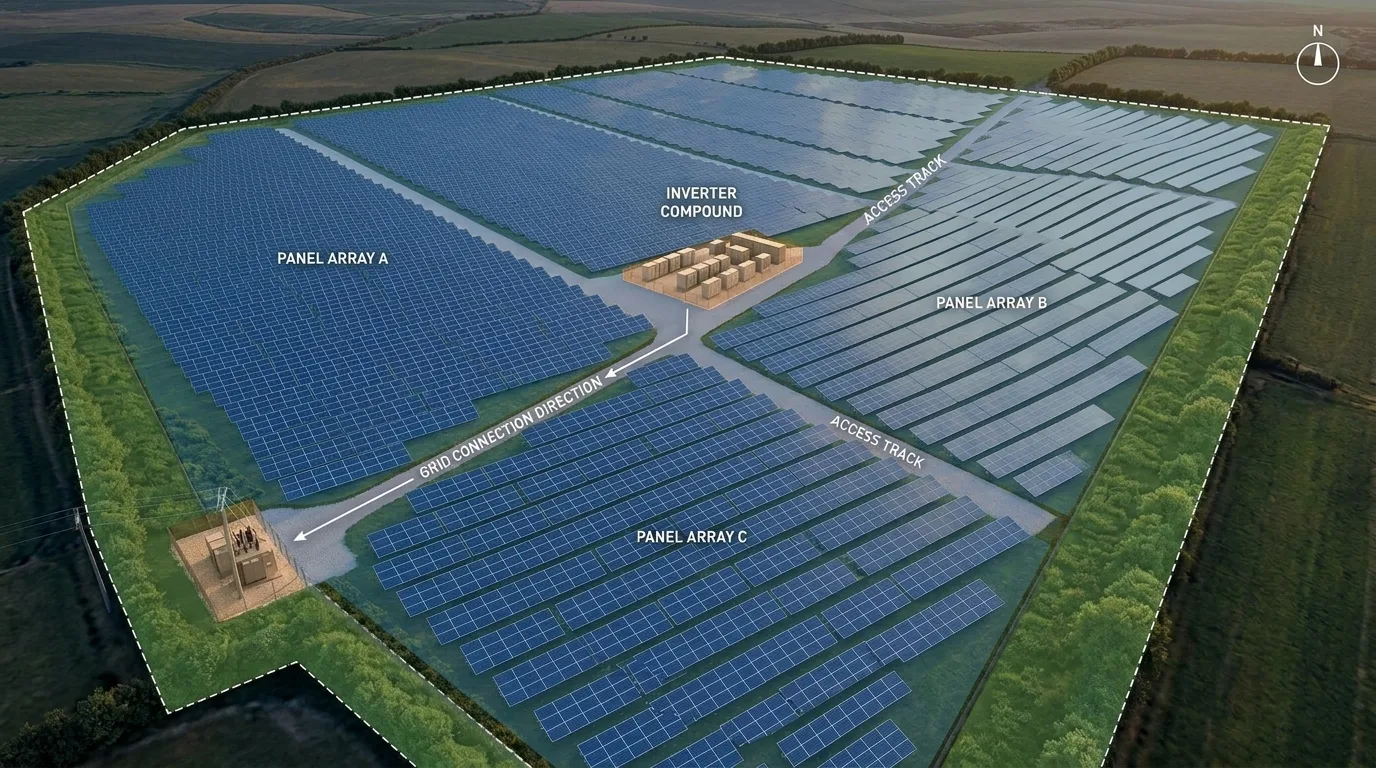
Ground-mounted photovoltaic array with site plan overlay showing panel blocks, inverter compound, access tracks, and buffer planting zones.
What This Covers
Who Commissions This
Common Questions About Solar Farm CGI
Making it honest. Solar farms are big, low, and highly visible from public rights of way, and LPAs know it. StratumCGI builds the array to the exact panel density and row spacing of the electrical layout, then tests it from agreed LVIA viewpoints, because an over-flattered render gets picked apart at examination and damages the case.
Yes. Photomontages are built from survey-aligned camera data at agreed viewpoints and prepared in line with the methodology LPAs and inspectors expect. The same model also generates marketing and stakeholder images, so the verified view work feeds directly into community consultation material without having to rebuild anything.
Yes, and it usually should. Hedgerow planting, wildflower margins, and sheep grazing between panel rows are what turns a solar farm from infrastructure into a managed landscape in the eyes of a parish council. StratumCGI models these from the ecology and landscape mitigation plan so the CGI backs up the BNG case rather than ignoring it.
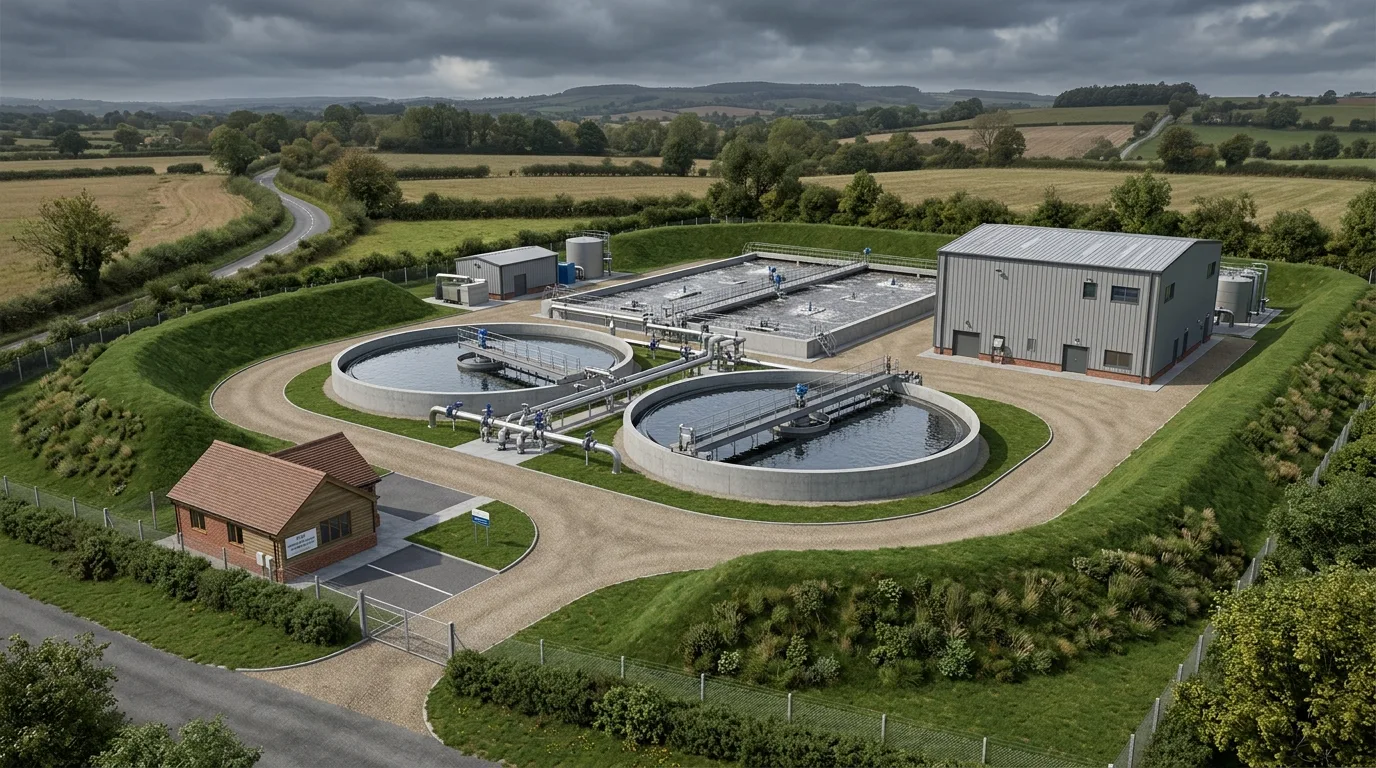
Water treatment facility showing circular settlement tanks, aeration basins, process building, and pipework connections in a rural setting.
What This Covers
Who Commissions This
Common Questions About Water Treatment Works CGI
Because these schemes are hard for non-technical audiences to picture. Engineering drawings mean nothing to councillors or residents, and a treatment works sits somewhere on the spectrum between factory and infrastructure. A CGI gives everyone, planners, communities, stakeholders, a single reference image of what will actually be built, which is usually the difference between a smooth consultation and a contested one.
Water companies, consulting engineers, and planning teams, but the audience is wider. The same image ends up in planning submissions, community newsletters, press releases, public consultation boards, and examination hearings. StratumCGI treats the render as a communication asset with a long life, rather than a one-off for a single document.
The civil and process layout, elevations of any buildings, and the landscape strategy showing bunding and screening. That is enough to produce a planning-grade image. Where a full design is still developing, StratumCGI can work from concept layouts and refine the CGI as the scheme firms up through the design process.
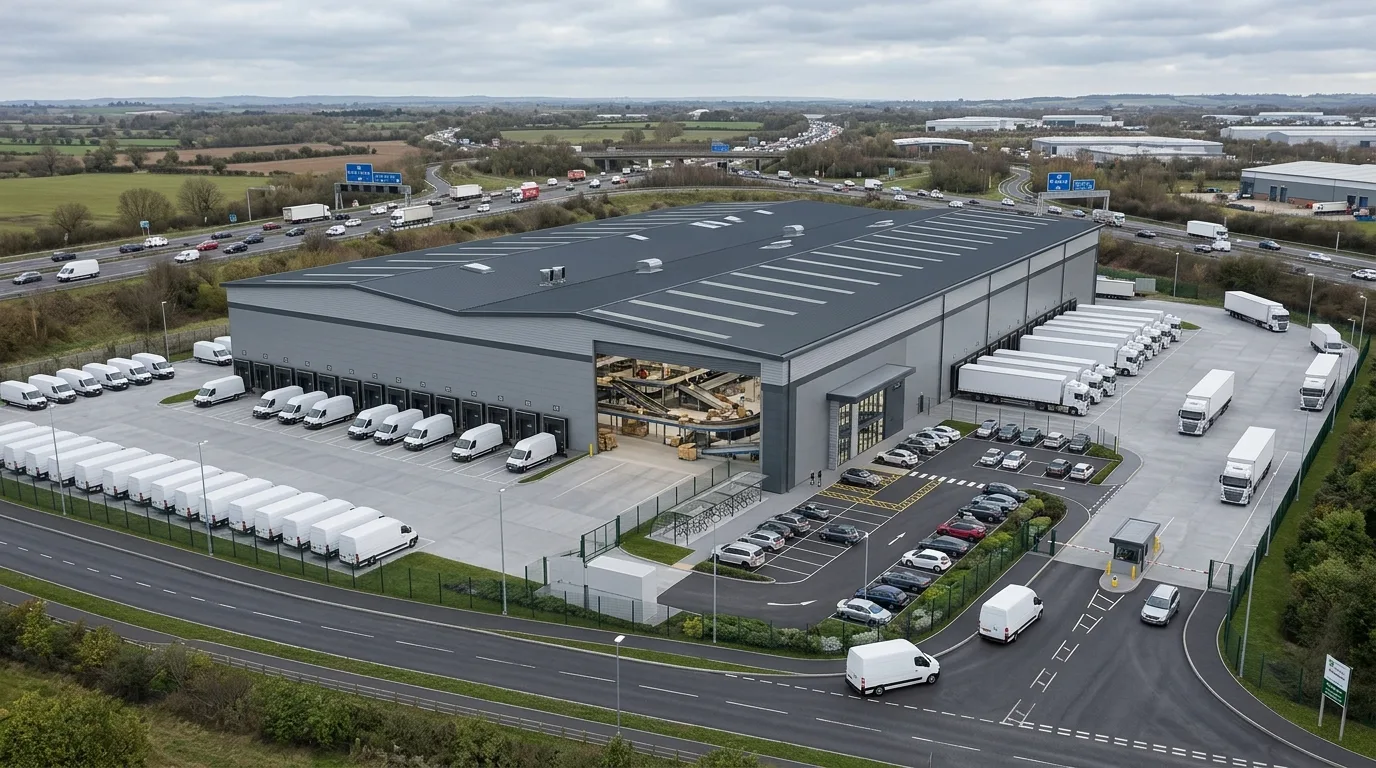
Large-scale parcel sorting facility with dock doors, delivery van fleet staging, HGV loading area, and conveyor infrastructure visible through open shutters.
What This Covers
Who Commissions This
Common Questions About Parcel Sorting Hub CGI
A long wall of dock doors and a yard full of vans. Nothing else looks quite like it. StratumCGI builds the facade rhythm to match the exact dock door count in the layout, because parcel operators like Amazon, DPD, Evri, and Royal Mail recognise the building by its door density and yard depth, and a render that fudges the count looks wrong immediately.
If the occupier is confirmed, yes. Amazon blue vans, Royal Mail red, DPD yellow, it makes the building immediately legible. If the scheme is speculative, StratumCGI uses neutral fleet so the render does not misrepresent a future tenant. Livery can be swapped later once a pre-let is agreed without rebuilding the scene.
Partially, through open shutters. A glimpse of conveyors, dock levellers, and interior lighting behind a few open doors signals that the building is a working sortation hub, not an empty shed. StratumCGI uses this sparingly, usually on two or three doors, to add operational depth without turning the exterior render into an interior one.
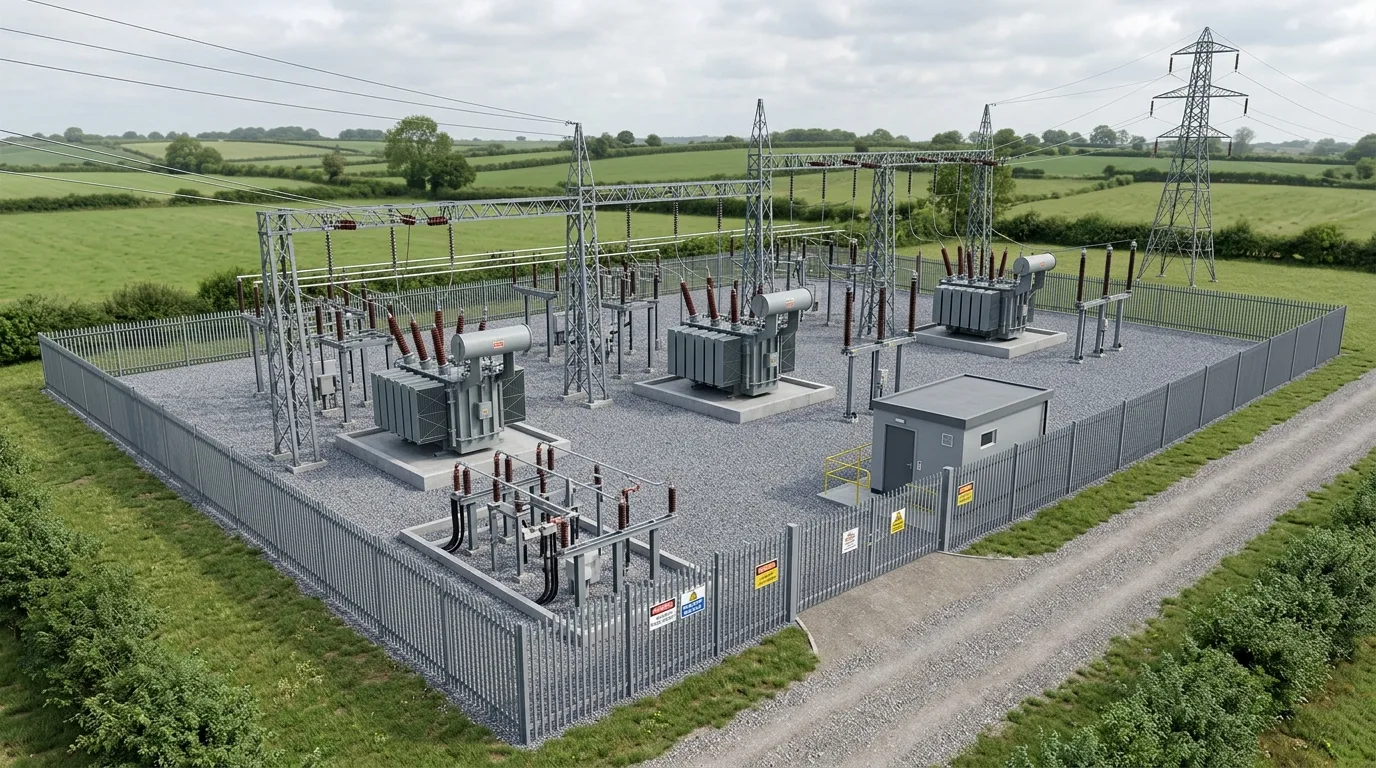
High-voltage substation compound showing transformers, gantry structures, circuit breakers, and overhead power line connections.
What This Covers
Who Commissions This
Common Questions About Electricity Substation CGI
Because substations are one of the most objected-to forms of infrastructure, and written descriptions rarely defuse the opposition. A CGI gives planners, parish councils, and residents a shared image of the compound, the transformers, the gantries, and the screening. It moves the conversation from fear to specifics, which is usually the only way a substation application gets through consultation intact.
Yes. Photomontages are built from agreed LVIA viewpoints using survey-aligned camera data, prepared to the methodology LPAs and the Planning Inspectorate expect. The same model generates marketing and stakeholder imagery, so the verified views feed directly into community consultation boards and hearing bundles without duplicating work.
These are almost always the determinative issues. StratumCGI models the bunding, tree belts, fence line, and access track from the landscape strategy, then tests the view from the receptors the ecology and visual assessments identify. The render is built to back up the mitigation case rather than dress around it, which matters when the CGI is being read by a hostile audience.
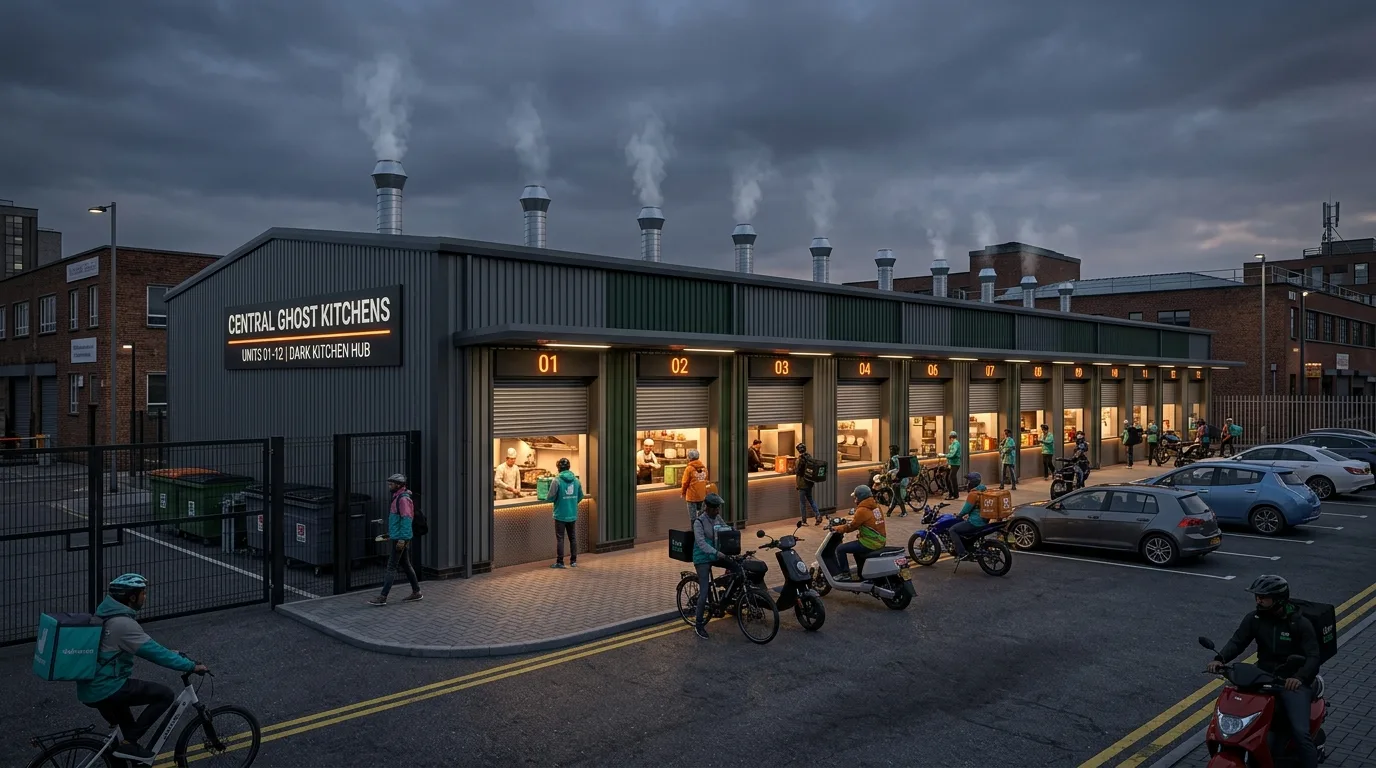
Ghost kitchen facility with individual kitchen units, extraction flues, delivery rider collection point, and evening operational lighting.
What This Covers
Who Commissions This
Common Questions About Dark Kitchen Hub CGI
Because the extraction flues are the whole story. A dark kitchen hub is defined by a row of vertical risers climbing the rear or side elevation, one per unit. StratumCGI models these from the M&E drawings rather than hiding them, because the flue arrangement is the element planners, neighbours, and environmental health officers all focus on.
Yes. Dark kitchens live or die on rider logistics, and a render without riders reads as a vacant industrial unit. StratumCGI populates the collection zone with cyclists, mopeds, and covered waiting shelters, which shows the operational layout working as intended and answers the traffic and circulation questions that come up in urban planning applications.
Evening, almost always. These facilities peak at night, so a dusk render with illuminated unit signs, rider lighting, and warm interior glow tells the truth about how the hub operates. Daylight is still useful for planning, but the evening shot is what communicates the scheme to investors and operators looking at the model.
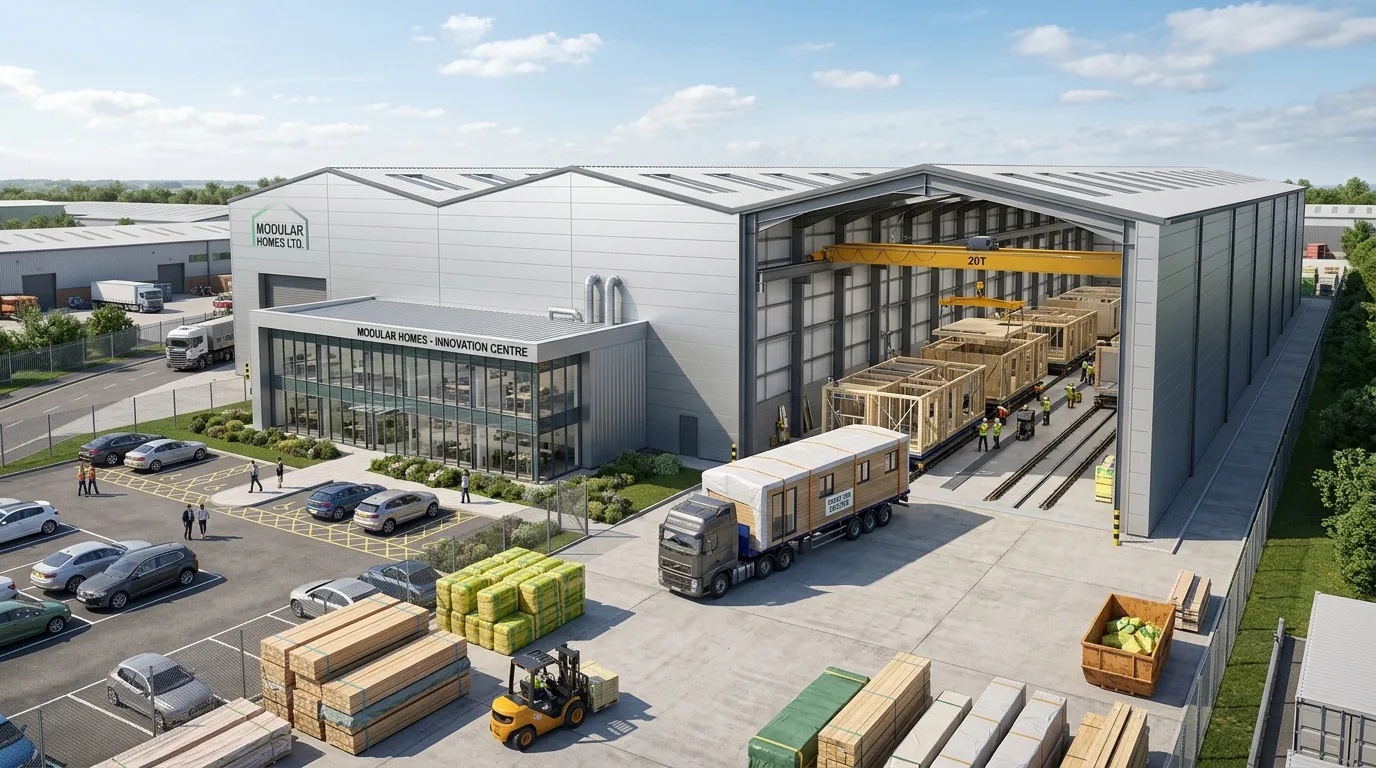
Large portal frame factory showing timber frame module production line, gantry crane, completed units on flatbed transport, and materials delivery yard.
What This Covers
Who Commissions This
Common Questions About Modular Housing Factory CGI
That the building can actually make houses at scale. Investors, Homes England, and planning committees all use the render to gauge whether the factory has the span, the gantry crane reach, and the production floor to justify the business case. StratumCGI models the portal frame and crane from the structural drawings, because getting the scale wrong undermines the entire investment case.
Yes, unless the brief says otherwise. An empty factory reads as speculation. StratumCGI populates the floor with volumetric modules at different build stages, jigs, forklifts, and completed units loaded onto flatbed transporters. The image has to feel like a running operation, which is what pre-lets and funding committees want to see.
Usually developers, MMC manufacturers, and local authorities backing modern methods of construction. Sometimes Homes England or combined authorities funding regional housing accelerators. StratumCGI builds the render so the same image works for planning, funding applications, and operator recruitment, because the audience for MMC factories is unusually broad.
Planning application CGI and planning photomontage packs evidence Reserved Matters submissions, Design and Access Statements, Section 73 amendments, and committee-day presentations. StratumCGI renders AVR Type 3 verified-view aerials, photogrammetry-aligned ground-level approach studies, and neighbour-perspective massing reads, with camera positions agreed with the LPA before the brief moves to lighting. For the method, inputs, and viewpoint logic, see verified views and planning photomontage.
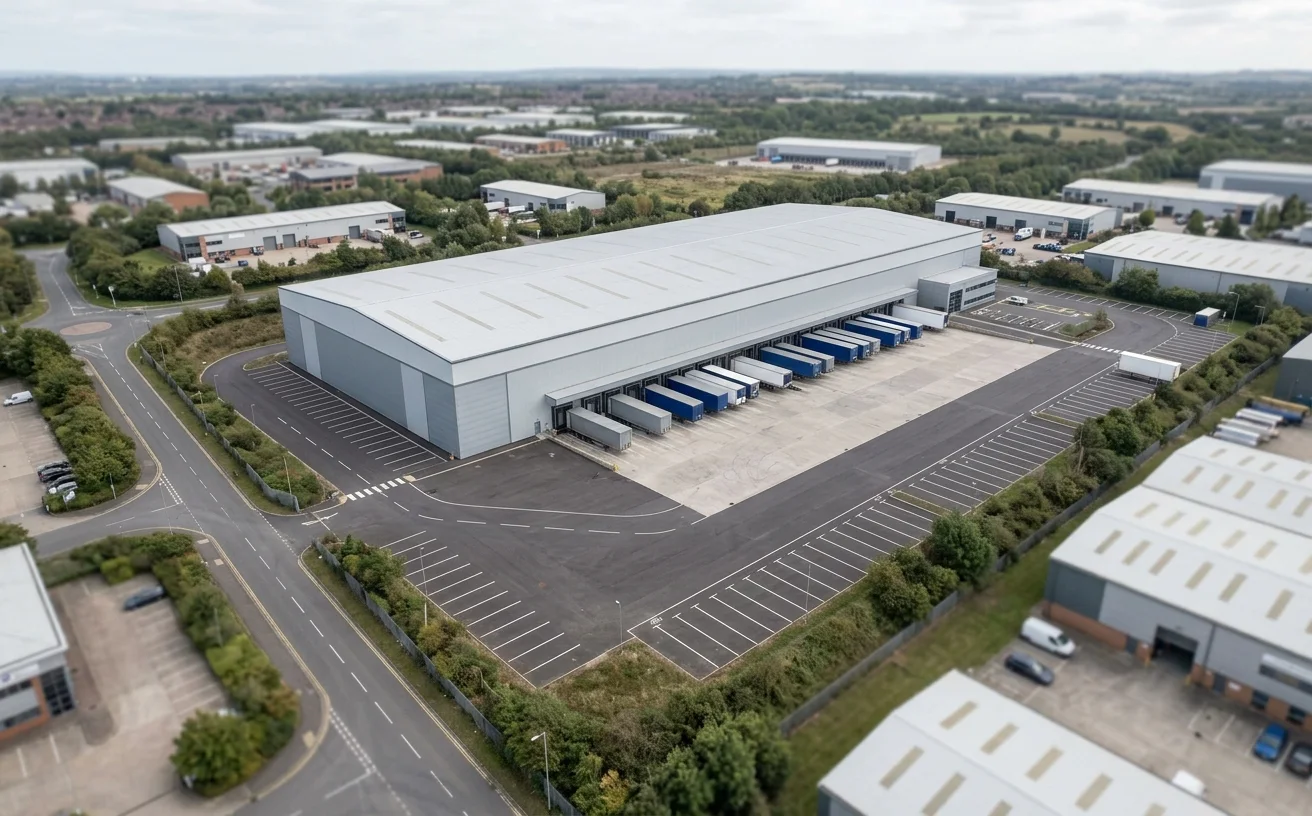
Photogrammetry-aligned aerial frame at the camera position the LPA accepts as evidence.
AVR Type 3 · LPA-agreed camera
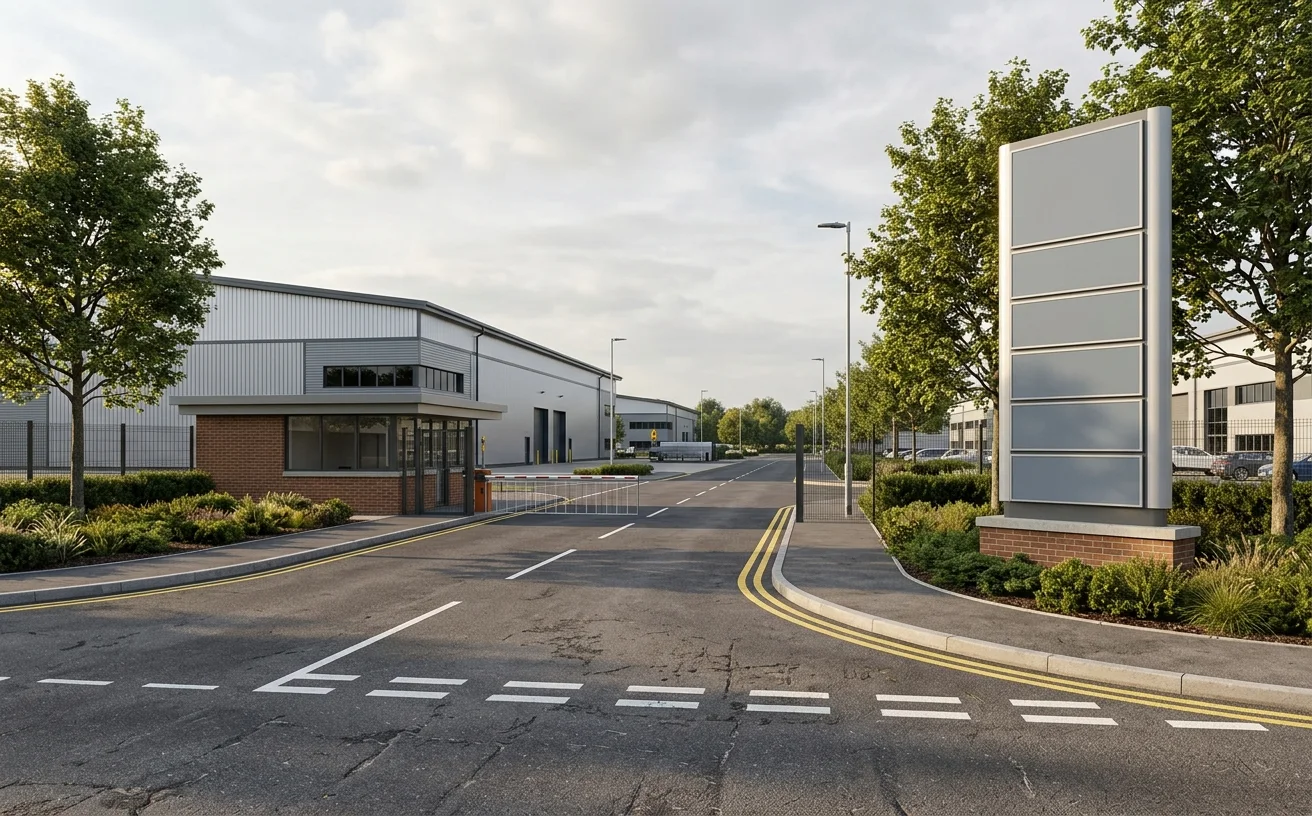
Pedestrian-eye view of the site entry, gatehouse, signage totem, and access road geometry.
Eye-level 1.5 m · swept-path overlay
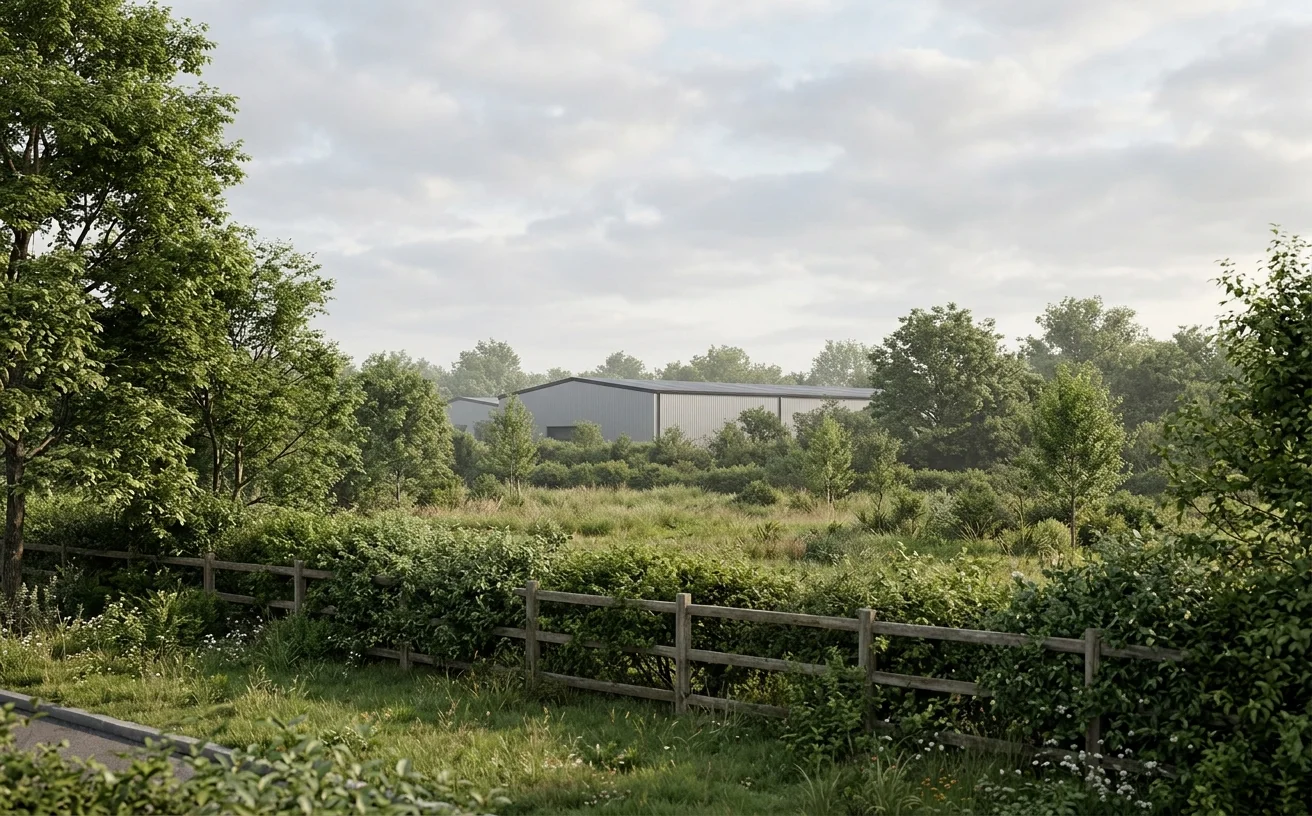
Massing study from the nearest residential or amenity edge, with screening and boundary treatment in context.
Boundary screening · biodiversity buffer
Officers reviewing Reserved Matters, a Design and Access Statement, or committee stills also need planning application CGI for industrial development when the brief is a planning pack rather than a verified-view method set.
Commercial development CGI packages comprise leasing brochures, occupier-ready frontage close-ups, investor pack imagery, NDA-safe publication, and the SCGI reference-code archive. Together they form the visual layer of industrial property marketing campaigns, where the same model carries through brief, brochure, and investor pack.
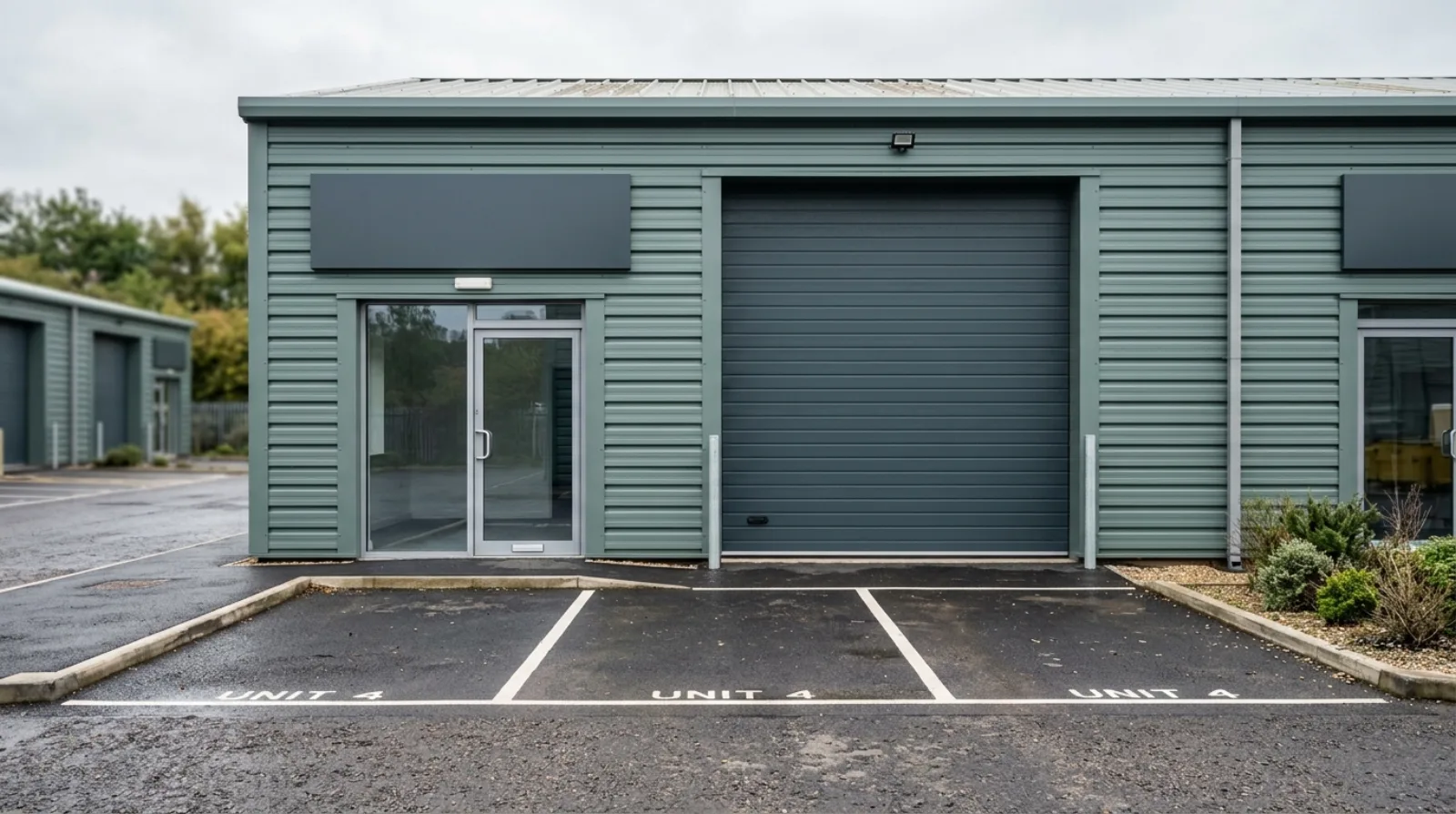
Frontage close-ups, dock-face detail, signage zones, and occupier finish at letting-brochure register.
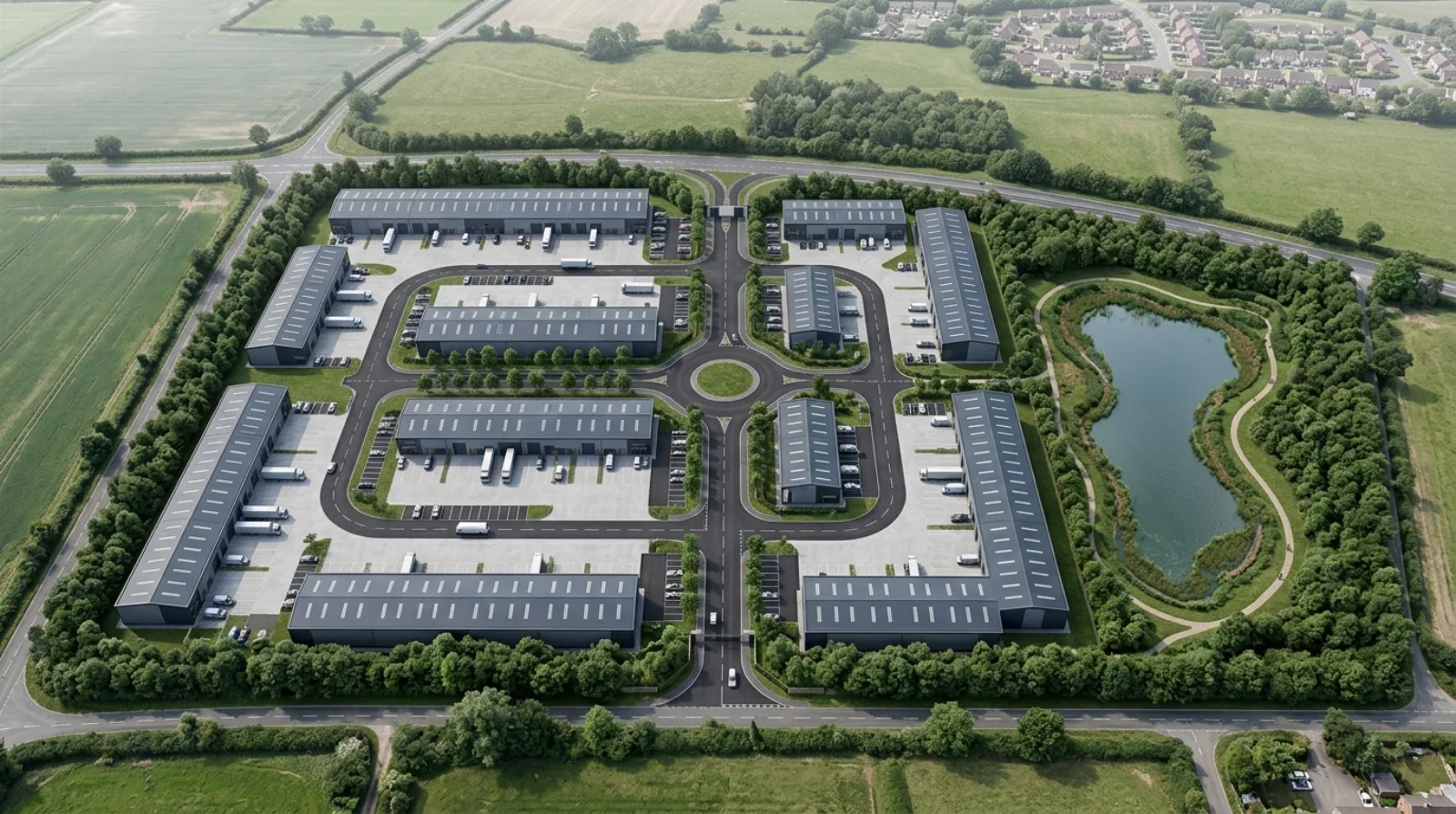
Masterplan aerials and valuation-grade frames, anonymised on request under the SCGI portfolio policy.
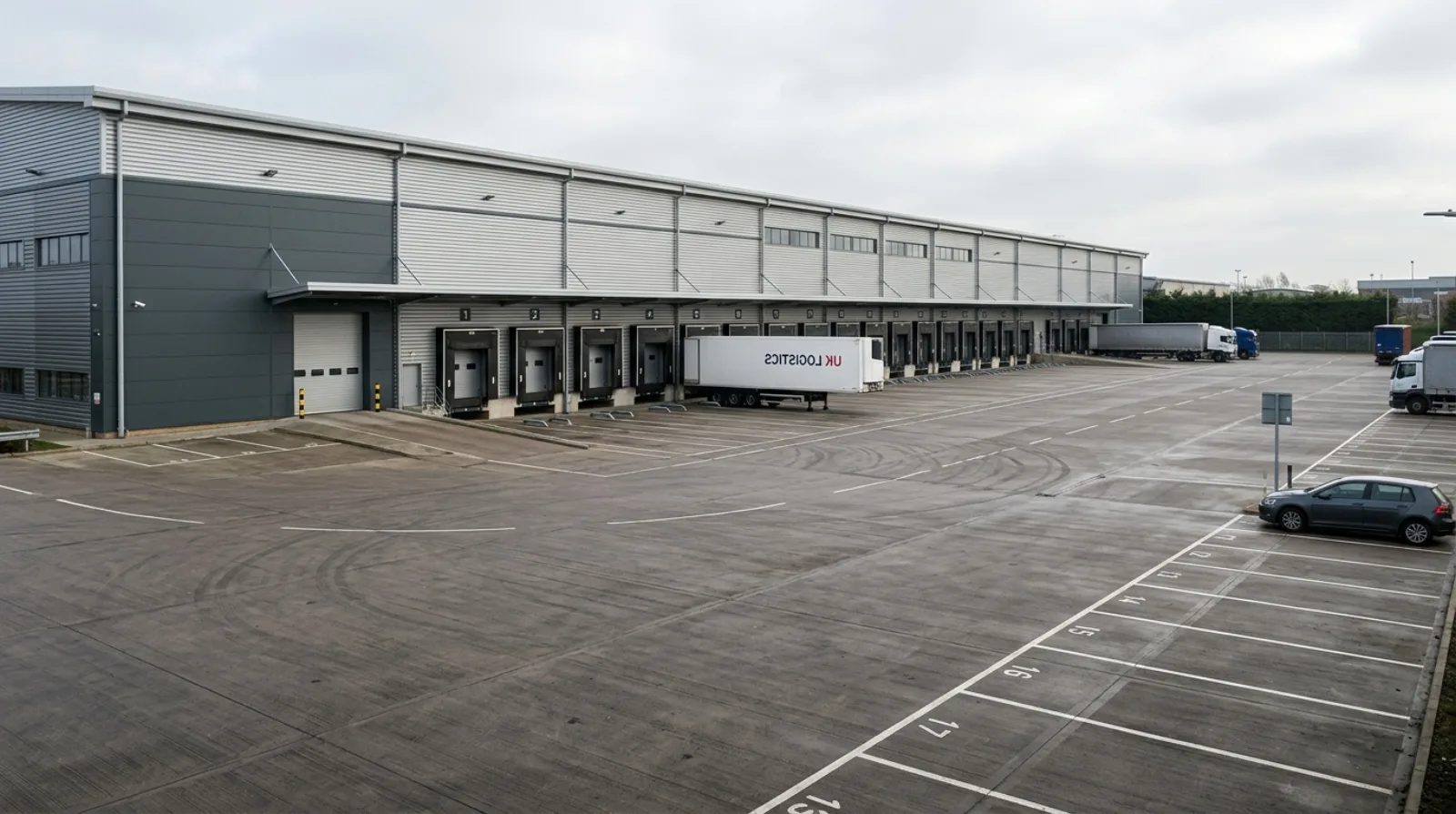
Yard depth, parking ratio, signage zones, and HGV manoeuvring confirmed before the occupier walks the site.
Frontage-only renders fail planning officers and investors. An industrial CGI has to resolve the service yard, the loading dock, and the frontage to spec, because each one carries a number a planner, agent, or occupier will check. StratumCGI models the three together, against UK industrial benchmarks and sustainability credits, in one coordinated image set.
A service yard CGI must show the yard depth, the swept-path geometry, and the slab and gradient the building sits on. UK big-box yard depth is 50 m as the modern floor, with SEGRO and Prologis pushing 55-65 m for cross-dock and trailer-swap layouts. Urban infill schemes trade down to 35-44 m for site coverage. The yard depth in the render is the depth the agent will quote on the spec sheet.
Every yard render is laid against the swept-path overlay for a 16.5 m UK articulated lorry before the camera is locked: 12.5 m outer radius, 5.3 m inner, 6.87 m kerb radius per UNECE Regulation 107. The slab beneath is modelled at 200-300 mm reinforced for a 7.5-10 kN/m squared imposed load, with surface falls at 1:80 typical and 1:20 the practical maximum gradient.
A loading dock CGI must show the dock-to-floor height, the leveller specification, and the door rhythm a tenant will count. Dock-floor height sits 1,200 mm above the apron to meet a UK trailer bed. Dock levellers are specified to BS EN 1398: 6 t for general distribution, 10 t for cold-chain and high-cycle big-box, with a +/- 300 mm working range to absorb trailer variation.
Door spacing sits in the 3.6-4.9 m centre-to-centre band, with 3-4 m dock canopies sheltering trailer head and leveller. Door provision converges on roughly one dock per 1,000 m squared GIA for distribution, tightening to one per 200-300 m squared in cross-dock layouts. A level-access door is provided alongside for plant and non-trailer collections.
A frontage CGI must show how much of the unit reads as office, how much as shed, and how the envelope scores against UK sustainability credits. Office content is 5-10% of GIA on a UK industrial unit per the BCO Guide to Specification, with a window-to-wall ratio of 30-50% on the office cube. Below 30% the frontage reads as warehouse; above 50% the building risks Building Regulations Part L overheating limits.
Glazing, rooflights, and cladding ratio carry into BREEAM Hea 01 daylight and Mat 01 envelope scoring, both modelled in the same render set so the planning officer and the certification assessor see one image. Recessed entrance, feature cladding band, and signage zone are placed in the model as a single composition, not bolted on after.
Four production stages from CAD intake to NDA-safe delivery. Three revision rounds are included as standard. Delivery typically runs two to six weeks per scheme depending on scope, revision depth, and CAD readiness, with phased delivery available against committee dates. The timeline chart below summarises the typical span for each brief tier.
CAD or BIM source review, site context, camera intent, planning or leasing audience, and NDA in place before any geometry leaves the studio. The intake locks the brief against committee dates and the typology of the scheme.
A 3D base model is built from the architect’s CAD or BIM, with camera positions and verified-view angles locked to the planning submission, and a daylight rig set across the shell. The approved base model becomes the source geometry for lighting passes, verified-view revisions, leasing-pack crops, and final delivery.
Physically based lighting passes resolve daylight, cladding read, and yard tonality across the image set. Three revision rounds are included as standard, with phased delivery available against committee dates and investor memorandum deadlines.
Final frames are delivered at print and web resolutions, with NDA-safe publication on request and an SCGI reference-code archive retained for the project. Final delivery comprises planning application CGI, leasing-pack imagery, and investor-review frames in one coordinated set.
Each row maps a brief profile to a working-day range, the phasing pattern, and the inputs that move the schedule earlier or later. Spans assume CAD or BIM is delivered on intake.
| Brief tier | Typical span | Phasing | What drives the schedule |
|---|---|---|---|
| Single verified-view frame, simple scheme | 10 to 14 working days | Single delivery | Light CAD, one camera, rate-card scope |
| Multi-frame planning pack, mid-complexity | 3 to 4 weeks | Optional split for committee gate | Multiple cameras, planning evidence rounds, LPA dialogue |
| Multi-frame planning, leasing, and investor set | 4 to 6 weeks | Phased: planning gate, then leasing, then investor | Coordinated outputs, daylight passes, revision depth |
| Data centre, hyperscale, BESS, sustainability-certified | 5 to 8 weeks | Phased against committee and procurement | Campus geometry, MEP detail, neighbour-perspective set, sustainability scoring |
Late or incomplete CAD, scope changes after lighting lock, or extra revision rounds beyond three extend the schedule. Phased delivery is offered when a committee or marketing date sits inside the production window.
Anonymised case studies across the typology matrix, published under the StratumCGI portfolio policy.
Six buyer questions examine scope, pricing, base-model reuse, typology route, and industrial park CGI.
Industrial CGI is photoreal architectural visualisation of warehouse, distribution, fulfilment, data centre, and industrial estate schemes. UK developers, architects, and agents commission it for planning evidence, pre-let marketing, and investor presentation. The image set models the service yard, the loading dock, and the frontage to UK spec, not just the elevation. Read the full definition on what industrial CGI is.
Industrial CGI is priced per render type. A standard verified-view frame for a warehouse, distribution, fulfilment, or industrial estate scheme runs £1,100 to £2,700 per still. A data centre frame sits higher at £2,200 to £2,800 because campus, MEP, and substation context adds scene complexity. A single planning photomontage frame, sharing the base model with a wider package, is priced about 20% below the full-rate frame. Reuse-rate variants of an approved view (lighting or crop change) drop to roughly 40% of the full-rate frame, and investor-deck crops cost £150 to £350 per export. Base modelling is quoted separately at £3,400 to £4,500 depending on typology, with a six-frame planning and marketing package landing between £12,500 and £28,000 all-in. Quote drivers, reuse rules, and the briefing checklist sit on the industrial CGI pricing page.
Industrial CGI proves operational viability; a generic commercial render shows only the elevation. The industrial image set frames the service yard, the loading dock, and the frontage to UK spec, because those are the attributes planning officers, occupiers, and investors test before they commit. Yard depth, swept-path geometry, dock-floor height, glazing ratio, and sustainability signal all read in the same set.
Yes. StratumCGI builds one coordinated 3D model and renders single verified views, multi-frame pre-let packs, and investor pack imagery from the same geometry. Cross-dock variants, cold-chain configurations, Passivhaus and BREEAM-certified developments, and hyperscale data centre clusters resolve inside the same pipeline. The service yard, loading dock, and frontage are modelled once and reused across planning, leasing, and occupier review.
Start with the typology that matches your scheme. Warehouse and logistics CGI covers the broad industrial-shed register. Distribution centre visualisation targets big-box throughput. Fulfilment centre visualisation targets dispatch-led mezzanine schemes. Data centre CGI targets hyperscale and edge campuses. Light Industrial Unit and Estate CGI targets Use Class E(g)(iii) and B2 multi-let estates, distinct from the B8 logistics register above. Mixed-use CGI targets industrial-led and co-location schemes where homes or offices share the site with light industrial space. Send a brief and the studio will map your project to the closest typology within a working day.
Industrial park CGI visualises unit mix, shared yards, estate roads, and phase logic on an estate-scale industrial scheme for planning, occupier, and investor review.
Warehouse and logistics CGI visualises a single warehouse or distribution shed. LiLight industrial unit CGI/portfolio/industrial-estate-cgi/">industrial estate CGI case study is the estate-scale proof. The strategic employment land masterplan CGI case study is the employment-land and masterplan proof.
Industrial CGI commissions deliver planning application CGI frames, pre-let marketing packs, investor-review imagery, and occupier-ready frontage detail, prepared from your CAD or BIM source, masterplan, landscape plan, and phasing diagram. NDA-safe publication on request.
Request a Quote